
Grand Teton National Park: Don't-Miss Experiences
Plan with current information. Conditions, roads, services, fees, and rules can change. Verify details with the National Park Service before your visit.
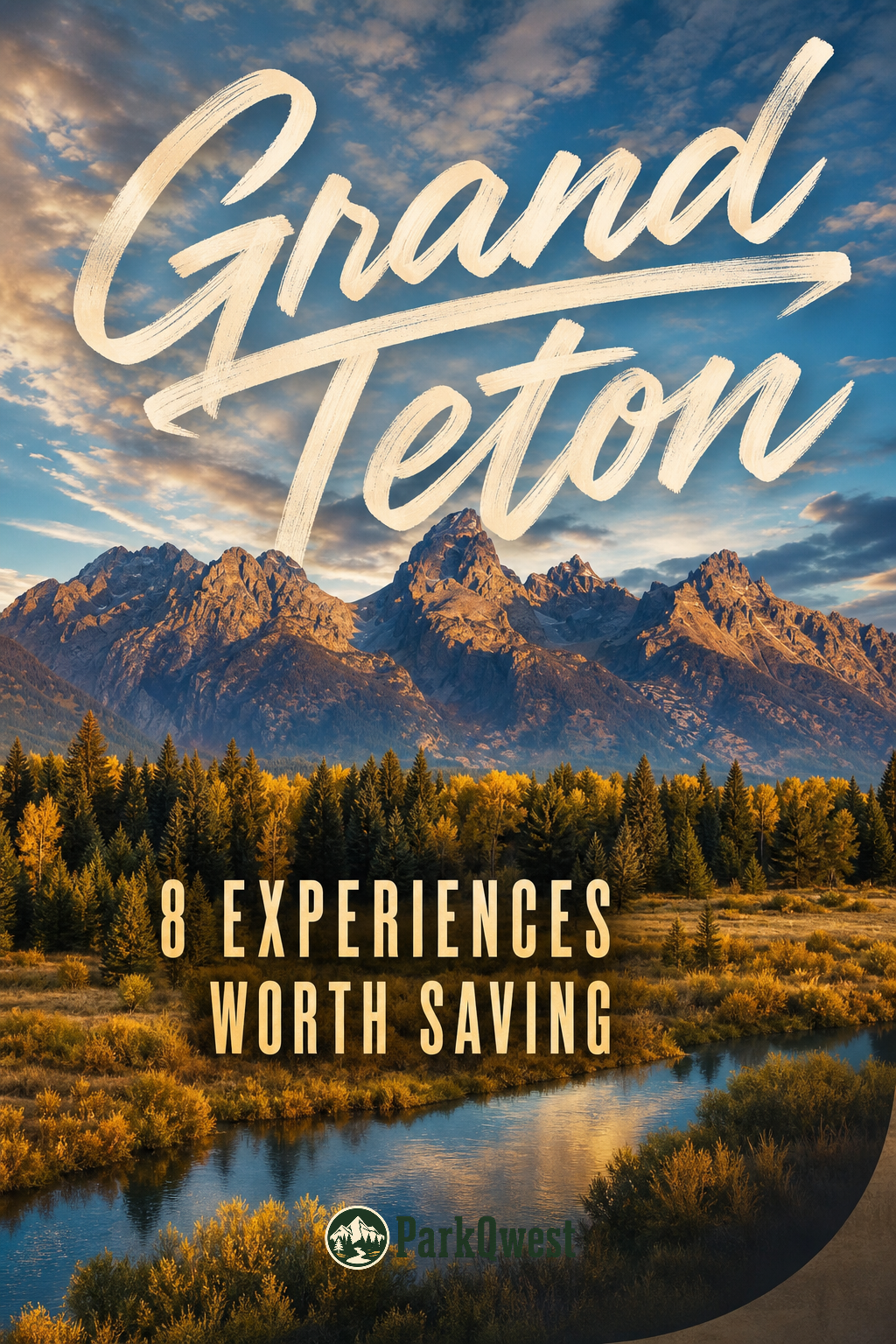
Grand Teton National Park rewards travelers who plan around light, weather, energy, and tolerance for crowds rather than trying to copy one perfect itinerary from a photo. The Teton Range rises sharply above Jackson Hole, but the park is not only a mountain-view stop: its lakes, open valley, wildlife habitat, changing weather, and long human story can shape very different kinds of days. Use these eight experiences as a menu, not a checklist. A family with a half-day, a serious hiker, and a first-time photographer should not leave with the same version of Grand Teton.
How to choose your Grand Teton “don’t-miss” list
Start with the time you actually have, then choose one anchor experience and one supporting experience per day. A long hike pairs well with an easy evening viewpoint; a wildlife-focused morning pairs well with a lake stop or scenic drive. Trying to combine every lake, overlook, trail, and photography stop in one day usually produces more windshield time than park time.
- Have only a few hours? Prioritize a range view, a short lakeside stop, and a slow drive with time to pull over safely.
- Traveling with mobile kids or mixed abilities? Build around wildlife watching, viewpoints, water, and short walks rather than a mileage goal.
- Want physical challenge? Make a hike the centerpiece, then leave the rest of the day intentionally light.
- Visiting for photography? Let morning and evening light determine your schedule, not a long list of pins.
- Coming in spring, fall, or winter? Let current road, trail, snow, and weather information make the final call.
Quick take
There is no universally mandatory Grand Teton experience. Choose the mountain-view-and-lake combination for a first visit, a hike if time on foot is your priority, wildlife viewing if patience is part of the fun, or a winter/shoulder-season day if quieter conditions matter more than a packed itinerary.
Eight experiences worth building a trip around
1. Watch the Teton Range change with first or last light
Why it matters: The range is the visual center of Grand Teton National Park, but its character shifts dramatically with cloud cover, shadow, snow, and the angle of the sun. Seeing it early or late gives the landscape room to feel like more than a quick roadside backdrop, and it can turn an ordinary viewpoint into the day’s most memorable pause.
Best for: First-time visitors, photographers, couples, and anyone with limited time who wants a high-return park experience without committing to a long hike.
Planning note: Pick a legal pullout or developed viewing area rather than stopping unpredictably along the road. Mornings can be cold even after warm afternoons, and evenings can bring rapidly falling temperatures; pack an insulating layer, allow extra driving time in low light, and check current conditions on the official NPS page before heading out.
2. Make a lake stop a destination, not a photo break
Why it matters: Grand Teton’s lakes create the park’s most satisfying contrast: still water in the foreground, steep peaks beyond, and a chance to slow the pace. A lake-centered stop is especially useful because it works whether your group wants to sit, take a short walk, sketch, photograph, or simply eat a snack somewhere that does not feel like a parking-lot reset.
Best for: Families, casual walkers, travelers recovering from a long drive, and visitors who want scenery without a demanding route.
Planning note: Choose one lake area and give it enough time to settle in. Verify which access points, paths, restrooms, boat-related rules, and seasonal services are available when you visit; those details can change, especially outside summer.
3. Take one hike that matches the day you actually have
Why it matters: A well-chosen hike changes the scale of the park. Instead of only looking toward the Teton Range, you begin to notice forest, water, weather, wildlife signs, and the way elevation changes temperature and effort. The right hike is not necessarily the longest or most photographed one; it is the route that leaves your group energized rather than stranded by a storm, darkness, or sore knees.
Best for: Active travelers, repeat visitors ready to move beyond overlooks, and anyone who values immersion over covering ground.
Planning note: Use current NPS trail information to choose based on distance, elevation gain, route conditions, snow, and your turnaround time. In July and August, afternoon thundershowers are common, so an earlier start can be the safer and more comfortable choice. Carry water, food, layers, navigation tools, and bear-aware travel essentials appropriate to current park guidance.
4. Give wildlife viewing its own unhurried block of time
Why it matters: The open valley and varied habitats are a major reason Grand Teton feels alive rather than staged. Wildlife viewing is most rewarding when it is approached as observation—not a scavenger hunt for a particular species. Even an hour spent quietly scanning from a safe, lawful location can reveal changing light, bird activity, distant movement, and the rhythms of the valley.
Best for: Patient travelers, families with binoculars, photographers with long lenses, and visitors who prefer watching over hiking.
Planning note: Do not build a schedule around a wildlife guarantee. Bring binoculars, use a zoom rather than approaching animals, keep a generous distance, remain in your vehicle where appropriate, and never create a traffic hazard by stopping where it is unsafe. Review current NPS wildlife-safety guidance before arrival.
Quick take
For a better wildlife day, plan less movement. Choose a safe viewing area, arrive with binoculars and patience, and accept that the landscape—not a sighting—is the dependable reward.
5. Drive the park slowly enough to notice the valley
Why it matters: Scenic driving in Grand Teton is not merely transportation between trailheads. The valley-floor perspective explains the park’s scale: the mountains rise abruptly, the terrain opens wide, and weather can be visible moving across miles of landscape. A deliberate drive also gives less-mobile travelers a meaningful way to experience the park.
Best for: Short-stay visitors, multigenerational groups, road-trippers, and anyone arriving from Jackson or continuing toward Yellowstone.
Planning note: Build in fewer stops than you think you need, because pullouts, changing weather, and wildlife traffic can slow the day. Road access is a changing condition, not a promise; consult the NPS website for current road information, particularly in spring, fall, and winter.
6. Let a weather window become the adventure
Why it matters: Grand Teton’s weather is not background information. Snow and frost are possible in any month, while spring can alternate between mild days and rain or snow, summer often brings afternoon thunderstorms, and fall can switch from sunny days to cold nights or snowstorms. Treating a clear morning, a fresh snowfall, or a dramatic cloud break as the day’s invitation can produce a more realistic and memorable trip than forcing a fixed plan.
Best for: Flexible travelers, landscape photographers, visitors in April through June or September through November, and anyone willing to trade certainty for atmosphere.
Planning note: Check the forecast close to departure and again each morning. Pack for a warmer, colder, and wetter version of the day than the one you hope for, and keep a low-commitment alternative—such as a viewpoint, short walk, or park drive—ready if high-country plans no longer make sense.
7. See the park after dark, with an exit plan
Why it matters: Once daytime traffic thins and the mountains become silhouettes, Grand Teton offers a different kind of attention: quieter roads, cooler air, and time to notice the sky and the shape of the range without a packed daytime agenda. This is less about chasing a technical astrophotography result and more about reserving a calm hour for the place.
Best for: Couples, photographers, night-sky curious travelers, and visitors whose daytime schedule is full.
Planning note: Choose a location where nighttime access and parking are permitted, confirm current conditions, and know your route back before darkness falls. Bring a headlamp, warm layers, and a charged phone; avoid wandering off-trail or using bright lights around other visitors and wildlife.
8. Put the mountains in their Jackson Hole context
Why it matters: The Tetons are more than dramatic peaks. The NPS describes Jackson Hole as a valley where communities have thrived for more than 11,000 years, and that perspective changes how the scenery reads. Taking time to engage with official interpretive material turns a mountain-view trip into a more grounded understanding of stewardship, human connection, and the landscape’s longer story.
Best for: Curious first-time visitors, families looking for meaning beyond a photo, and travelers who value cultural context alongside outdoor activity.
Planning note: Before your visit, review the official Grand Teton National Park website for current interpretive opportunities, visitor information, and any available cultural-history resources. Pair this experience with a scenic stop or a quieter lakeside break, when there is time to read, listen, and look beyond the skyline.
Build a trip that leaves breathing room
The most useful Grand Teton itinerary usually has one active commitment, one scenic pause, and one weather-aware backup. If you are flying into Jackson Hole Airport—the unusual commercial airport located within the park—or arriving by road from Jackson, Salt Lake City, Denver, or Yellowstone, resist the urge to treat the first available view as the whole experience. Choose the two or three entries above that fit your season and travel style, then use the official NPS page to confirm the conditions that can change: weather, roads, trails, access, and safety guidance.
Before you go
- Review official alerts, closures, hours, and reservation requirements.
- Allow extra travel time and keep an alternate plan.
- Use official NPS information as the final authority.
Sources
- Grand Teton National Park — official National Park Service site — National Park Service, accessed 2026-08-30
Continue planning Grand Teton
Learn more about Grand Teton and find other helpful guides, trails, and trip information in the ParkQwest guide.
ParkQwest is a QwestLyfe Community.
QwestLyfe helps you track your lifelong bucket lists, collections, recipes, and the places you've been. Document your experiences, add notes and pictures, and share them with your friends — and the world.