
Grand Teton National Park: Family Adventure Guide
Plan with current information. Conditions, roads, services, fees, and rules can change. Verify details with the National Park Service before your visit.
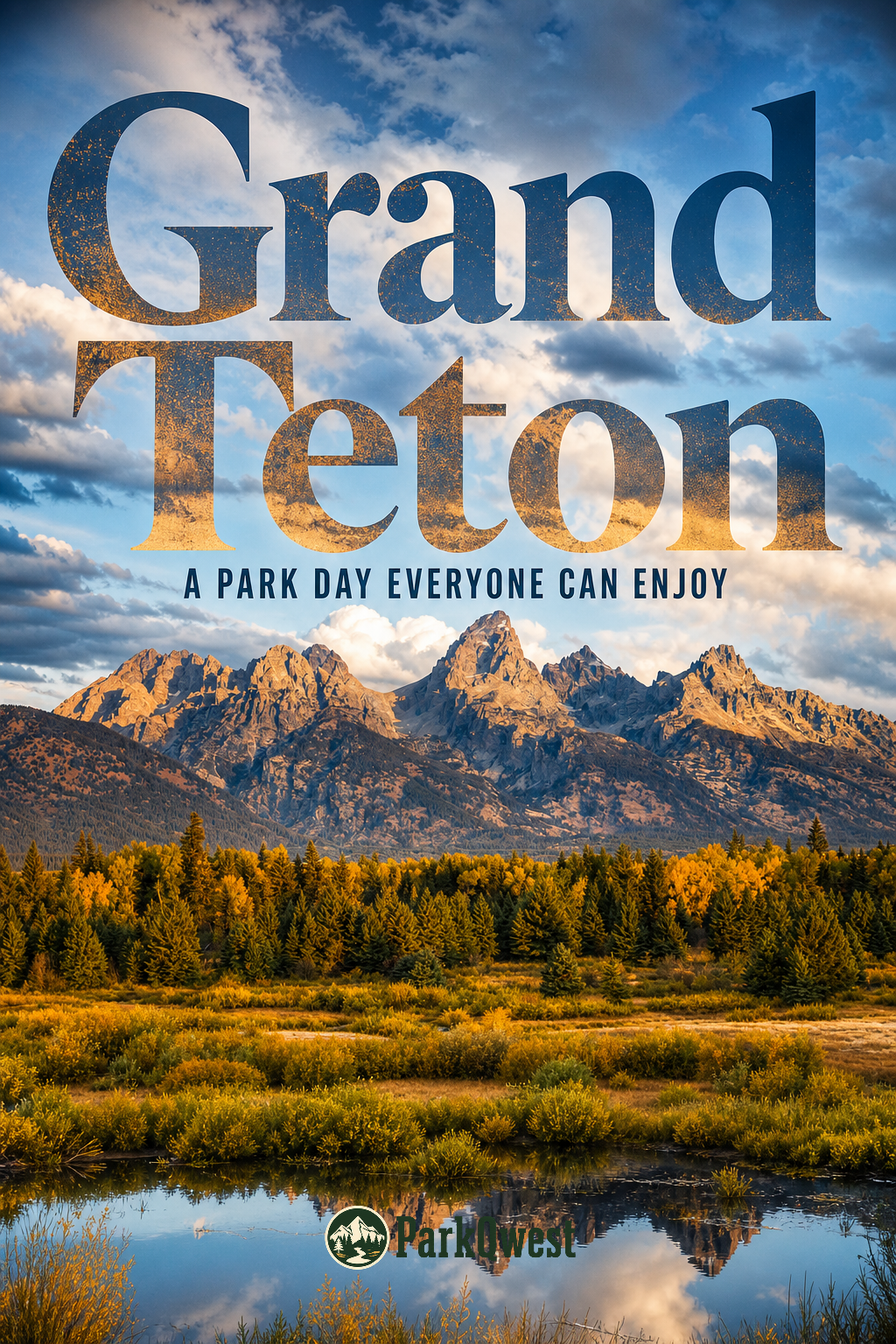
Grand Teton National Park works best for families when you plan in chapters, not in one long push. The park’s big views, lakes, wildlife habitat, and mountain weather can make a simple day feel full quickly—especially with children who need snacks, bathrooms, movement, and a chance to choose what happens next. Build your visit around short outings, a reliable indoor-or-car break, and one or two “this is why we came” moments rather than trying to cover every overlook or activity.
The setting is part of the lesson. Grand Teton National Park lies in northwestern Wyoming, north of Jackson and south of Yellowstone, in a valley known as Jackson Hole where people have lived and traveled for more than 11,000 years. For kids, that can turn a mountain-view stop into a conversation: Who has depended on this landscape? What do animals need here? Why do mountains and weather shape where people go?
Quick take
For a satisfying family day, choose one short walk or shoreline stop, one ranger- or visitor-center-based activity if available, one scenic drive segment, and one unhurried picnic or car break. Add more only if the group is still cheerful.
Plan for attention spans, not just daylight
The most useful family rhythm is active–rest–active. Start with the outing that matters most before hunger, crowds, or afternoon weather complicate it. Follow it with food and a reset, then decide whether the afternoon calls for another small adventure or simply a scenic drive with stops.
Use the “two-hour rule” for young explorers
For many families, two hours is a reasonable maximum between dependable stops—bathrooms, snacks, a place to sit, or an easy chance to turn around. That does not mean every activity must be short; it means a longer outing should have a clear turnaround plan before anyone is tired enough to argue about it.
- Preschoolers and early elementary ages: Aim for frequent pauses, simple sensory missions, and a short destination such as water, a view, rocks, or a picnic spot.
- Upper elementary kids: Give them a map role, a photo challenge, or responsibility for spotting changing weather and wildlife from a safe distance.
- Teens: Let them choose between a more active outing and a photography, sketching, or wildlife-observation stop. Choice creates buy-in.
- Mixed-age groups: Pick a base stop where faster walkers can go a little farther while another adult stays with children who are done.
A good family hike is one that ends while the group still likes hiking. Before setting out, confirm current trail conditions, closures, and the route’s practical length on the official NPS page or at a visitor center. Snow, mud, standing water, heat, and thunder can change what feels appropriate for children.
Make a visitor center your first family decision point
Visitor centers are more than a rainy-day backup. They can help children orient themselves to the Teton Range, understand the park’s wildlife and human history, use restrooms, refill water where available, and get a current answer about conditions. Because operating hours, exhibits, services, and programming change, check the official Grand Teton National Park website before relying on a specific location or activity.
If your children enjoy collecting badges, completing booklets, or working toward a small goal, ask whether a Junior Ranger activity or other youth-focused program is currently available. Do not build the whole day around it; instead, treat it as a useful anchor that can guide what your family notices outdoors.
Let kids lead without handing them the whole itinerary
Offer two parent-approved options rather than an open-ended question. “Do you want our next stop to be a lake view or a short forest walk?” works better than “What do you want to do?” and still gives children real ownership.
- Junior naturalist prompt: Ask each child to find three signs of weather, three different textures, or three colors that do not appear on the park map.
- Map captain: Let one child track where the family has traveled and choose the next picnic or viewpoint stop from options you provide.
- Photo editor: Give a phone or camera to an older child and ask for five images that tell the story of the day—without approaching wildlife.
- Sound minute: Stop together for sixty seconds. What is natural sound, what is human-made, and what has changed since the last stop?
Quick take
Give every child one job and one veto. A job might be map captain or snack checker; a veto means they can say “I need a break” before a minor meltdown becomes the day’s defining memory.
Weather is part of the packing list
Grand Teton weather asks families to pack for more than the forecast headline. Snow and frost are possible in any month. Spring brings mild days, cool nights, rain, and snow; summer commonly brings warm days, cool nights, and afternoon thundershowers; fall can shift between sunny days, cold nights, rain, and occasional snowstorms. Winter is long and cold, with snow covering both mountains and valley.
| Season pattern | Best family planning move |
|---|---|
| April–June | Carry warm layers and waterproof options; keep outdoor plans short enough to swap for a car-based scenic afternoon. |
| July–August | Start earlier, protect against sun, and make sure your afternoon plan has a fast exit if thunderstorms build. |
| September–November | Use layers, hats, and gloves; expect colder evenings and check conditions before committing to longer walks. |
| December–April | Treat winter travel as a conditions-first trip; confirm current road access, weather, and available services before leaving your lodging. |
Pack the boring things that save the day
- Footwear: Closed-toe shoes with traction, plus dry socks for children who find every puddle or shoreline.
- Layers: A warm layer and weather-resistant outer layer for each person, even when the morning begins bright and mild.
- Food buffer: More snacks and water than the drive-time estimate suggests, along with an easy picnic meal that does not require cooking.
- Car reset kit: Towels, a small blanket, spare clothes for younger children, motion-sickness supplies if needed, and a low-mess activity for weather delays.
- Sun and storm basics: Sun protection, hats, and a plan to head indoors or back to the vehicle if conditions turn unsafe.
Wildlife watching: make distance the activity
Wildlife viewing should feel like observation, not pursuit. Children often remember the waiting, the binoculars, and the quiet excitement as much as the animal itself. Set the expectation early: the family stays together, watches from a respectful distance, never feeds animals, and follows current park guidance if wildlife affects a route or stop.
A practical trick is to give wildlife viewing a time boundary. Try a ten- or fifteen-minute observation window, then move on unless everyone is engaged. That keeps a roadside stop from becoming a long stretch of boredom for siblings who are not interested.
A realistic Grand Teton family-day outline
- Morning: choose one priority outing. Begin with a short walk, shoreline stop, or viewpoint-oriented activity while everyone has energy. Keep the turnaround point clear.
- Late morning: reset at a visitor center or picnic stop. Use facilities, eat, look at exhibits if available, and ask staff about current weather, roads, wildlife conditions, and youth activities.
- Early afternoon: drive with a purpose. Pick a scenic segment and let children choose between two approved stops. This is a useful lower-energy window.
- Afternoon: make the weather call. If skies are stable and energy is good, add one compact outdoor activity. If rain, wind, or fatigue arrive, shift to exhibits, a snack break, journaling in the car, or an earlier return.
- Evening: end before the crash. Save enough time for dinner, dry clothes, and a simple recap: favorite view, funniest moment, one question to look up tomorrow.
The backup plan is not a failed plan. On a wet, cold, or low-energy day, a visitor-center stop, scenic driving, short view-focused walks, and a family photo challenge can still create a memorable park day. Before travel, check the official NPS page for current road information, weather alerts, closures, and facility details; conditions matter as much as the itinerary in Grand Teton National Park.
Before you go
- Review official alerts, closures, hours, and reservation requirements.
- Allow extra travel time and keep an alternate plan.
- Use official NPS information as the final authority.
Sources
- Grand Teton National Park — official National Park Service site — National Park Service, accessed 2026-09-14
Continue planning Grand Teton
Learn more about Grand Teton and find other helpful guides, trails, and trip information in the ParkQwest guide.
ParkQwest is a QwestLyfe Community.
QwestLyfe helps you track your lifelong bucket lists, collections, recipes, and the places you've been. Document your experiences, add notes and pictures, and share them with your friends — and the world.