
Grand Teton National Park: Packing Guide
Plan with current information. Conditions, roads, services, fees, and rules can change. Verify details with the National Park Service before your visit.
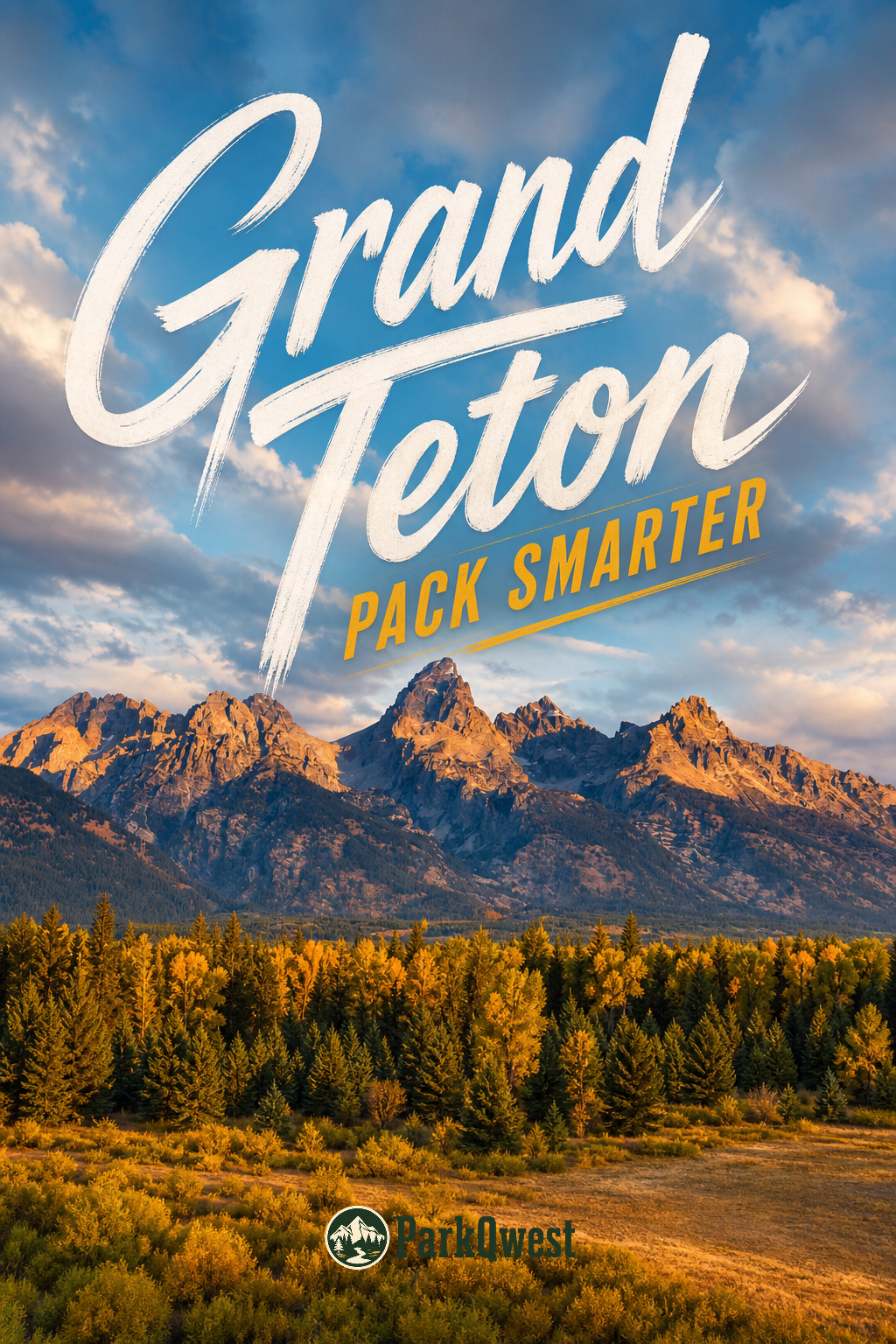
Grand Teton National Park rewards a pack built for fast-changing mountain weather, open valley exposure, and long days spent moving between lakes, overlooks, wildlife pullouts, and trailheads. This is not a “throw in a hoodie and sandals” park, even in summer. The Tetons rise sharply above Jackson Hole, and the practical effect is simple: a warm, sunny morning can turn windy, cold, wet, or stormy by afternoon. Pack for layers, protect food and people around wildlife, and keep a few useful items within reach instead of buried in the trunk.
Quick take
For most warm-season visits, the winning Grand Teton outfit is not one heavy jacket: it is a moisture-wicking shirt, insulating midlayer, waterproof shell, sun protection, and real hiking shoes. Snow and frost are possible in any month, and summer afternoons commonly bring thundershowers.
Clothing: Build a Layering System, Not a Single Outfit
The Teton weather pattern makes removable layers more useful than bulky “just in case” clothing. NPS notes that April through June can bring mild days, cool nights, rain, and snow; July and August are generally warm by day and cool at night, with common afternoon thunderstorms. In September through November, sunny days can still give way to cold nights, rain, and occasional snowstorms.
- Base layers: Bring quick-drying T-shirts or long-sleeve sun shirts rather than cotton tops. Cotton feels fine at a sunny lakeshore but stays damp after rain, sweat, or a cold wind.
- Warm layer: Pack a fleece, light synthetic jacket, or insulated vest even for a July or August trip. It earns its space during early wildlife viewing, sunset stops, shaded walks, and wet-weather delays.
- Rain shell: Choose a genuinely waterproof, wind-blocking jacket with a hood. A thin windbreaker is useful but is not a substitute when an afternoon shower arrives far from the car.
- Bottoms: Hiking pants, trail tights, or quick-dry shorts with a backup layer are more practical than jeans. Include long pants if you expect brushy walks, cool mornings, or variable spring and fall weather.
- Sun coverage: A brimmed hat, sunglasses, and a lightweight long sleeve do double duty in the high-elevation sun and on exposed valley viewpoints.
Pack for the season you are actually visiting
| When | Most useful additions | Why it matters here |
|---|---|---|
| April–June | Warm hat, gloves, waterproof footwear, extra insulation | Mild days can alternate with rain, snow, and cool nights. |
| July–August | Rain shell, sun layer, dry socks, light warmth | Warm days do not eliminate cool nights or afternoon thunderstorms. |
| September–March | Insulated coat, warm boots, hat, gloves, spare dry layers | Cold nights, snowstorms, and long winter conditions require a more serious kit. |
Footwear: Choose Traction and Dry Socks Over Style
Grand Teton is a park where footwear affects how much of the day feels enjoyable. Uneven paths, wet ground, changing weather, and the possibility of lingering snow in cooler periods make supportive shoes more useful than casual sneakers. You do not need stiff mountaineering boots for every visit, but you do want a sole that grips and an upper that can handle damp grass, mud, or a passing shower.
- For scenic stops and short walks: Supportive walking shoes or trail runners with tread are usually enough in dry conditions.
- For longer hikes or shoulder season: Waterproof hiking shoes or boots offer better protection from wet ground and cold conditions.
- For everyone: Pack two pairs of moisture-wicking socks. Changing into dry socks after a wet walk can make an evening drive or dinner stop far more comfortable.
- For cold-weather travel: Use insulated, waterproof boots sized to accommodate warm socks. Check current NPS conditions before deciding whether traction devices are appropriate for your plans.
Daypack Essentials for a Big-View, Big-Exposure Park
A compact daypack is the difference between being prepared and repeatedly returning to the vehicle for basics. The park’s alpine vistas and wide-open valley can mean bright sun, sudden wind, and weather that looks different a few miles away. Keep these items together in a pack that stays with you on walks, not in a suitcase.
- Water: Carry more than a casual sightseeing bottle, especially on warm days or longer walks. Bring a refill plan and confirm current water availability on the official NPS page rather than assuming every stop has potable water.
- Navigation: Download offline maps before entering areas with weak service, and carry a paper map if your itinerary includes longer drives or hikes. A phone is helpful, but battery and signal are not a wilderness plan.
- Weather protection: Keep your shell, warm layer, hat, sunscreen, and sunglasses accessible—not packed beneath lunch.
- First-aid basics: Include blister care, bandages, personal medication, insect repellent, and any allergy supplies your group needs.
- Light and power: A small headlamp and charged power bank are useful when a day runs later than expected. They weigh little and are more reliable than relying on a phone flashlight.
Quick take
Keep a “weather pivot” pouch near the top of the daypack: rain shell, warm hat, gloves in cooler months, sunscreen, and a dry pair of socks. It is the small kit most likely to save a day when conditions change between the valley and the mountains.
Weather Exposure: Plan for Sun, Wind, Thunder, and Cold Nights
Do not let a sunny forecast convince you to pack only for heat. Grand Teton National Park has long, cold winters, and the NPS specifically notes that snow and frost can occur during any month. In summer, start earlier when possible, watch the sky, and treat afternoon thunder as a reason to have a conservative turnaround plan rather than an inconvenience to outwait in exposed terrain.
A reusable sun umbrella can be handy at roadside stops, but it is not a substitute for a rain shell in wind. Bring lip balm with SPF, sunscreen, and a brimmed hat because reflective water, pale ground, and open viewpoints can make sun exposure feel stronger than expected. For overnight or early-morning outings, add a warm beanie and gloves even when daytime temperatures look comfortable.
Food, Water, and Wildlife-Smart Storage
Pack food that can spend a few hours in a daypack or cooler without becoming a mess. Grand Teton’s wildlife-rich landscape is a reason to be deliberate: snacks should stay contained, scented trash should not be left out, and children should not be handed loose food while moving through busy wildlife-viewing areas. Follow current park rules for food storage, bear spray, and wildlife safety on the official NPS website.
- Easy day food: Sandwiches, fruit, nuts, trail mix, cheese, wraps, and shelf-stable snacks are practical for a driving-and-walking day.
- Cooler strategy: Use a hard-sided cooler or well-insulated soft cooler for perishable food, then keep it secured and managed according to current park guidance.
- Waste kit: Carry zip bags for wrappers, wet clothing, and messy kid snacks. A clean car and sealed trash are especially useful on a multi-stop day.
Safety Items Worth Carrying
Wildlife awareness is part of the packing list at Grand Teton, not an optional add-on. Carry bear spray only if you know how to use it, keep it accessible rather than buried, and review current NPS guidance before arrival. Never depend on a camera zoom or a car door as a reason to crowd wildlife; give animals space and change your plan if they are using the area you hoped to enter.
Also pack a whistle, basic emergency blanket, rain protection, and enough medication for an unplanned delay. Before setting out, check current conditions and road information through the official Grand Teton National Park NPS page. Road, weather, trail, and service conditions are changeable; your packing list should reflect the current report, not last year’s social posts.
Photography and Family Extras That Earn Their Space
The best extras solve practical problems: glare, cold hands, impatient kids, and long pauses while viewing a landscape. Bring a lens cloth, spare battery or power bank, and a small dry bag for cameras or phones during wet weather. A compact pair of binoculars can be more useful than a longer camera lens for observing distant scenery and wildlife responsibly.
- For photographers: Pack a lightweight tripod only if you will use it; otherwise, it becomes a cumbersome item during walks. A rain cover or simple dry bag matters more than extra gear in a thundershower.
- For families: Add kid-sized rain layers, warm backups, familiar snacks, wipes, and a simple activity for long drives. Children cool down faster when they are sitting still, so their insulating layer should be easy to reach.
- For the car: Keep a blanket, spare water, towels, and a change of clothes in a separate vehicle tote. This preserves daypack space while covering muddy shoes, wet dogs where permitted, and chilly roadside stops.
What to Leave Behind
Leave behind gear that creates clutter, false confidence, or wildlife problems. Skip cotton-heavy outfits, flimsy fashion footwear, oversized coolers you cannot manage, and unnecessary single-use packaging. Avoid bringing drones or assuming any activity is allowed because it is common elsewhere; confirm current park regulations before packing specialized equipment.
Do not rely on feeding wildlife, carrying food loosely, or approaching animals for a better photo. Grand Teton’s appeal is its intact landscape and active wildlife; your gear should help you observe it responsibly, not interfere with it.
Grand Teton Final Packing Checklist
- Wear: Quick-dry top, hiking pants or shorts, supportive shoes, sun hat.
- Pack for weather: Waterproof shell, insulating layer, sunscreen, sunglasses, dry socks, warm hat and gloves when conditions call for them.
- Carry daily: Water, snacks, map or offline navigation, first-aid basics, power bank, headlamp, and trash bags.
- Prepare for wildlife: Review current NPS guidance, store food properly, and carry bear spray only if appropriate and understood.
- Check before departure: Current weather, road information, conditions, and regulations on the official NPS page.
The most useful Grand Teton packing strategy is simple: dress for the morning you expect, carry layers for the afternoon you may get, and keep safety and weather essentials close enough to use without digging.
Before you go
- Review official alerts, closures, hours, and reservation requirements.
- Allow extra travel time and keep an alternate plan.
- Use official NPS information as the final authority.
Sources
- Grand Teton National Park — official National Park Service site — National Park Service, accessed 2026-09-09
Continue planning Grand Teton
Learn more about Grand Teton and find other helpful guides, trails, and trip information in the ParkQwest guide.
ParkQwest is a QwestLyfe Community.
QwestLyfe helps you track your lifelong bucket lists, collections, recipes, and the places you've been. Document your experiences, add notes and pictures, and share them with your friends — and the world.