
Grand Canyon National Park: Packing Guide
Plan with current information. Conditions, roads, services, fees, and rules can change. Verify details with the National Park Service before your visit.
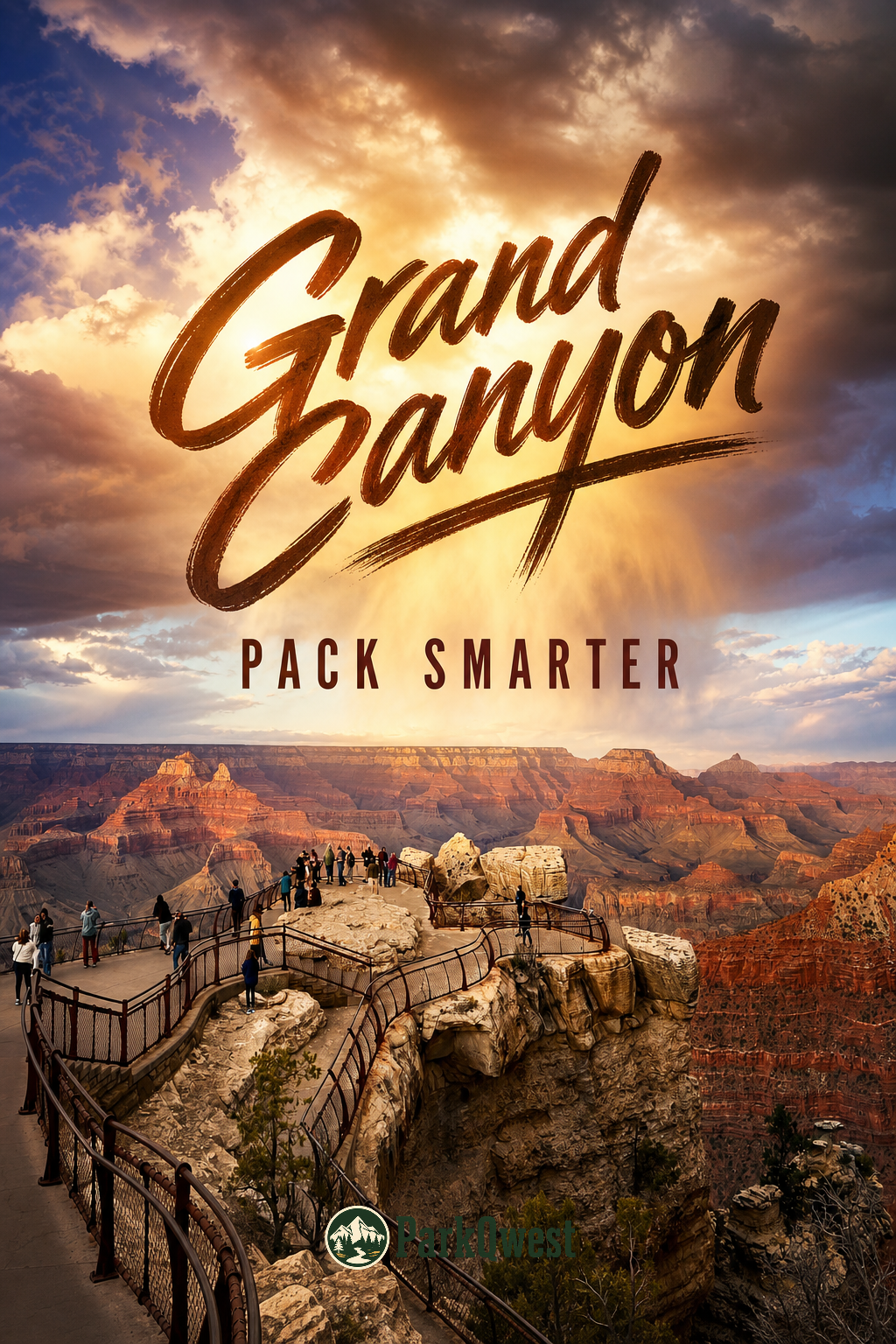
Grand Canyon National Park rewards a packing list built around elevation, exposure, and the difference between rim time and canyon time. The park spans 278 miles of the Colorado River and rises from roughly 2,500 feet near the bottom to 8,400 feet on the North Rim, so “Arizona weather” is not a useful enough plan. A comfortable South Rim viewpoint day, a cold North Rim morning, and a hot walk below the rim can require very different gear. Pack for the part of the park you will actually use, then add enough margin for sun, wind, changing weather, and the fact that a short-looking outing can become a long one once you are carrying water back uphill.
Start With a Layering System, Not a Single Forecast
The rim can feel much cooler than the desert landscapes people picture when they think of Arizona. Winter conditions can be cold and snowy, while summer brings periods of excessive heat. Temperatures inside the canyon commonly run 20 to 30 degrees warmer than on the rims, which is why a sweatshirt-only strategy often fails: it can be too warm below the rim and too little protection after the sun drops or wind picks up at an overlook.
- Base layer: Bring a breathable T-shirt or sun shirt for warm, active hours. Quick-drying fabric is especially useful if you expect sweat, summer heat, or an outing that descends below the rim.
- Warm layer: A light fleece, insulated vest, or packable midlayer makes rim mornings and evenings far more comfortable. This matters in shoulder seasons and on the North Rim, where elevation can make conditions notably cooler.
- Wind and rain shell: Pack a lightweight waterproof or water-resistant shell even when the day begins clear. Grand Canyon weather can change rapidly, and wind at exposed viewpoints can make a mild temperature feel much colder.
- Bottoms: Choose walking shorts, hiking pants, or leggings that let you step over uneven ground comfortably. If you plan to go below the rim, pants or longer shorts can reduce sun exposure and abrasion better than delicate casual clothing.
Quick take
Pack for two environments: a cooler, windy rim and a substantially hotter canyon interior. A breathable sun layer plus one warm layer and a shell is more useful than bringing one heavy jacket or relying on a single temperature reading.
Footwear: Choose for Your Actual Walking Plan
You do not need heavy mountaineering boots for every Grand Canyon visit, but you do need shoes that can handle more than a hotel parking lot. Paved overlooks and shuttle-style sightseeing may be comfortable in supportive sneakers. Longer walks, unpaved surfaces, or any route that goes below the rim call for more traction, a secure heel, and shoes already broken in.
- Rim-viewing day: Supportive walking shoes or trail runners are usually the practical choice. They are lighter than boots and more comfortable if your day includes repeated stops, pavement, and short walks.
- Longer hikes: Wear trail shoes or hiking boots with dependable tread. Downhill travel can stress toes and knees, while the return climbs require stability when legs are tired.
- Warm-weather protection: Bring moisture-wicking socks and one backup pair in the daypack or car. Dry socks can prevent a small hot spot from becoming the reason a planned walk ends early.
- Cold or wet conditions: Use insulated or waterproof footwear only when conditions warrant it; waterproof shoes can feel overly warm during hot-weather walking. In snow or icy conditions, confirm current NPS guidance before choosing traction devices.
Build a Daypack That Works Beyond the Viewpoint
A small, organized daypack is the most useful piece of Grand Canyon gear after footwear. Even visitors who are not planning a major hike may spend hours exposed to sun and wind, away from their vehicle, moving between overlooks, museums, trail access points, and services. Use a pack large enough for water, layers, sun protection, food, and a basic safety kit without forcing items into jacket pockets.
The non-negotiable core
- Water capacity: Carry more than a single disposable bottle, especially in warm months or if descending below the rim. Heat inside the canyon can be dramatically greater than at the rim, and the uphill return is where dehydration catches up with people.
- Sun protection: Add a wide-brimmed hat or cap, sunglasses, sunscreen, and lip balm with sun protection. Canyon viewpoints and trails offer long stretches of direct exposure with little shade.
- Navigation backup: Download maps before entering areas with uncertain service, and carry a paper map if you are taking a longer walk. Do not depend on a phone as the only route plan or emergency tool.
- First-aid basics: Pack blister care, bandages, personal medication, electrolyte mix if you use it, and any supplies needed for allergies or chronic conditions.
- Power and light: A charged power bank and a small headlamp are smart insurance when a day runs longer than expected. A phone flashlight is a backup, not the preferred primary light source.
Plan Food and Water for the Uphill Half
The Grand Canyon’s most important packing calculation is not how far you can walk downhill; it is what you can safely carry and manage on the climb back out. Food should be compact, heat-tolerant, and easy to eat during short pauses. Think salty snacks, nuts, energy bars, dried fruit, sandwiches packed in an insulated pouch, or other foods you already know sit well during exertion.
Avoid treating energy drinks, soda, or alcohol as hydration. Bring plain water first, then add electrolytes if they suit your needs and the conditions. Before relying on water sources, food sales, or refill stations, verify current availability on the official Grand Canyon National Park page; operations and seasonal services can change.
Quick take
If your plan involves going below the rim, pack and pace for the return climb—not the easy descent. Turn around while water, energy, and daylight are still comfortably in your favor.
Weather Exposure by Season and Location
Check the forecast for the specific rim or canyon area you will visit, not merely the nearest Arizona city. Elevation changes conditions quickly across Grand Canyon National Park. The South Rim is open year-round, while North Rim access is more limited and subject to changing conditions; review the official NPS news and alerts before building a North Rim packing plan.
| Condition | Pack around it | Why it matters here |
|---|---|---|
| Summer heat | Extra water, sun shirt, hat, electrolytes, cooling breaks | The canyon interior can be 20–30°F warmer than the rims. |
| Cold, snow, or wind | Insulating layer, shell, gloves, warm hat, dry socks | Rim elevations are high enough for genuine winter conditions. |
| Rapid changes | Packable shell, downloaded maps, charged phone | Conditions vary by elevation and can shift during the day. |
Safety Items That Earn Their Space
Grand Canyon packing should emphasize prevention over rescue gear. Start early when heat is a concern, tell someone your plan, keep children within close reach near overlooks, and give every person enough water rather than putting all supplies in one pack. The park’s enormous scale can make familiar-looking paths feel deceptively remote.
- Emergency information: Keep a written emergency contact, medical details, and vehicle information in your pack or wallet in case a phone is lost or uncharged.
- Whistle and headlamp: These weigh little and are more practical than assuming you will always return before dark.
- Weather-aware clothing: A shell and insulating layer are safety items when wind, rain, or cold arrive, not just comfort accessories.
- Respect for edges: Skip loose footwear, distractions, and any photo setup that requires stepping beyond designated barriers or stable ground.
Photography and Family Extras Worth Carrying
The best camera kit is the one you can carry safely while keeping water and layers accessible. A phone, compact camera, or one camera body with a versatile lens is often enough for a rim day. Bring a microfiber cloth for dust, a spare battery or power bank, and a secure strap; strong light, wind, and wide views are more common than controlled shooting conditions.
For families, add child-size sun hats, snacks that can be handed out quickly, an extra water bottle for each child, wipes, and a simple warm layer. Binoculars can be more rewarding than oversized camera equipment because the canyon’s scale invites looking across long distances. If bringing a stroller or mobility gear, verify current route and facility details on the official NPS page rather than assuming every viewpoint approach is the same.
What to Leave Behind
- Brand-new hiking shoes: The canyon is the wrong place to discover heel rub, toe pressure, or unstable tread.
- Heavy, single-purpose camera kits: They can crowd out water, food, and layers—the items that matter more when conditions shift.
- Glass containers and excess disposable packaging: They add weight, break easily, and create more trash to manage.
- Overly casual sandals for substantial walking: They leave feet exposed and offer poor stability on uneven terrain.
- Assumptions about seasonal access: North Rim access and services can change; confirm the latest park status before departure.
Grand Canyon National Park Packing Checklist
- Wear: Broken-in walking or trail shoes, breathable top, sun hat, and weather-appropriate pants or shorts.
- Carry: Ample water, snacks, sunscreen, sunglasses, lip balm, map backup, phone, power bank, headlamp, and basic first aid.
- Layer: Warm midlayer plus a wind/rain shell, even if the day starts sunny at the rim.
- For canyon travel: Add extra water capacity, electrolyte option, salty food, blister care, and a conservative turnaround plan.
- Before leaving: Check the official NPS forecast, alerts, current access information, and any service updates for the specific area of Grand Canyon National Park you plan to visit.
Before you go
- Review official alerts, closures, hours, and reservation requirements.
- Allow extra travel time and keep an alternate plan.
- Use official NPS information as the final authority.
Sources
- Grand Canyon National Park — official National Park Service site — National Park Service, accessed 2026-09-07
Continue planning Grand Canyon
Learn more about Grand Canyon and find other helpful guides, trails, and trip information in the ParkQwest guide.
ParkQwest is a QwestLyfe Community.
QwestLyfe helps you track your lifelong bucket lists, collections, recipes, and the places you've been. Document your experiences, add notes and pictures, and share them with your friends — and the world.