Grand Canyon National Park: Family Adventure Guide
Plan with current information. Conditions, roads, services, fees, and rules can change. Verify details with the National Park Service before your visit.
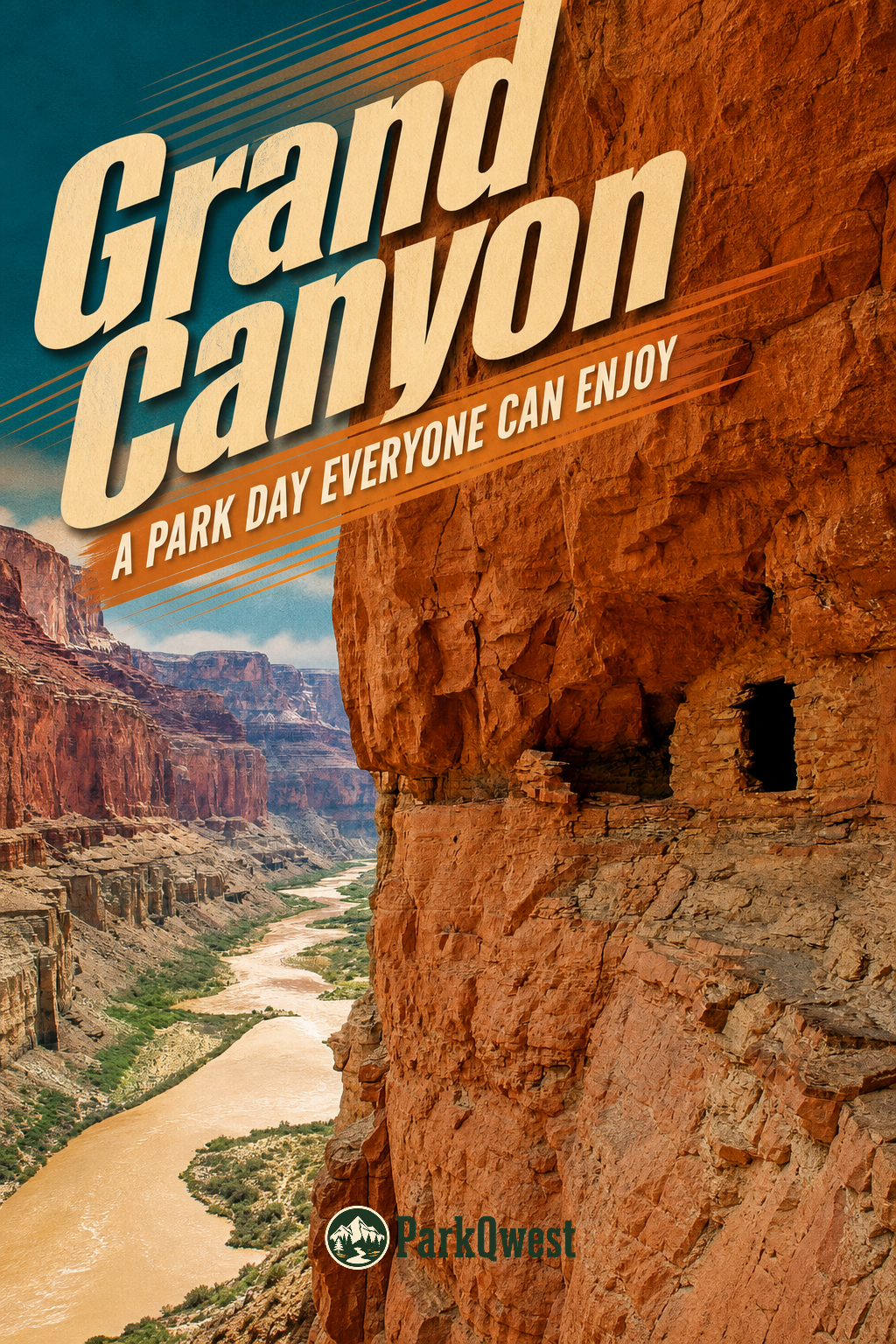
Grand Canyon National Park works best with kids when the day is built around short wins, not a marathon of viewpoints. The canyon is enormous—its park lands include 278 miles of the Colorado River and adjacent uplands—and the scale can be hard for younger children to process at first. Give them a few repeatable jobs, plan regular indoor or shaded pauses, and choose one or two meaningful canyon experiences rather than trying to “cover” the park. That approach leaves room for the questions, snacks, sketches, and sudden weather changes that tend to define a good family park day.
The park is entirely in Arizona and sits on the ancestral homelands of 11 present-day Tribal Communities. Before looking over the rim, take a minute to frame the visit as more than a photo stop: this is a living landscape shaped by the Colorado River, deep time, human history, and ongoing cultural connections.
Choose the rim that fits your family’s actual day
For most first-time family trips, the South Rim is the practical starting point. It is open year-round and is reached from the Williams area via Route 64 from Interstate 40 or from Flagstaff via Route 180. That does not make it automatically easy: a long drive followed by a full agenda can wear out children before the canyon becomes the fun part.
The North Rim is a different planning proposition. The NPS notes that select areas are open to public access between October 1 and November 14, with conditions and access details subject to current news releases. Its entrance station is 30 miles south of Jacob Lake on Highway 67, and the rim is another 14 miles beyond that, so families should treat it as a destination day rather than a quick detour.
| Planning choice | Best fit | Family tradeoff |
|---|---|---|
| South Rim | Year-round trips, first visits, shorter stays | More pressure to fit in too much; arrive with a simple plan |
| North Rim | Families already near the access route and comfortable with a more seasonal plan | Long approach and variable public access require current checks |
| Rim-only day | Toddlers, grandparents, hot afternoons, low-energy travelers | Less “adventure” by mileage, more capacity to notice the place |
Quick take
A family does not need to hike into the canyon to have a full Grand Canyon day. A viewpoint walk, a ranger or visitor-center stop if available, a picnic break, and one child-led activity can be more memorable—and more manageable—than an overambitious itinerary.
Build the day in short adventure blocks
Think in 45- to 90-minute blocks, with a reset between them. Children usually do better when the rhythm alternates between looking, moving, eating, and choosing. Adults get a better day, too: the canyon’s visual scale is intense, and pauses make it easier to enjoy rather than simply process it.
A realistic family-day outline
- Arrival and orientation: Start with restrooms, water, a snack check, and a look at the day’s conditions. If a visitor center is open, use it early for maps, safety information, exhibits, and current guidance rather than saving it for the rushed end of the day.
- First rim experience: Choose one accessible-looking overlook or short rim walk based on current NPS information. Let everyone have a turn at binoculars, a camera, or the family map before moving on.
- Movement break: Pick a short, clearly understood walk rather than beginning a downhill route just because the canyon is in front of you. For young children, “walk until the next interesting thing, then turn around” is often a better rule than chasing a mileage goal.
- Lunch and quiet reset: Eat before hunger becomes a problem. Use the break for sunscreen, layers, restroom stops, and a no-pressure activity such as drawing the canyon layers or listening for wind and birds.
- One afternoon choice: Let the children vote between another viewpoint, a visitor-center return, a short walk, or a calm seated activity. A family that stops while everyone is still doing well is more likely to remember the day happily.
- Exit before the unraveling: Leave enough time for the drive, a final restroom stop, and the possibility that weather or traffic changes the plan.
Give children jobs that are useful, not busywork
Kids engage more deeply when they have a real role in the trip. The best assignments are simple enough to repeat and flexible across ages.
- Weather watcher: Compare what the sky is doing with the forecast and remind the group when layers, hats, or rain gear are needed.
- Map keeper: Follow the route between stops and help decide which planned activity comes next.
- Canyon detective: Look for changes in rock color, shadow, plant life, or the apparent size of the Colorado River far below.
- Safety scout: Help identify the safe stopping place before anyone leans in for a photo. This is especially useful near drop-offs, where adults should keep close, direct supervision.
- Junior Ranger question-asker: Ask at a visitor center whether a Junior Ranger activity, booklet, ranger program, or family learning option is currently available. Program schedules and offerings can change, so treat this as a bonus rather than the only purpose of the stop.
Plan for energy, elevation, and the “we’re done” moment
The rim may feel mild while conditions elsewhere in the park are radically different. Elevations range from about 2,500 feet at the canyon bottom to 8,400 feet on the North Rim. The NPS advises that temperatures inside the canyon can run 20 to 30 degrees warmer than on the rims, while winters can be cold and snowy and summer periods can bring excessive heat.
This matters most when a family considers going downhill. Descending can feel easy at first, but the return is uphill, often warmer, and comes when children are already tired. A short descent may be appropriate for some groups under favorable conditions, but it should never be treated as a casual extension of a rim stroll. Check current trail, heat, water, weather, and safety information on the official NPS page before committing.
Quick take
The most important family safety decision is often the turnaround decision. If a child is hot, unusually quiet, irritable, thirsty, or losing coordination, the plan has already changed: pause, cool down, eat and drink, and choose the shortest sensible route back to a comfortable setting.
Pack for the rim, even on a short visit
- Water and salty snacks: Bring more than the car-ride amount, especially in warm weather. Offer drinks before children ask for them.
- Sun and wind layers: A hat, sunscreen, and an extra layer cover the common mismatch between sunny overlooks and cooler, windier conditions.
- Sturdy footwear: Closed-toe shoes with dependable traction are more useful than fashion footwear when paths are uneven or children want to explore.
- A small comfort kit: Include tissues, wipes, basic first-aid supplies, and a familiar snack for the child who suddenly refuses the planned lunch.
- An analog activity: A pencil and small notebook, scavenger-style observation list, or binoculars can turn a waiting period into part of the visit.
Use visitor centers and indoor pauses strategically
Visitor centers are not merely an information stop; they can reset the entire family. They may offer exhibits, maps, restrooms, park staff, and a calmer environment when wind, cold, heat, or overstimulation is building. Because services, hours, and programs vary, check the official Grand Canyon National Park website shortly before departure rather than relying on an old itinerary or social post.
On a rainy, smoky, windy, or low-energy day, narrow the goal. Spend time with interpretive displays if open, ask a ranger or park staff member for the best current family-friendly option, eat a slow snack, and choose one safe rim view when conditions allow. A weather-shortened visit still counts; the useful lesson for children is that national parks are real places with changing conditions, not attractions that perform on schedule.
Make the final viewpoint feel like a family memory
Before leaving, give each person one quiet minute to choose what they noticed. Younger children might name a color or shape; older kids may wonder how water carved something so vast, why the far wall looks close but is not, or how different the canyon would feel in another season. That small ritual keeps the day from ending as a blur of parking, snacks, and photographs.
Grand Canyon National Park rewards families who trade a checklist for a pace. See the canyon safely, learn one true thing about the landscape and its people, leave room for rest, and save the longer hike or second rim for another trip if that is what the day requires.
Before you go
- Review official alerts, closures, hours, and reservation requirements.
- Allow extra travel time and keep an alternate plan.
- Use official NPS information as the final authority.
Sources
- Grand Canyon National Park — official National Park Service site — National Park Service, accessed 2026-09-04
Continue planning Grand Canyon
Learn more about Grand Canyon and find other helpful guides, trails, and trip information in the ParkQwest guide.
ParkQwest is a QwestLyfe Community.
QwestLyfe helps you track your lifelong bucket lists, collections, recipes, and the places you've been. Document your experiences, add notes and pictures, and share them with your friends — and the world.