
Acadia National Park: Packing Guide
Plan with current information. Conditions, roads, services, fees, and rules can change. Verify details with the National Park Service before your visit.
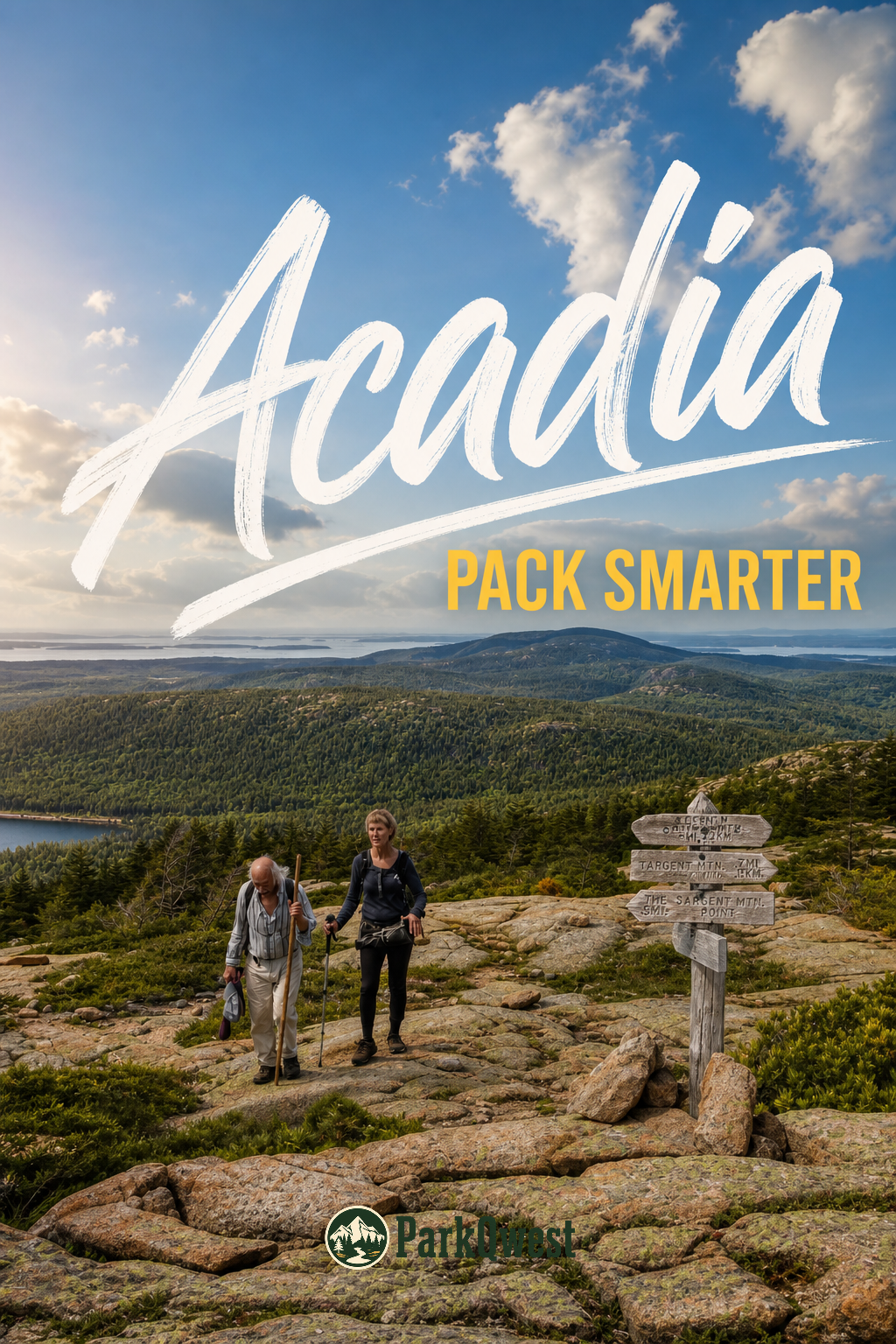
Acadia National Park packing is less about bringing more and more about covering fast changes well. Mount Desert Island can move from cool, damp shoreline air to warm sun and back again in a single day, while the park’s rocky headlands, historic motor roads, hiking trails, and carriage roads invite very different kinds of outings. Build your kit around layers, traction, weather protection, and a daypack that can handle a long day away from your car—not around a single forecast or a generic “national park” checklist.
Quick take
For Acadia, prioritize a waterproof outer layer, non-slip footwear, warm layers you can add or remove, and enough water and food for an unplanned extension of your day. The Atlantic coastline makes wind and dampness feel more consequential than the thermometer alone suggests.
Build Your Acadia Clothing System Around Layers
Acadia has four genuine seasons, with summer temperatures ranging from about 45–90°F and spring and fall often landing between 30–70°F. That range is exactly why a single heavy jacket or a pile of cotton shirts is less useful than a compact layer system. You want to be comfortable at a chilly early overlook, a warmer midday walk, and a breezy coastal stop without returning to your lodging to change.
What to wear on a typical three-season day
- Moisture-managing base layer: Choose a synthetic or wool T-shirt, long-sleeve top, or lightweight sun shirt. Cotton can be pleasant in dry summer heat, but it stays damp after sweat, drizzle, or foggy coastal air.
- Warm midlayer: A fleece, light wool sweater, or insulated jacket belongs in the daypack for most spring, fall, and cooler summer days. It earns its space when the sun drops, wind picks up, or you linger on exposed rock.
- Waterproof shell with a hood: Bring a real rain shell rather than treating a poncho as your only rain plan. A fitted hood and wind-blocking fabric are especially useful along Acadia’s open Atlantic headlands.
- Comfortable hiking pants or durable shorts: Pick the option that works with your season and route. Quick-drying fabric is more practical than denim for wet rock, rain, and long driving days.
- Hat and sunglasses: Pack both. A brimmed cap helps in bright conditions; a warm beanie is small enough to carry whenever temperatures may dip.
Bring one warmer layer than you think you need in shoulder season. The NPS notes that the first frost typically arrives in mid-October, while snowfall can begin in November and continue through April. A sunny forecast does not remove the need for insulation when your plans include early starts, late returns, or time near the water.
Winter is a separate packing category
Winter temperatures at Acadia generally range from 14–35°F, and the park averages about 73 inches of snow. If you are visiting during snow-and-ice conditions, upgrade from “cool-weather hiking gear” to a true winter setup: insulated waterproof boots, warm socks, gloves or mittens, a hat, waterproof outer layers, and traction appropriate for icy surfaces. Check current conditions and which areas are accessible on the official NPS page before deciding what specialized equipment to bring.
| Season | Likely packing priority | Useful adjustment |
|---|---|---|
| Summer | Sun protection plus rain and wind layers | Keep a fleece in the car or pack for cool mornings and evenings. |
| Spring/Fall | Layering, waterproofing, warm accessories | Pack gloves and a beanie even if daytime highs look mild. |
| Winter | Insulation, waterproof boots, traction readiness | Verify current road, trail, and facility conditions before leaving home. |
Footwear: Pack for Rock, Gravel, and Changing Surfaces
One dependable pair of broken-in hiking shoes is the best default for Acadia. With 158 miles of hiking trails, 45 miles of carriage roads, and rocky coastal terrain, shoes need grip more than they need to look rugged in photos. A low hiking shoe or trail runner with a firm, textured outsole works well for many visitors; choose waterproof hiking boots if you expect cold, wet, or shoulder-season conditions.
- For hiking-focused days: Wear shoes with stable soles and secure heel fit. Test them before the trip; Acadia is not the place to discover that a new boot rubs on descents.
- For carriage-road walks or cycling: Comfortable walking shoes may be enough in dry conditions, but still bring something with traction if you may switch plans to a trail.
- For wet weather: Pack extra socks in a zippered bag. Dry socks can change the rest of a long day more than an extra shirt can.
- For camp, town, or lodging: A lightweight casual shoe gives your feet a break, but do not make flimsy sandals your only outdoor footwear.
Avoid relying on smooth-soled fashion sneakers, flip-flops, or brand-new boots. Wet stone, loose material, and uneven terrain make “good enough” footwear a poor tradeoff when a better pair is already in your closet.
Set Up a Daypack That Works Beyond the Parking Area
Acadia’s 27 miles of historic motor roads make it easy to create a day with several short stops, but that convenience can lead people to leave essentials in the car. Pack for the possibility that one short walk turns into a longer outing, weather rolls in, or you decide to spend more time away from your vehicle.
- Navigation backup: Carry a paper park map or downloaded map in addition to your phone. Save battery by downloading information before entering areas with unreliable service.
- Rain and warmth: Stow a shell and insulating layer even when they begin the day in the car.
- Sun and bug protection: Bring sunscreen, lip balm with SPF, sunglasses, and insect repellent when conditions call for it. Coastal clouds do not eliminate UV exposure.
- Small first-aid kit: Include blister care, bandages, personal medications, and any items your group uses regularly.
- Headlamp: A compact headlamp is more useful than a phone flashlight if a hike, drive, or photo stop runs later than planned.
- Dry storage: A zip bag or dry pouch protects phone, paper map, medications, and spare socks from rain.
Quick take
Use a 15–25 liter daypack for most Acadia days. It is large enough for layers, water, food, and rain gear, but not so large that it becomes awkward on rocky trails or crowded viewpoints.
Plan Food and Water for a Busy, Popular Park Day
With roughly 4 million annual visits, Acadia is one of the country’s 10 most-visited national parks. Packing food and water gives you more control over timing when parking, traffic, or popular stops affect your schedule. It also makes a long stretch of scenic driving or a spur-of-the-moment trail feel easier to enjoy.
Carry more water than you expect to drink during the drive. A reusable bottle per person is the starting point; add capacity for longer hikes, warm weather, children, or anyone who drinks heavily while active. Before relying on a refill point, verify current locations and availability through official park information.
- Pack durable snacks: Nuts, fruit, bars, sandwiches, crackers, and salty snacks handle a daypack well.
- Bring a simple lunch: A picnic-style meal saves time and prevents the late-afternoon “we should have eaten earlier” slump.
- Use a cooler strategically: Keep perishable food in your vehicle for the drive, then carry only what you need for the day’s outing.
- Protect food from weather: Rain-proof containers and resealable bags prevent soggy lunches and scattered crumbs.
Weather Exposure and Safety Details Worth Packing For
Acadia’s exposure is the reason a small preparedness kit matters. The park protects the highest rocky headlands along the Atlantic coastline of the United States, so wind, rain, slick surfaces, and cooler air can shape a day quickly. Check the official NPS weather forecast and current alerts close to departure; those are changing conditions, while layers and traction are the durable solution.
- Wind protection: A hooded shell, neck gaiter, and sunglasses are compact tools for exposed coastal stops.
- Rain readiness: Pack a waterproof shell and cover electronics. An umbrella is awkward on windy, open terrain and should not replace a rain jacket.
- Emergency basics: Bring a whistle, headlamp, first aid supplies, food, water, and a charged power bank.
- Route awareness: Tell someone your plan, keep your group together, and turn around rather than forcing progress on slippery or uncomfortable terrain.
Photography and Family Extras That Earn Their Space
Acadia rewards a little organization here because weather and light can change quickly. Keep camera gear simple and protected rather than carrying every lens you own. A weather-resistant pouch, microfiber cloth, spare battery, and power bank are often more useful than extra equipment left exposed to damp air.
- For photographers: Bring a secure strap, lens cloth, rain cover or dry bag, and a compact tripod only if you know you will use it responsibly and safely. Keep gear close on uneven ground.
- For families: Add child-sized layers, familiar snacks, a spare clothing set, wipes, and a small sit pad. Children cool down faster when they stop moving at overlooks or during snack breaks.
- For cyclists: If your plans include the park’s carriage roads, bring a properly fitted helmet, repair supplies, water, weather layers, and lights if there is any chance of low-light riding. Verify current bicycle guidance on the NPS site.
What to Leave Behind
Editing your packing list keeps Acadia days more comfortable. Leave bulky “just in case” items that duplicate each other, but do not cut the small essentials that manage cold, wetness, hunger, or footing.
- Heavy cotton sweatshirts: They take up space, dry slowly, and are less versatile than a fleece plus shell.
- Large hard-sided coolers on hikes: Keep them in the vehicle; use a compact lunch bag or daypack for the trail.
- Disposable water bottles by the handful: Reusables are easier to carry, refill, and track.
- Overly technical gear for easy plans: You do not need mountaineering equipment for every visit, but you do need footwear and layers appropriate to your actual route and conditions.
- Unverified specialized equipment: Before packing winter traction, bicycles, or other activity-specific gear, check current NPS guidance for the areas you intend to use.
Acadia National Park Final Packing Checklist
- Wear: moisture-wicking top, hiking pants or shorts, broken-in grippy shoes, hat, sunglasses.
- Carry: waterproof hooded shell, warm midlayer, extra socks, water, lunch, snacks, sunscreen, map, first aid kit, headlamp, and power bank.
- Add for cold weather: insulated jacket, gloves, beanie, waterproof boots, and condition-appropriate traction.
- Add for rain: dry bags or zip bags, pack cover, microfiber cloth, and a spare base layer in the car.
- Check before departure: official NPS weather, alerts, current conditions, and any route-specific guidance for your planned hike, drive, carriage-road outing, or winter visit.
The best Acadia packing list is compact but not casual. Bring gear that handles wet rock, exposed coastline, temperature swings, and long days exploring Mount Desert Island—and leave enough room in the daypack for the layers you will actually take on and off.
Before you go
- Review official alerts, closures, hours, and reservation requirements.
- Allow extra travel time and keep an alternate plan.
- Use official NPS information as the final authority.
Sources
- Acadia National Park — official National Park Service site — National Park Service, accessed 2026-09-02
Continue planning Acadia
Learn more about Acadia and find other helpful guides, trails, and trip information in the ParkQwest guide.
ParkQwest is a QwestLyfe Community.
QwestLyfe helps you track your lifelong bucket lists, collections, recipes, and the places you've been. Document your experiences, add notes and pictures, and share them with your friends — and the world.