
Bryce Canyon National Park: Don't-Miss Experiences
Plan with current information. Conditions, roads, services, fees, and rules can change. Verify details with the National Park Service before your visit.
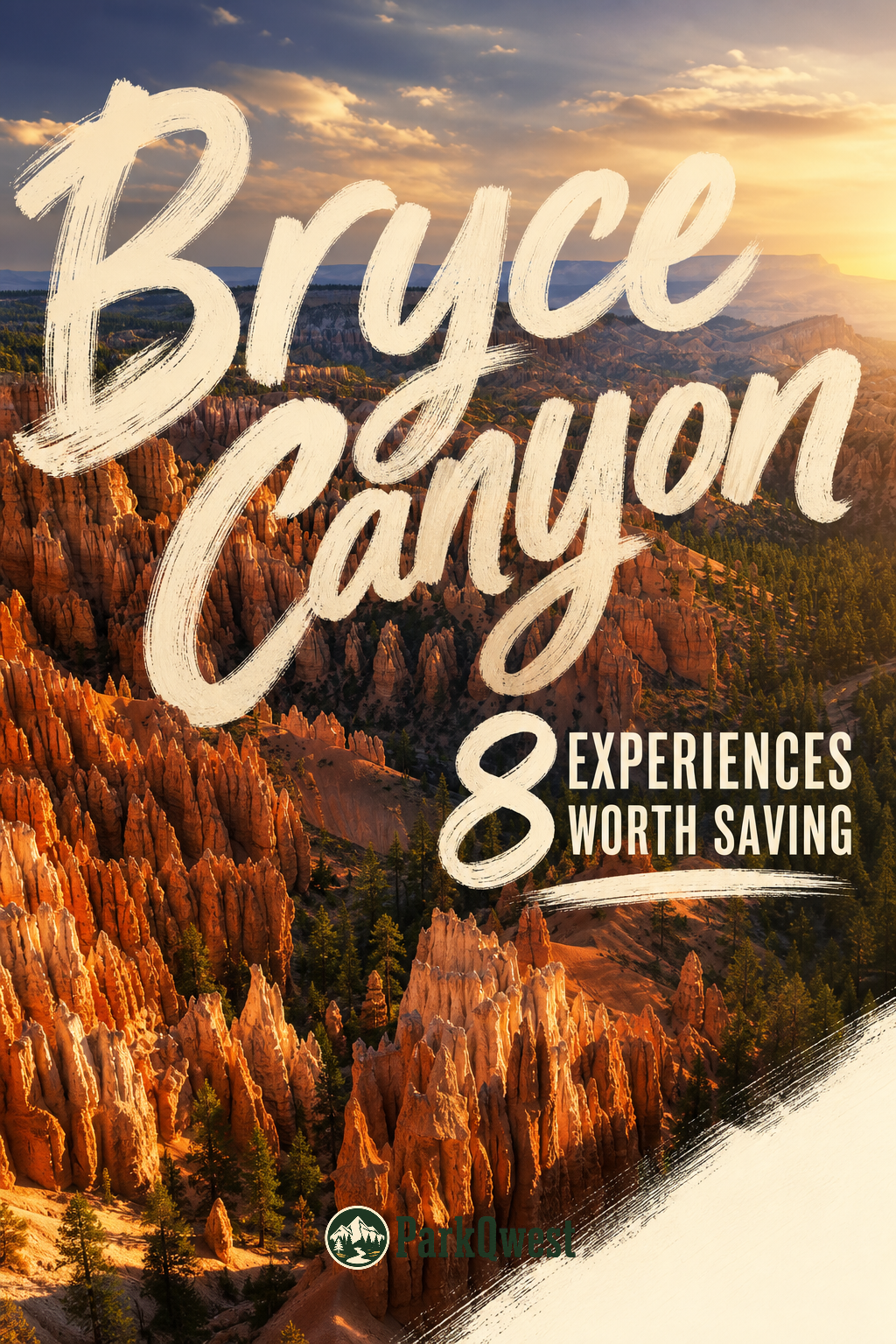
Bryce Canyon National Park is best planned as a menu, not a checklist. The park’s largest-on-Earth concentration of hoodoos rewards different kinds of days: a short rim walk can be the right choice for one traveler, while another will want time below the rim among the rock columns. Add the park’s high-plateau elevation, variable weather, and notably dark skies, and the most useful question becomes: which experiences fit your daylight, energy, season, and comfort with changing conditions?
Quick take
Choose two anchor experiences—one for daylight and one for evening or early morning—then add a third only if weather, road conditions, and energy allow. Bryce Canyon’s elevation makes a deliberately lighter plan smarter than trying to cover every viewpoint and trail in one push.
How to choose your Bryce Canyon day
Use your priorities rather than treating any one stop as universally mandatory. Pick the experience that solves your main trip-planning need: expansive views, close-up geology, a low-commitment walk, cooler-season scenery, night-sky time, or a scenic-drive day with minimal hiking.
- Limited time or mixed mobility: prioritize rim views and scenic overlooks.
- Active hikers: pair a rim perspective with a route that descends among hoodoos, after checking current trail conditions.
- Photographers: build around low-angle light and leave room for clouds, storms, or changing visibility.
- Summer visitors: plan earlier outdoor activity and account for common July and August afternoon thunderstorms.
- Winter through spring visitors: make snow and freezing nights part of the itinerary, not an afterthought.
Eight don’t-miss ways to experience Bryce Canyon
1. Get the wide-angle hoodoo view from the rim
Why it matters: The rim is the quickest way to understand Bryce Canyon’s scale: an enormous concentration of irregular rock columns spread across an amphitheater-like landscape. It delivers the visual logic of the park before you invest time or effort in a longer outing below.
Best for: First-time visitors, families, travelers with a short window, and anyone who wants a high payoff without committing to a strenuous hike.
Planning note: Viewpoints can feel very different depending on sun angle, cloud cover, and seasonal snow. Check the official NPS page for current access information, then give yourself time to stop at more than one rim location rather than assuming a single overlook tells the whole story.
2. Walk below the rim for a hoodoo-scale perspective
Why it matters: From above, hoodoos read as a vast geological pattern; from within the formations, their odd shapes, narrow passages, and changing proportions become the point. This is the experience that best turns “a scenic view” into an encounter with the landscape’s texture.
Best for: Travelers who enjoy hiking, geology-minded visitors, and photographers looking for foreground detail rather than only broad panoramas.
Planning note: Descending is only half the decision—the climb back out is the part to budget honestly. Verify which trails are open, how conditions are affecting footing, and whether recent snow, ice, heat, or storms change what is sensible for your group.
3. Make sunrise or late-day light a deliberate appointment
Why it matters: Hoodoos have form, shadows, and color variation that show up differently when the sun is low. Early and late light can make the same view feel more dimensional than it does under flat midday illumination, while also helping summer visitors avoid the hottest part of the day.
Best for: Photographers, early risers, couples, and visitors trying to fit a strong park experience into a single day.
Planning note: Bring layers even if the forecast looks mild. Bryce Canyon sits at high elevation, and temperatures from October through May commonly fall below freezing at night; summer mornings can still feel cool before the day warms.
Light-planning shortcut
If you are not chasing photographs, use early or late light for one rim stop and reserve the middle of the day for a drive, visitor information, lunch, or a shorter walk. That simple split reduces the pressure to be outside continuously.
4. Take the scenic drive as a landscape survey
Why it matters: Bryce Canyon is more than one famous-looking bowl of rock. A drive through the park’s high plateau terrain helps reveal changing elevations, forested sections, and the broader setting above the Grand Staircase—not just the most photographed hoodoo scenes.
Best for: Road-trippers, visitors traveling with children or limited hiking capacity, and anyone using Bryce Canyon as part of a larger southern Utah route.
Planning note: Treat the drive as an experience with stops, not merely transportation between two points. Seasonal weather can affect travel, particularly in the snowier months, so verify current road conditions and any vehicle-related guidance with the NPS before departure.
5. Stay out after dark for the park’s night sky
Why it matters: The NPS specifically notes Bryce Canyon’s fantastic dark skies, and nighttime changes the park from a geology destination into an astronomy-friendly landscape. Even travelers without cameras can appreciate the contrast between a day built around rock formations and an evening built around darkness and open sky.
Best for: Stargazers, campers, photographers, and visitors willing to slow down rather than immediately drive onward after sunset.
Planning note: Darkness and cold arrive faster than many day visitors expect at high elevation. Check the official NPS page for any current night-sky guidance or programs, carry warm layers and a reliable light, and make your return plan before you are tired and cold.
6. See the hoodoos with snow if your trip falls in the cold season
Why it matters: Snow redraws the park’s color and contrast, often simplifying the scene into white slopes, dark evergreens, and warm-toned rock. It is not a substitute for a summer visit; it is a different visual version of Bryce Canyon, with quieter pacing and more weather-driven decisions.
Best for: Winter landscape photographers, repeat visitors, and travelers comfortable planning around cold conditions.
Planning note: December through February are typically the park’s coldest and snowiest months, while March and April storms can still produce heavy snowfall. Build in extra driving time, expect freezing nights from October through May, and verify road and trail status shortly before arrival.
7. Notice the high-plateau ecology, not only the rock
Why it matters: The hoodoos are the headline, but Bryce Canyon’s high elevations also support numerous life communities. Looking beyond the formations adds context: changing vegetation, forested terrain, and shifts in exposure help explain why the park feels unlike lower, hotter desert stops elsewhere in the region.
Best for: Nature-focused travelers, repeat visitors, families trying to slow children down with observations, and anyone visiting after other Utah canyon parks.
Planning note: Choose a manageable walk or overlook and give it an observational purpose: watch for changes in plant communities, temperature, shade, and terrain. This is especially useful on a weather-affected day when a longer hike may not be appealing.
8. Plan one weather-aware summer afternoon instead of fighting it
Why it matters: In July and August, afternoon thunderstorms are common. Rather than seeing that as a ruined hiking window, use it to create a better rhythm: active exploration earlier, then a flexible block for shelter, driving, park information, or a later return when conditions permit.
Best for: Summer road-trippers, families, hikers, and travelers who tend to overpack a one-day itinerary.
Planning note: Watch the forecast on the day of your visit, not only when booking the trip. Keep rain protection, water, insulating layers, and footwear suited to changing surfaces, and follow current NPS safety guidance if storms develop.
Build a day that fits the season
| If your priority is... | Pair these experiences | Main tradeoff |
|---|---|---|
| A short first visit | Rim views + scenic drive | Less close-up hoodoo time |
| A hiking-focused day | Below-rim walk + late-day rim view | More effort at elevation |
| Summer comfort | Early light + flexible afternoon | Less rigid scheduling |
| A distinctive cold-season trip | Snow scenery + dark-sky evening | Greater weather and travel uncertainty |
The practical payoff is simple: let Bryce Canyon’s conditions shape the day instead of forcing a preset itinerary. Arrive via UT-63 after connecting from UT-12, whether approaching from the north, east, or through the Zion area, and check the official Bryce Canyon National Park page close to travel for current conditions. The hoodoos will still be the reason you came; thoughtful pacing is what gives you time to actually see them.
Before you go
- Review official alerts, closures, hours, and reservation requirements.
- Allow extra travel time and keep an alternate plan.
- Use official NPS information as the final authority.
Sources
- Bryce Canyon National Park — official National Park Service site — National Park Service, accessed 2026-08-29
Continue planning Bryce Canyon
Learn more about Bryce Canyon and find other helpful guides, trails, and trip information in the ParkQwest guide.
ParkQwest is a QwestLyfe Community.
QwestLyfe helps you track your lifelong bucket lists, collections, recipes, and the places you've been. Document your experiences, add notes and pictures, and share them with your friends — and the world.