
Grand Teton National Park: 3-Day Itinerary
Plan with current information. Conditions, roads, services, fees, and rules can change. Verify details with the National Park Service before your visit.
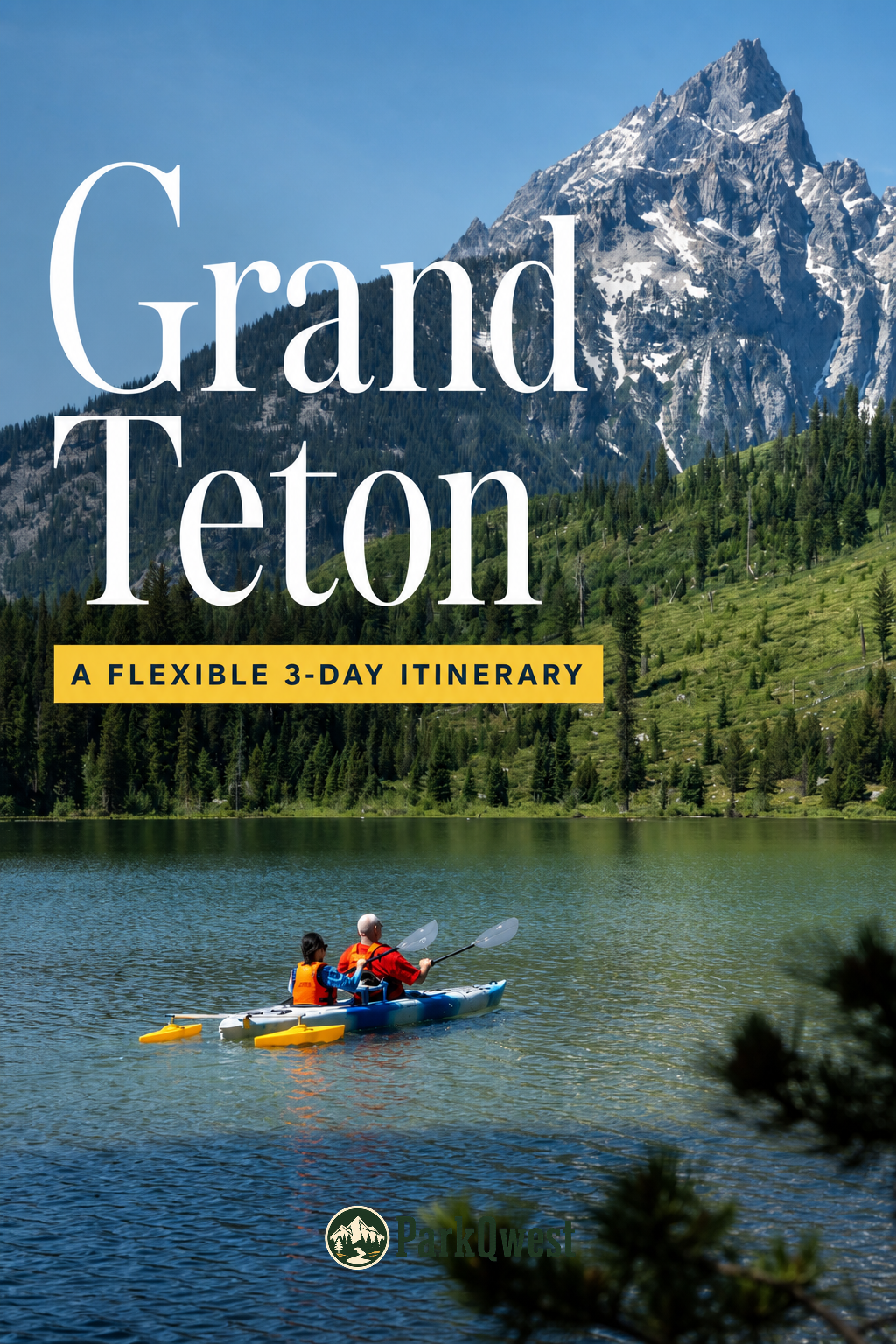
Grand Teton National Park works best when you plan by landscape, not by a long checklist of stops. The Tetons rise sharply above Jackson Hole, so a three-day visit can feel surprisingly full even without trying to cover every viewpoint, lake, and trail. This itinerary gives each day one job: settle into the valley and lakes, spend a full day in mountain country, then leave room for a slower wildlife-and-weather buffer. It is designed for visitors arriving by car or through Jackson Hole Airport, the commercial airport located within the park’s borders, with lodging in or around Jackson Hole.
Conditions matter more here than a rigid route. The National Park Service notes that snow and frost are possible in any month; summer afternoons commonly bring thunderstorms, while spring and fall can shift between sun, rain, and snow. Use the official Grand Teton National Park website for current road, trail, weather, wildlife, and facility information before deciding each day’s exact stops.
Quick take
Build each day around one primary landscape and one optional add-on. In Grand Teton, a closed road, storm cell, animal-caused delay, or tired hiking group can turn a tightly packed plan into a frustrating one fast.
Day 1: Learn the Valley, Lakes, and Your Pace
Today’s purpose is orientation, not mileage. Begin with a park map, current conditions check, and a realistic look at what is open. This first day should help you understand how the mountains, broad valley, water, trailheads, and overlooks fit together—useful context before committing to a longer hike tomorrow.
Morning: Start with the big-picture landscape
Enter early enough to enjoy the cooler part of the day, but do not turn the morning into a race. Choose a scenic drive through the park’s lower-elevation valley-and-lake areas, stopping selectively at overlooks or shoreline access points that are open and not overcrowded. The goal is to see the Teton Range from several angles, then notice how dramatically the experience changes when the peaks reflect in water or rise behind open sagebrush country.
Bring breakfast or pick it up before entering the park, especially if your lodging is in Jackson. A car picnic is a practical first-morning move because it lets you eat when the group is actually hungry rather than detouring for a meal just as the light improves or a parking area fills.
Afternoon: Pick one easy-to-moderate outing
After lunch, choose one walk or short hike rather than several disconnected stops. Look for an open route near a lake, forest edge, or valley viewpoint, and choose according to the day’s wind, heat, trail condition, and your group’s energy. A lower-commitment outing is smart on Day 1: it gives you a read on altitude, footwear, kids’ patience, and how long photo stops really take.
- If you want scenery with minimal effort: Prioritize a shoreline, viewpoint, or short nature walk.
- If you want a little movement: Choose a clearly posted out-and-back hike and set a turnaround time before you begin.
- If the park is busy: Skip the urge to circle lots repeatedly. Move to a second-choice area and save your preferred stop for an earlier morning.
Evening: Reset before the hiking day
Return to your lodging area with enough time for a real meal, water refill, and gear check. Lay out layers, rain protection, snacks, navigation, and the footwear you will use tomorrow. This is also the best time to decide whether Day 2 should be a longer mountain hike or a shorter, scenery-first day based on the forecast.
Alternate for weather or closures
Make Day 1 your flexible scenic-drive day. If rain, snow, wind, lightning, or a closure rules out the planned walk, use open paved or maintained routes and official visitor information to build a lighter sightseeing loop. Low clouds may hide the high peaks, but the valley’s scale, changing weather, and lakes still make the day worthwhile; just avoid treating reduced visibility as a reason to push farther into exposed terrain.
Day 2: Give the Mountains the Longest Day
This is the day to choose your signature hike or mountain-focused outing. Start earlier than you think you need to, not because every route requires a predawn launch, but because an early start buys you cooler temperatures, quieter trailheads, more parking options, and a better margin before typical July and August afternoon thunderstorms.
Morning: Commit to one trail plan
Select an open trail that matches your group’s actual ability, not the most dramatic image you saved. Read current NPS alerts, note whether the route is exposed or shaded, and choose a turnaround point that leaves plenty of time to get back before weather changes. Grand Teton’s terrain can make a modest-looking hike feel bigger than expected, especially when elevation gain, heat, or uneven surfaces are involved.
Quick take
A shorter hike completed well beats a longer hike completed under pressure. Turn around while the group is still comfortable, has water remaining, and can respond calmly if clouds build or the trail becomes more demanding.
Carry more than a camera and a water bottle. Conditions can change quickly in any season, and the NPS specifically notes cool nights, rain, snow, frost, and summer thunderstorms across different parts of the year.
- Footwear: Wear shoes or boots suited to uneven ground; avoid making a new pair of shoes part of the experiment.
- Layers: Pack an insulating layer and rain protection even if the morning begins warm.
- Food and water: Bring enough for an unplanned delay, then eat and drink before you feel depleted.
- Wildlife awareness: Review current NPS guidance, keep space from animals, and never plan on wildlife appearing on command.
Afternoon: Recover, then choose a scenic bonus
After the hike, schedule a proper lunch and a non-negotiable rest break. This is where many itineraries go wrong: people finish a demanding morning, drive immediately to another major stop, and arrive tired, hungry, and less alert. Take time to change socks, refill water, and decide whether your group has the energy for one short lake, overlook, or photo stop.
If the answer is no, go back to town or lodging early. An unhurried evening protects Day 3 and makes the trip feel like a vacation rather than a three-day endurance event.
Evening: Watch the sky, not the clock
Use the evening for an easy scenic area if weather is calm and you are not driving tired. Sunset can be appealing, but do not count on a specific view, parking situation, or road condition. If you remain out later, have a clear plan for returning safely and avoid turning dusk into a wildlife-viewing chase.
Alternate for weather or closures
Trade elevation for flexibility. If storms are forecast, snow affects higher terrain, or your intended trail is closed, replace the long hike with short walks near developed areas, scenic driving on currently open roads, and a slower lake-and-valley circuit. Save your best weather window for any outdoor walk, even if it is only an hour, and keep lightning-prone or exposed terrain off the plan.
Day 3: Use the Buffer Day Well
Think of Day 3 as the day that makes the first two better. It can absorb bad weather, repeat a favorite viewpoint in better light, create room for a second short hike, or simply make departure less rushed. Instead of planning another maximal day, build it around what you missed and what your group genuinely enjoyed.
Morning: Revisit the priority you skipped
Choose one of three directions: return to a lake or overlook you saw too quickly on Day 1, take a short morning walk you passed over, or use the early hours for a wildlife-aware scenic drive. The broad Jackson Hole valley is part of the park’s story as much as the peaks are; communities have lived in this landscape for more than 11,000 years, and the setting rewards time spent looking rather than constantly moving.
Afternoon: Keep departure logistics honest
Plan around your actual departure point. If you are flying from Jackson Hole Airport, remember that the airport is within the park but changing weather and road conditions still deserve a buffer. If you are driving south toward Jackson or continuing north toward Yellowstone, use the official NPS page and transportation sources for current road information rather than relying on an itinerary saved months ago.
Eat lunch before a long transfer, fuel up where appropriate, and keep one simple snack accessible in the vehicle. The final afternoon should feel intentionally light: a last viewpoint, a short open walk, or a relaxed meal is usually more satisfying than forcing in one more major objective.
Alternate for weather or closures
If the final day brings poor visibility or winter-like conditions, do not chase mountain views that are not there. Use the time for a low-key drive on open roads, an official information stop if available, a warm meal in Jackson, or an earlier departure. Grand Teton National Park is a place where the mountains set the terms; leaving with energy and a safe route matters more than checking off one final stop.
Before you go
- Review official alerts, closures, hours, and reservation requirements.
- Allow extra travel time and keep an alternate plan.
- Use official NPS information as the final authority.
Sources
- Grand Teton National Park — official National Park Service site — National Park Service, accessed 2026-08-27
Continue planning Grand Teton
Learn more about Grand Teton and find other helpful guides, trails, and trip information in the ParkQwest guide.
ParkQwest is a QwestLyfe Community.
QwestLyfe helps you track your lifelong bucket lists, collections, recipes, and the places you've been. Document your experiences, add notes and pictures, and share them with your friends — and the world.