
Rocky Mountain National Park: Park Inspiration
Plan with current information. Conditions, roads, services, fees, and rules can change. Verify details with the National Park Service before your visit.
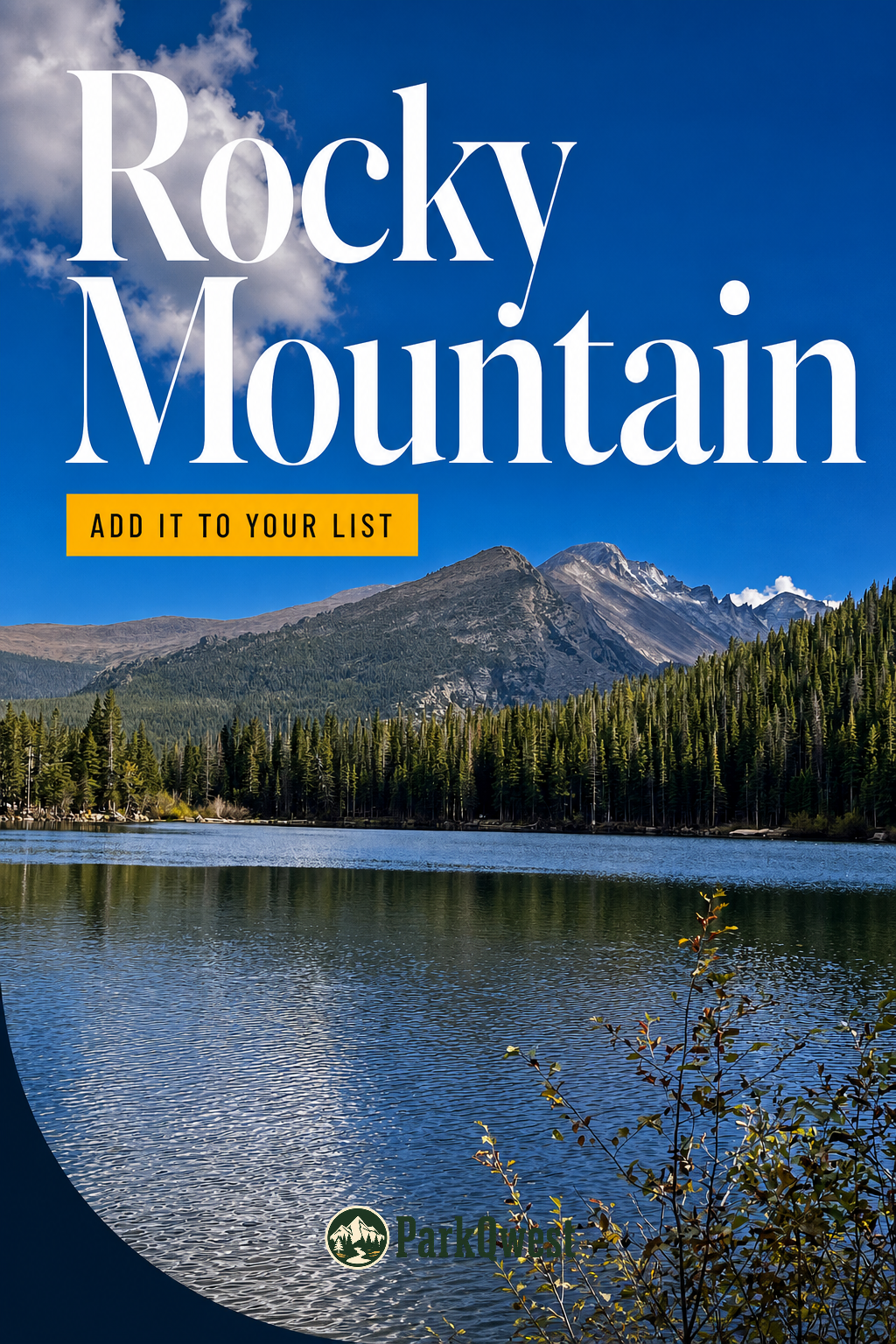
Rocky Mountain National Park is a place for remembering scale. On one visit, the world can contract to the sound of wind moving through grass in a mountain meadow, then expand without warning when the trees thin and the horizon rises into rock, snow, sky, and far-off ridgelines. Its 415 square miles hold a true vertical journey—from roughly 7,800 feet to peaks above 14,000 feet—and that change in elevation is the heart of the experience. Come for the photographs if you like; leave room for the slower, stranger pleasure of noticing how quickly one mountain environment gives way to another.
This is not a park to “complete” in a day. Rocky Mountain National Park is better approached as a collection of moods: an early quiet at the edge of a meadow, a cool pause beside an alpine lake, a long climb through changing forest, a weather-filled afternoon that sends you back to the car feeling small in a useful way. With more than 300 miles of hiking trails and remarkable opportunities to watch wildlife, it rewards travelers who choose a few meaningful moments rather than trying to collect every viewpoint.
Quick take
Save Rocky Mountain National Park for the trip when you want mountains to feel immediate rather than decorative. Build your day around one high-elevation experience, one unhurried lower-elevation walk or wildlife pause, and enough margin to respond sensibly when mountain weather changes the plan.
Why this park earns a place on a lifelong list
The park’s drama comes from contrast, not a single grand reveal. In the montane zone, meadows and forests can feel intimate, with the possibility of animal movement at the edge of vision. Higher up, glistening lakes and open alpine terrain shift the emotional register: the air feels sharper, the landscape more exposed, and every stop asks you to look farther.
That progression gives a visit its arc. The morning may begin with the grounded pleasures of trees, water, and birdsong; by midday, elevation can make even an easy stop feel momentous. Then the afternoon teaches the practical mountain lesson: clouds, wind, temperature, and visibility deserve as much attention as scenery.
Seek the transition, not just the summit feeling
Many park photographs focus on the high country, and reasonably so. But the most memorable itinerary often follows the transitions between ecosystems. Notice when the forest opens, when the groundcover changes, when water becomes the central feature of a landscape, and when trees give way to exposed alpine views. Those changes make the park feel like a living elevation map rather than a backdrop.
- For a restorative day: Favor meadow country, water, short walks, and long pauses. This is the right choice if you want to watch light move across the landscape without turning the day into an endurance test.
- For a mountain-scale day: Prioritize a higher-elevation destination or hike, while allowing time to adjust to the altitude and turn around if conditions deteriorate.
- For a balanced first visit: Pair a lower-elevation morning with one carefully chosen alpine experience later. The contrast will tell the park’s story better than rushing between similar overlooks.
The moments worth planning around
Rocky Mountain National Park is most affecting when you give ordinary moments enough time to become distinct. The goal is not constant spectacle. It is a day with a few clear memories: cold air on your face, the shimmer of a lake, a distant animal viewed patiently and respectfully, boots on a trail, and the hush that arrives when conversation stops because the terrain is asking for attention.
Morning: let the park arrive before the itinerary does
Early hours are for observation, not speed. Start with a modest walk or a pullout-worthy landscape where you can spend time looking rather than immediately chasing the next stop. Wildlife viewing is one of the park’s defining possibilities, but it works best as a patient practice—not a promise. Keep a respectful distance, use binoculars if you have them, and never let a sighting turn into an approach.
Midday: choose one experience with consequence
At higher elevations, even a simple outing has a different texture. The air is thinner, sun exposure can feel intense, and weather can turn the mood quickly. Choose one hike or high-country stop that feels like the centerpiece of the day, then give it the time it deserves instead of stacking multiple ambitious commitments around it.
Late day: make room for weather and reflection
Afternoon is not a failure if it becomes shorter, wetter, windier, or quieter than expected. In this park, a change of plan can be part of the experience: a warm layer pulled on at a trailhead, clouds gathering over a ridge, a retreat to lower elevation, or an extra stop to watch changing light. A flexible final hour often produces the day’s most honest memory.
A better Pinterest save
Instead of saving a long checklist of scenic stops, save a three-part day: “meadow morning, alpine centerpiece, weather-aware evening.” It is a more realistic framework for a park where elevation and conditions shape the day as much as your map does.
Pick the version of Rocky that fits your trip
Your best park day depends on what you want to feel, not just how many miles you can cover. The park’s range of environments makes it unusually good for travelers with different energy levels, but those choices come with tradeoffs. Use this quick comparison to set the tone before you begin choosing specific routes or destinations on the official NPS site.
| If you want… | Build around… | The tradeoff |
|---|---|---|
| A gentler introduction | Montane meadows, forest walks, and time to watch for wildlife | You may see less of the exposed high country, but gain a calmer pace. |
| The classic high-mountain feeling | An alpine lake, elevated viewpoint, or hike into higher terrain | Altitude, wind, sun, and fast-changing weather demand more preparation. |
| A memorable family or mixed-ability day | Short, repeatable stops with a single shared scenic goal | The day needs restraint; avoid planning around a pace only one person can sustain. |
Practical choices that protect the magic
There is a difference between being spontaneous and being underprepared. Rocky Mountain National Park’s elevations range from 7,800 feet to above 14,000 feet, and the National Park Service emphasizes that conditions can change quickly throughout the day. Preparation is what lets you enjoy a sudden shift in weather without turning it into a miserable surprise.
- Layers: Bring an insulating layer and a weather-resistant outer layer even when the start of the day feels warm. Temperature and wind can change sharply with elevation.
- Water and food: Carry more than you think a casual scenic day requires. Altitude and dry mountain air can make exertion feel different than expected.
- Sun protection: Use sunscreen, sunglasses, and a hat. Open terrain offers little forgiveness when the sun is strong.
- Route knowledge: Before committing to a hike or scenic drive, verify current conditions, closures, and any access requirements on the official NPS page rather than relying on a saved pin or an older blog post.
- Wildlife distance: A long look through binoculars is better than a close encounter. Give animals room to move naturally, and never block their path or gather around them.
Let the route in be part of the anticipation
The east side of the park, near Estes Park, is reached from I-25 via U.S. Highway 34 or 36 west. The west side is approached via I-70 to U.S. Highway 40 toward Granby, then U.S. Highway 34 east to Grand Lake. Choose your approach based on your larger Colorado itinerary, not on the assumption that either side is interchangeable on a given day. Conditions, access, and seasonal operations can change, so confirm the details that matter to your route directly with the National Park Service.
It is also worth resisting the urge to make the park a quick detour between bigger destinations. The drive to a trailhead, the search for a place to pause, and the time needed to return safely all belong in the day’s math. A shorter, more spacious visit is often more satisfying than an overstuffed one.
Save this park for the kind of trip you want to remember slowly
Rocky Mountain National Park offers a rare kind of abundance: not an endless list of attractions, but a deep range of landscapes that can meet you where you are. You can come seeking a long hike, a lake reflecting mountain light, a wildlife watch, or simply the reset that comes from standing in a place where the terrain sets the pace. The park does not need to be conquered to feel consequential.
Save Rocky Mountain National Park for a day with room in it. Save the image of an alpine lake, the idea of a quiet meadow morning, and the reminder to pack layers. Then, when the trip comes, trade the perfect checklist for a few well-chosen moments—and let the mountain weather, elevation, and wide-open country make the visit feel like your own.
Before you go
- Review official alerts, closures, hours, and reservation requirements.
- Allow extra travel time and keep an alternate plan.
- Use official NPS information as the final authority.
Sources
- Rocky Mountain National Park — official National Park Service site — National Park Service, accessed 2026-08-26
Continue planning Rocky Mountain
Learn more about Rocky Mountain and find other helpful guides, trails, and trip information in the ParkQwest guide.
ParkQwest is a QwestLyfe Community.
QwestLyfe helps you track your lifelong bucket lists, collections, recipes, and the places you've been. Document your experiences, add notes and pictures, and share them with your friends — and the world.