
Grand Teton National Park: Park Inspiration
Plan with current information. Conditions, roads, services, fees, and rules can change. Verify details with the National Park Service before your visit.
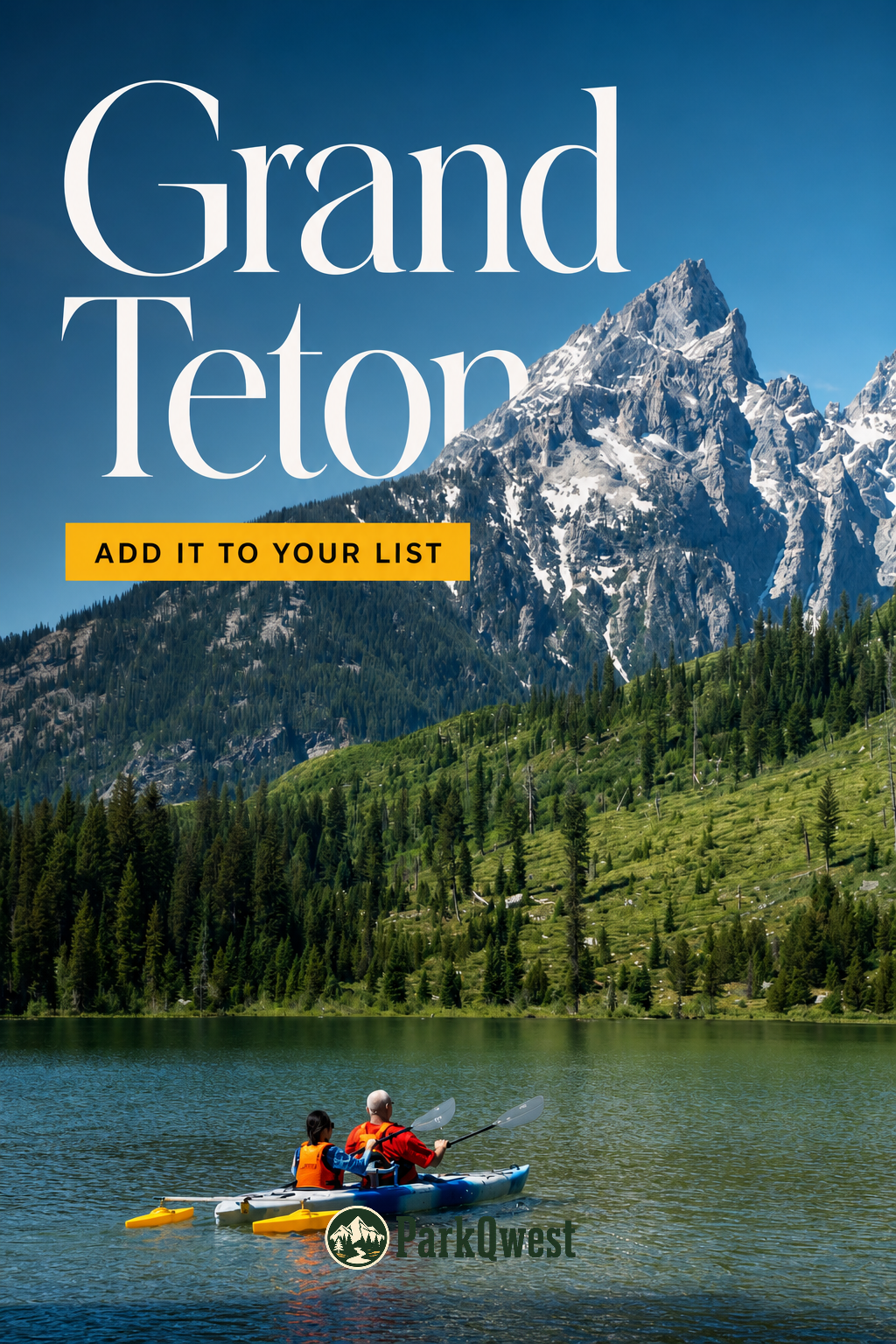
Grand Teton National Park is the rare place that looks immediate even in photographs: the mountains rise sharply from Jackson Hole with very little visual warm-up, turning a roadside pause, a lakeshore walk, or an early-morning overlook into a scene that feels composed on purpose. But the reason to put it on a lifelong list is not simply the skyline. It is the feeling of spending a day under those steep, changing peaks—watching weather move across the range, noticing how much room the valley gives wildlife, and ending the evening with the mountains still visible beyond the last light.
The park sits in northwestern Wyoming, north of Jackson and south of Yellowstone, making it an especially compelling anchor for a wider mountain-road-trip dream. Yet Grand Teton National Park is worth treating as more than Yellowstone’s scenic neighbor. Its appeal is concentrated: pristine lakes, open valley, alpine vistas, and a range whose scale is easiest to understand when you give yourself enough time to stop looking for a checklist.
Why the Tetons stay in your mind
The emotional arc here runs from anticipation to attention. You arrive expecting jagged mountains and big views; then the park gradually asks you to slow down. A lake reflects a different version of the range than a roadside pullout does. A quiet hour in the valley makes the landscape feel less like a backdrop and more like a living place shaped by weather, water, animals, and more than 11,000 years of human connection in Jackson Hole.
The Tetons do not need elaborate framing. Their drama comes from contrast: hard granite forms above softer grassland and water, distant snow against summer color, an enormous horizon interrupted by a sudden storm. That makes Grand Teton an excellent park for travelers who like a trip to feel spacious rather than overprogrammed.
Quick take
Come to Grand Teton for the moments between destinations: a cool morning by a lake, a long look across the valley, the sound of wind before a storm, and the gradual realization that the mountains keep changing as the light moves.
Build a visit around light, weather, and room to wander
For an inspiration-first trip, the best plan is not to chase every viewpoint. Choose one part of the day for a wide landscape experience, one for time near water or on a walk, and one for simply being still. That approach creates room for cloud cover, traffic, wildlife activity, or a view that asks you to linger longer than expected.
Morning: let the range introduce itself
Early light is less about collecting a perfect photo than seeing the landscape wake up. Cool temperatures, long shadows, and quieter surroundings can make the valley feel especially expansive. Bring a warm layer even if the forecast points toward a pleasant afternoon; the park’s weather guidance emphasizes cool nights and the possibility of snow and frost in any month.
If photography is part of your trip, avoid making the entire morning a race from one saved pin to the next. Find a legally available place to stop, stay aware of traffic and changing conditions, and give one composition time. A reflection, a low cloud layer, or a break in the weather can be more memorable than the clearest possible sky.
Midday: trade the grand view for a closer one
Midday is a good time to shift from the iconic mountain-wall perspective to details: water moving along shore, wildflowers in season, texture in the forest, or the way the peaks appear and disappear through trees. A shorter walk or a lakeside pause can reset the pace of a drive-heavy day without requiring a major backcountry commitment.
Choose your activity by conditions, not by pride. A longer hike may be the right choice on a stable day when you have appropriate gear, time, and route information. On a windy, rainy, or storm-prone day, a shorter outing plus unhurried scenic stops may deliver a better experience—and leave you with more energy for the evening light.
Evening: make space for the quiet finish
Grand Teton’s final-hour appeal is simple: the mountains hold light differently as the sun drops, while the valley begins to feel larger and calmer. Do not treat sunset as a guaranteed spectacle. Treat it as an invitation to stay present, dress for the temperature drop, and have a safe plan for getting back after dark.
That unhurried final stretch is often what turns a beautiful park day into a lasting memory. The goal is not to prove you saw everything. It is to leave with one scene you can still feel: cold air on your hands, a broad lake surface, the silhouette of the range, and the sense that tomorrow’s version of the view will be different.
Pick the season for the kind of story you want
There is no universally “best” season, because Grand Teton National Park changes character dramatically through the year. The durable choice is to decide whether you want open-road summer energy, autumn’s colder clarity, or the stripped-back quiet of a snow-covered landscape—then verify current conditions before committing.
| Season window | What it can feel like | Planning tradeoff |
|---|---|---|
| April–June | A transition season of mild days, cool nights, rain, and possible snow. | Spring atmosphere can be rewarding, but conditions may be variable. |
| July–August | Warm days, cool nights, and a lively summer rhythm beneath the peaks. | Afternoon thundershowers are common, so start outdoor plans early. |
| September–November | Sunny days and cold nights, with rain and occasional snowstorms. | Bring insulation and expect a faster shift from fair weather to winter feel. |
| December–April | Snow blankets the valley and mountains; days between storms can be sunny, nights frigid. | A more wintry, quiet vision of the park requires close attention to current access and weather. |
Quick take
In summer, plan around afternoon thunderstorms. In shoulder seasons and winter, plan around cold, snow, and changing access. In every month, pack a layer for a temperature shift that can arrive long before your day feels finished.
Make the Pinterest version useful in real life
Grand Teton is highly saveable because its visual language is so clear: mountain silhouette, lake reflection, open meadow, moody cloud, cabin-scale foreground against a vast range. Use those saved images as inspiration, not as a promise. Conditions, light, seasonal snow, roadside availability, and your own timing will shape what is actually possible.
- Save scenes, not exact replicas: Pin “misty lake morning” or “stormy mountain afternoon” rather than assuming a particular image can be recreated at a particular spot.
- Pair one iconic view with one slower experience: A dramatic overlook is satisfying; an unhurried hour by water or on a walk gives the trip texture.
- Keep the sky in the plan: Clouds are not automatically a disappointment here. They add scale, shadow, and a sense of the mountain weather at work.
- Leave wildlife as wildlife: The valley is rich with wildlife, but observation should always happen from a respectful distance. Do not approach, feed, or block animals for a photo.
- Verify the practical details: Before departure, check the official NPS page for current road information, weather, closures, alerts, and any route-specific guidance.
A park that rewards an unrushed itinerary
Grand Teton works best when you resist treating it as a drive-through on the way somewhere else. Its location makes it tempting to compress into a Yellowstone itinerary, especially for travelers arriving by road from Salt Lake City or Denver. It is also unusual among national parks in having a commercial airport within its boundary at Jackson Hole Airport, which can make a shorter focused visit possible.
But ease of arrival is not the same as ease of understanding. Give the park enough daylight to see the range in more than one mood. Let a passing shower alter the plan. Let one lake or valley view become the point, rather than a pause between more important things.
Save Grand Teton National Park for the trip when you want mountains that feel close enough to command your attention, but a valley wide enough to let you breathe. Save it for the cold morning layer, the storm-watch afternoon, the long evening glance back at the peaks. Then protect the possibility of those moments: travel thoughtfully, follow current NPS guidance, and leave the landscape as spacious for the next visitor as it was for you.
Before you go
- Review official alerts, closures, hours, and reservation requirements.
- Allow extra travel time and keep an alternate plan.
- Use official NPS information as the final authority.
Sources
- Grand Teton National Park — official National Park Service site — National Park Service, accessed 2026-08-24
Continue planning Grand Teton
Learn more about Grand Teton and find other helpful guides, trails, and trip information in the ParkQwest guide.
ParkQwest is a QwestLyfe Community.
QwestLyfe helps you track your lifelong bucket lists, collections, recipes, and the places you've been. Document your experiences, add notes and pictures, and share them with your friends — and the world.