
Grand Canyon National Park: First-Trip Guide
Plan with current information. Conditions, roads, services, fees, and rules can change. Verify details with the National Park Service before your visit.
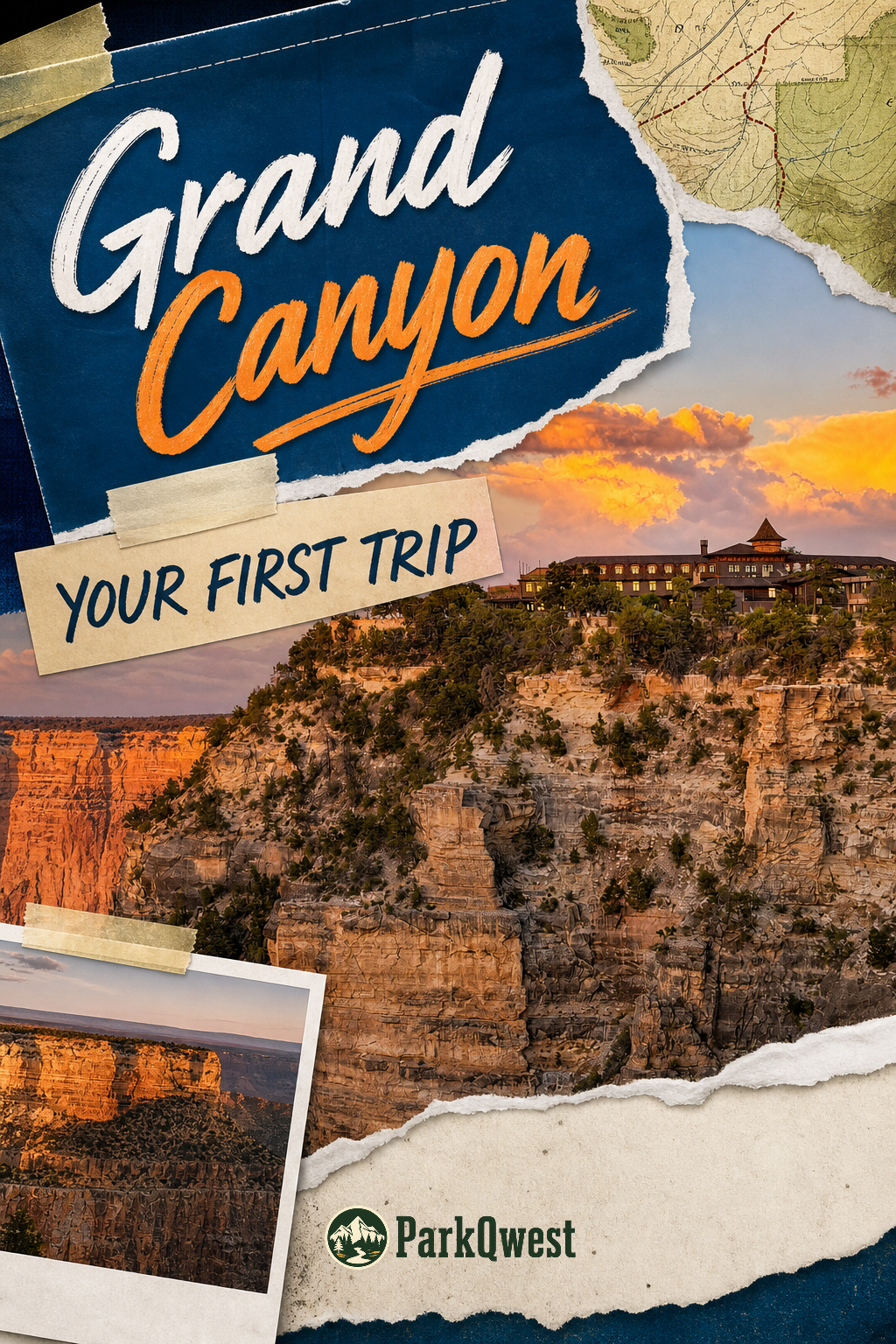
Grand Canyon National Park is not a place to “do” in one checklist-driven sweep. It is a 278-mile-long Colorado River landscape, entirely in Arizona, where the useful first-trip skill is learning how to look at a canyon that operates on a much larger scale than most visitors expect. The rim views are immediate; the real orientation takes longer. A strong first visit balances one or two signature viewpoints, time to understand the terrain, and enough unscheduled margin to let changing light, crowds, weather, and your own energy set the pace.
The park also deserves a wider frame than a single scenic overlook. Grand Canyon lies on the ancestral homelands of 11 present-day Tribal Communities, and its mile-deep geology is only one part of a living cultural landscape. Start with curiosity, follow posted guidance, and use the official National Park Service information to understand what is open and how visitation is managed during your dates.
First, understand the scale: this is two rims, not one quick stop
The South Rim and North Rim are different trip bases, not interchangeable neighborhoods. Both offer the immense canyon views people picture, but they are separated by the canyon itself and involve very different access patterns. Trying to treat them as a same-day add-on is one of the easiest ways to turn a first visit into a long drive with too little time at the rim.
- South Rim: This is the practical first choice for many visitors because it is open year-round and has the clearest official approach information from northern Arizona. The South Rim is about 60 miles north of Williams via Route 64 from Interstate 40, and about 80 miles northwest of Flagstaff via Route 180.
- North Rim: The North Rim sits at a higher elevation and has a much more limited public-access window. NPS guidance notes that select areas are open to public access between October 1 and November 14; conditions and access details should be checked in current park news before making plans. From Jacob Lake, the entrance station is 30 miles south on Highway 67, with the rim another 14 miles beyond.
Quick take
For a first trip with limited time, choose one rim and give it a full day rather than spending that day trying to connect the two. The South Rim is usually the simpler all-year orientation choice; the North Rim requires especially careful verification of current access.
Choose a base that protects your time at the canyon
Your overnight location matters most when it reduces pressure on the start and end of your day. The best base is not automatically the closest dot on a map. It is the place that lets you arrive rested, enter early enough to orient yourself, and leave without driving tired after sunset.
| Base choice | Best for | Planning tradeoff |
|---|---|---|
| In or immediately near the park | A dawn start, a relaxed evening, and less driving on your main park day | Availability can shape the trip, so confirm current lodging or camping options through official sources. |
| Williams | Visitors approaching the South Rim from Interstate 40 | It adds a meaningful drive, so build that time into both arrival and departure. |
| Flagstaff | Travelers who want a larger-town base before or after the South Rim | The 80-mile official approach distance means this works best with an early departure. |
If you are making a one-night visit, avoid stacking a long approach drive, the park visit, and a late onward drive into the same day. The canyon will still be there, but your attention will be divided by arrival logistics. A second night near your chosen rim can be more valuable than adding another faraway stop.
Arrival strategy: orient before you chase the view
Your first hour should answer practical questions, not just produce photos. Once you reach your chosen rim, check the official NPS page or current park information for road conditions, transportation options, viewpoint access, weather alerts, and any temporary closures. These details change more often than the basic geography does.
- Confirm the day’s operating reality: Look for closures, traffic guidance, and weather notices before committing to a route.
- Get one wide view early: Let your eyes adjust to the scale before moving quickly from overlook to overlook.
- Identify your turnaround point: Decide when you need to begin heading back, especially if you are not sleeping nearby.
- Choose one below-the-rim or rim-walking goal only if conditions and ability support it: Descending changes the effort equation quickly because the return is uphill.
Do not let the first parking challenge or crowded viewpoint convince you that the whole park will feel that way. Use the first stop as orientation, then make your next choice deliberately: another expansive rim view, a short walk, a longer walk, or time to sit and watch light move through the canyon.
Signature experiences worth prioritizing on a first visit
1. The first rim reveal
Give the first big view more time than your camera roll suggests. Grand Canyon’s depth can initially flatten in photographs, while the actual experience becomes clearer when you notice the layered walls, side canyons, river corridor, and distant plateaus. Spend at least a few minutes without trying to frame it.
2. A rim-level walk
A walk along the rim is often the smartest first-timer activity because it keeps the canyon in view while revealing how quickly the perspective shifts. It also gives you a better sense of exposure, elevation, shade, and wind before you consider a more demanding route. Verify current route conditions and access through NPS sources rather than assuming every path is available.
3. A carefully chosen descent
Going below the rim is not a casual extension of sightseeing. The park ranges from about 2,500 feet at the bottom to 8,400 feet on the North Rim, and temperatures inside the canyon can run 20 to 30 degrees warmer than on the rims. If you choose to descend, set a conservative turnaround point while you still feel fresh; the uphill return is the part that determines whether the outing remains enjoyable.
4. A quiet light-change moment
Morning and late-day light can make the canyon’s layers easier to read, but do not treat sunrise or sunset as mandatory proof of a successful visit. The more useful goal is to reserve one unhurried block of time when you are not driving, checking in, or racing toward the next stop. That is usually when the canyon stops feeling like a landmark and starts feeling legible.
Quick take
Plan your day around one major viewpoint period, one walking period, and one rest-and-look period. More stops can be useful, but only after those three basics are protected.
Weather and effort: the mistake is planning for the rim only
Grand Canyon weather is vertical. Conditions can vary dramatically with elevation, and the park warns that weather can change rapidly. A comfortable rim forecast does not describe the canyon interior, while a cold or snowy day at a high rim can be a serious access and traction concern.
Check the forecast for your specific park location shortly before departure, then reassess on arrival. Heat deserves particular caution for anyone considering a descent, while cold, wind, precipitation, and rapidly changing visibility can alter a rim day. This is durable advice, but the exact forecast, road status, and open areas are changing conditions—use the official NPS page as the final word.
Common first-trip missteps—and the better move
- Trying to see both rims: Pick one rim. The canyon’s geography makes “just popping over” an unrealistic use of a short visit.
- Underestimating the approach: Treat the 60-mile drive from Williams or 80-mile drive from Flagstaff to the South Rim as part of the day, not a minor prelude.
- Descending based on how easy the first steps feel: Turn around earlier than instinct says. Every downward step becomes an upward step later.
- Building the day around a single photo location: Give yourself several ways to have a good visit: a viewpoint, a walk, and time to observe.
- Using outdated access assumptions: Verify current North Rim access, roads, weather, and park notices directly with NPS before leaving your base.
A realistic sample day for a South Rim first visit
This is a pacing model, not a rigid itinerary. It assumes you have already chosen the South Rim as your single rim and have checked current NPS conditions. Adjust the order for your arrival point, daylight, weather, and any transportation guidance in effect.
- Early arrival: Drive in with enough time to settle parking or transportation logistics without beginning the day rushed. Check current notices one more time.
- First overlook period: Spend 30 to 45 minutes at one broad canyon view. Take photos, then put the phone away long enough to understand what you are seeing.
- Midmorning rim walk: Choose an out-and-back walk length that leaves plenty of energy for the rest of the day. Turn around while the return still feels easy.
- Midday reset: Eat, drink, use available services, and decide honestly whether a below-the-rim outing is appropriate for conditions and your group.
- One intentional afternoon experience: Either make a conservative descent and return, or continue exploring rim perspectives without forcing a strenuous hike.
- Late-day pause: End at a viewpoint with enough time to watch the light change, then leave with your drive and fatigue level in mind—not after you are already exhausted.
The most satisfying first visit usually feels a little incomplete in the right way: you have seen the canyon clearly, learned its scale, and left with a reason to return rather than a list of stops you rushed past.
Before you go
- Review official alerts, closures, hours, and reservation requirements.
- Allow extra travel time and keep an alternate plan.
- Use official NPS information as the final authority.
Sources
- Grand Canyon National Park — official National Park Service site — National Park Service, accessed 2026-08-23
Continue planning Grand Canyon
Learn more about Grand Canyon and find other helpful guides, trails, and trip information in the ParkQwest guide.
ParkQwest is a QwestLyfe Community.
QwestLyfe helps you track your lifelong bucket lists, collections, recipes, and the places you've been. Document your experiences, add notes and pictures, and share them with your friends — and the world.