Grand Canyon National Park: Park Inspiration
Plan with current information. Conditions, roads, services, fees, and rules can change. Verify details with the National Park Service before your visit.
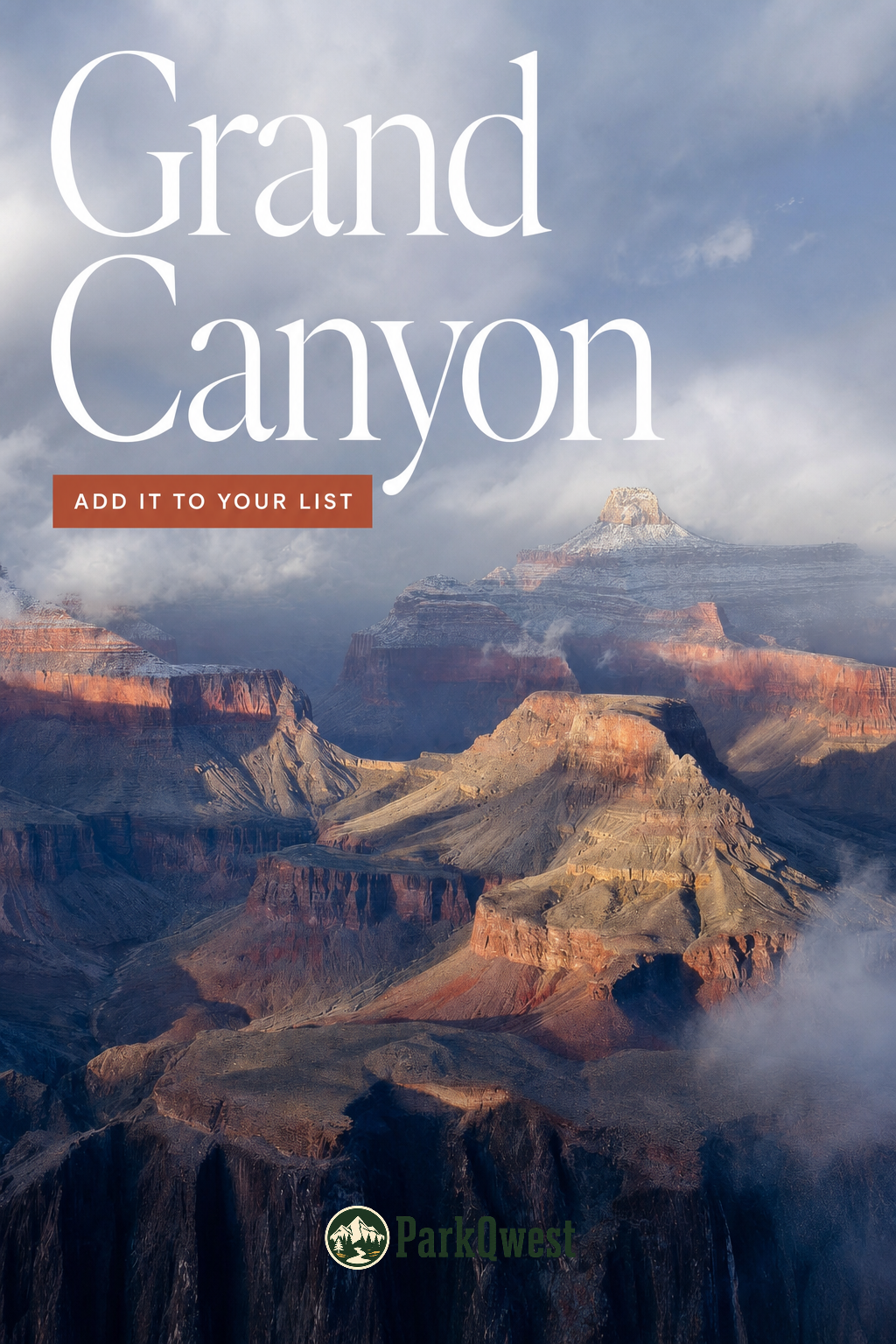
Grand Canyon National Park is not a place that needs a dramatic introduction; it creates one for you. You arrive in Arizona’s high country, often through forest and open road, and then the ground simply falls away. The first view can feel almost too large to process: layered stone fading from rust to violet, a river corridor far below, and walls that make familiar ideas of distance unreliable. This is a park for slowing down—not because there is little to do, but because the canyon rewards the rare decision to stop trying to “cover” a place and instead let a few hours, a few overlooks, and a changing sky do their work.
Come for the scale; stay for the changing light
The Grand Canyon holds 278 miles of the Colorado River and adjacent uplands, and it is one of the world’s most spectacular examples of erosion. That geological description is accurate, but it misses the lived experience: the canyon is a moving composition. A viewpoint that seems all sharp shadows in the morning can turn warm and soft later in the day, while distant walls reveal colors that were invisible an hour earlier.
The best Grand Canyon moments are often not the biggest itinerary items. They are the quiet pauses: noticing how wind moves through rim-country trees, watching a storm drift across the far side, or seeing a line of sun travel down a wall of rock. Build room for these moments rather than treating every stop as a photograph-and-go task.
Quick take
If you have only one day, choose fewer viewpoints and give each one more time. The canyon’s real drama comes from light, weather, depth, and distance changing around you—not from checking off the most stops.
Choose the rim experience that fits your trip
Grand Canyon National Park offers different ways to encounter the same immense landscape, and the first practical choice is which rim is realistic for your route and dates. The South Rim is open all year and is the straightforward choice for many travelers. It is located 60 miles north of Williams via Route 64 from Interstate 40 and 80 miles northwest of Flagstaff via Route 180.
The North Rim sits at a higher elevation and creates a more remote-feeling approach, but access is a condition to verify, not an assumption to make. Current NPS guidance says select areas are open to public access between October 1 and November 14; check current park news releases before planning around it. The North Rim entrance station is 30 miles south of Jacob Lake on Highway 67, with the actual canyon rim another 14 miles farther south.
| If your priority is… | A useful planning direction |
|---|---|
| Year-round access and a simpler first visit | Start with the South Rim, then shape your day around unhurried viewpoints and a walk that matches your energy. |
| A higher-elevation, less direct approach | Consider the North Rim only after confirming current access details on the official NPS page and park news releases. |
| A deeper canyon day | Plan conservatively. Going down can feel easy at first; returning upward in heat and elevation is the commitment. |
The emotional arc worth planning for
Morning: let the first view be enough
Early in a visit, resist the urge to immediately decide which angle is “best.” The canyon can seem abstract at first—so vast that your eye has nowhere to settle. Find one safe place to stand, look across rather than only down, and give yourself time to trace a ridge, side canyon, or distant band of rock.
Morning is especially good for attention. Before a day fills with logistics, conversations, and screens, the canyon has room to feel impossibly old and quietly present. It is the right time for a first long look, a warm layer, and a simple question: what do you want to remember from this day besides the photo?
Midday: trade ambition for comfort
The park’s elevation range is dramatic: roughly 2,500 feet at the bottom of the canyon to 8,400 feet on the North Rim. Conditions can differ sharply by location, and temperatures inside the canyon tend to run 20 to 30 degrees warmer than on the rims. In summer, that difference turns a casual-looking descent into a serious heat-management decision.
Midday does not have to be a dead zone. It can be the time for a shorter rim walk, a slower lunch, a geology-focused pause, or simply a reset before returning to viewpoints as the light changes. If you are considering a hike below the rim, use the official NPS page to verify current guidance and choose based on fitness, water, weather, turnaround time, and the uphill return—not just on how inviting the downhill beginning feels.
- For a rim-focused day: prioritize layers, water, sun protection, and time to linger.
- For a below-rim outing: treat heat, elevation change, and the return climb as the central planning factors.
- For a mixed-age group: make the canyon views the shared centerpiece, then let each person choose an appropriate amount of walking.
Quick take
Dress for the location you are actually visiting, not the Arizona forecast you saw at home. Rim weather can be cold and snowy in winter, while summer heat inside the canyon can be substantially hotter. Check the forecast for your specific area before leaving.
Late day: seek a place to watch the canyon settle
As the sun lowers, the canyon often becomes easier to read. Shadows define terraces and side canyons; far walls separate into layers; the river corridor may become more apparent. This is a strong time to return to a viewpoint you saw earlier, because the comparison reveals something no single visit to a scenic stop can offer: the landscape is not static, even when the rocks are ancient.
Choose a safe, legal viewing area and arrive with patience. The goal is not to chase a perfect sunset image from a crowded edge. It is to notice the temperature drop, the color shift, and the way conversation naturally quiets when the canyon takes over the frame.
A landscape with living relationships
Grand Canyon National Park lies on the ancestral homelands of 11 present-day Tribal Communities. That fact should change the tone of a visit. This is not an empty spectacle waiting to be consumed; it is a living cultural landscape with enduring Indigenous connections, alongside its extraordinary geological story.
Approach the park with curiosity and respect. Read the interpretive material available during your visit, use the official NPS site to learn what current cultural resources or guidance may be available, and avoid treating sacred-looking places, artifacts, or quiet spaces as props. The more you understand that the canyon holds human history as well as rock layers, the more meaningful its scale becomes.
What to save for a future Grand Canyon day
A Pinterest save should be more than a promise to stand at a famous view. Save Grand Canyon National Park for the kind of trip where you wake early enough to see a rim in cool light, carry more water than seems glamorous, and leave enough blank space for a weather change or an unexpected favorite overlook. Save it for a visit where the itinerary has a backbone but not a chokehold.
Most of all, save it because places this large teach a useful kind of humility. You cannot absorb a mile-deep canyon in one glance, one drive, or one post. You can only meet it attentively: by preparing well, giving it time, respecting its risks and its cultural significance, and leaving its edges and quieter moments intact for the people who come after you.
Before you go
- Review official alerts, closures, hours, and reservation requirements.
- Allow extra travel time and keep an alternate plan.
- Use official NPS information as the final authority.
Sources
- Grand Canyon National Park — official National Park Service site — National Park Service, accessed 2026-08-23
Continue planning Grand Canyon
Learn more about Grand Canyon and find other helpful guides, trails, and trip information in the ParkQwest guide.
ParkQwest is a QwestLyfe Community.
QwestLyfe helps you track your lifelong bucket lists, collections, recipes, and the places you've been. Document your experiences, add notes and pictures, and share them with your friends — and the world.