

Dry Tortugas National Park: 3-Day Itinerary
Plan with current information. Conditions, roads, services, fees, and rules can change. Verify details with the National Park Service before your visit.
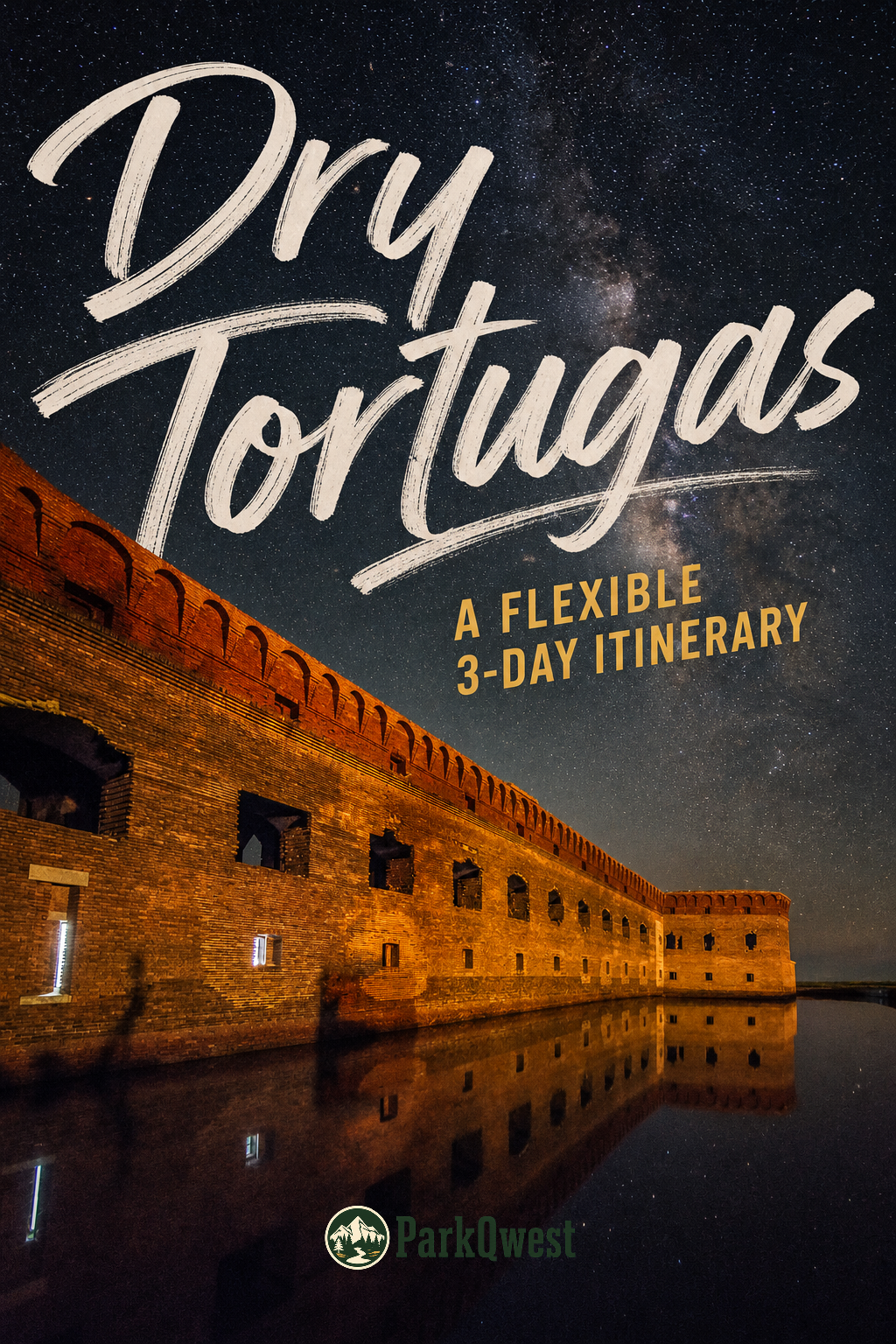
Dry Tortugas National Park works best as a three-day plan, not a single ambitious outing. The park sits almost 70 miles west of Key West, and its 100 square miles are mostly open water surrounding seven small islands. That means the real itinerary is as much about weather, boat or seaplane logistics, and conserving your energy as it is about Fort Jefferson, snorkeling, and photographs. Use Key West as your base, give the park a full day rather than squeezing it between other plans, and keep the final day deliberately useful if wind, storms, or an operator cancellation changes the picture.
Quick take
Book your transportation first, then build the rest of the trip around it. Dry Tortugas National Park is accessible only by the daily concession ferry, private or charter boat, or seaplane; the best three-day itinerary leaves one day open as a weather and energy buffer.
How to use this itinerary
This plan assumes you are staying in or near Key West for three nights and taking a day trip to Dry Tortugas National Park on the middle day. It is intentionally structured around a low-stress park day: an easy arrival day, one full day focused on the islands and water, and a final day that can become either a make-up day or a satisfying Key West day if conditions cooperate.
Transportation schedules, check-in rules, weather cancellations, food inclusions, and gear availability can change. Before committing, check the official Dry Tortugas National Park website and confirm details directly with your selected ferry, charter, or seaplane operator. Do not assume a particular departure time, return time, or activity is guaranteed.
Day 1: Key West staging day — prepare without burning yourself out
Morning: Arrive, settle in, and protect tomorrow’s energy
Make Day 1 a logistics-and-recovery day, especially if you have flown, driven the Florida Keys, or arrived after a busy travel stretch. Check into your lodging, put together a dry bag or daypack, and read your transportation confirmation line by line. The most avoidable Dry Tortugas mistake is showing up tired, under-hydrated, or unclear about where to report.
Use the morning to confirm the practical details that matter most:
- Transportation: Reconfirm the meeting location, required check-in timing, baggage limits, and what happens if weather changes plans.
- Water plan: Bring a reusable bottle, but verify whether drinking water, meals, or refill opportunities are included with your chosen transportation.
- Water activities: If snorkeling is important, verify whether equipment is provided, whether you may bring your own, and any current safety guidance.
- Medication: Pack motion-sickness remedies, prescription medication, and sunscreen in a place you can reach easily rather than in buried luggage.
Afternoon: Buy supplies, then keep the agenda light
Pick up the foods you will actually eat after a long day on the water: salty snacks, fruit, sandwiches or other portable lunch items if needed, and an easy dinner for your return. Favor familiar foods over a complicated picnic. If the sea is rough or you are prone to motion sickness, a huge rich meal the night before is rarely the clever choice.
Spend the rest of the afternoon at an unhurried pace. A short walk, a shaded café break, or time by your hotel pool is plenty. You do not need to “earn” tomorrow’s park day by exhausting yourself today.
Evening: Pack once, sleep early
Lay out clothing for heat, wind, salt spray, and strong sun. The NPS describes a subtropical climate generally ranging from 60°F to 90°F; winter, from December through March, is typically windier and rougher on the water, while summer’s June-through-November tropical storm season brings heat, humidity, and a higher chance of isolated storms.
Pack for the transition, not just the beach
The park’s blue water can look like a swim-day invitation, but the journey may be windy, cool, or wet. Bring a light layer for the ride, sun protection for the island, and dry clothing or a cover-up for the return.
- Footwear: Choose secure shoes or water shoes with grip; avoid relying on flimsy footwear around uneven historic surfaces and wet edges.
- Sun protection: Pack a hat, sunglasses, reef-conscious sun protection if you use it, and a long-sleeve layer.
- Dry storage: Use a waterproof pouch or dry bag for phone, tickets, medication, and an extra layer.
- Comfort items: Bring motion-sickness supplies, insect protection if desired, and a small towel.
Alternate for weather or closures: If your Day 2 transport has already been canceled, do not scramble to turn Day 1 into an overstuffed sightseeing marathon. Ask whether a later departure can be moved to Day 3, preserve that availability if possible, and use the afternoon for low-key Key West time and rest.
Day 2: Dry Tortugas National Park — Fort Jefferson, water, and unhurried observation
Morning: Travel out with a realistic goal
Today has one purpose: give Dry Tortugas your full attention. Whether you arrive by ferry, charter boat, private boat, or seaplane, the approach is part of the experience. This is a remote national park, not a roadside stop; leave your schedule roomy enough that transportation and conditions set the rhythm.
Once on Garden Key, orient yourself before racing toward the water. Fort Jefferson is the park’s defining historic feature, and the combination of its masonry walls, surrounding open water, and marine setting rewards a slow first loop. Read posted guidance, note current conditions, and decide whether your first priority is fort exploration, snorkeling, bird watching, photography, or simply taking in the scale of the place.
Afternoon: Divide your time between land and water
A satisfying first visit usually works better with a two-part afternoon than with an attempt to do everything. Give yourself one focused block for Fort Jefferson and one for the water, separated by food, shade, and hydration. The park is known for coral reefs and marine life, but conditions, comfort level, currents, visibility, and available access should determine whether you snorkel.
- Fort first: Best for travelers who want historical context, architectural photographs, and a calmer start before changing into water gear.
- Water first: Best when conditions are favorable and snorkeling is your main priority; save the fort for later, when you are ready to dry off.
- Land-focused visit: Best for rough water, nervous swimmers, families with limited water confidence, or anyone more interested in history and birds than snorkeling.
Eat before you become depleted, not after. Find shade where permitted, drink water steadily, and leave more time than you think you need to rinse off, change layers, gather gear, and be ready for the return. The goal is not to maximize every minute; it is to avoid ending the day sun-struck, hungry, and rushed.
Evening: Recover rather than schedule a second “big” day
Back in Key West, plan for a simple dinner near your lodging or food you prepared ahead of time. Salt, sun, motion, and swimming can create a delayed crash even when the day felt easy. Charge devices, review tomorrow’s weather outlook, and decide whether Day 3 should remain open-ended or become your rescheduled park opportunity.
Alternate for weather or closures: If your transportation cannot operate, treat the cancellation as a real safety decision rather than a ruined trip. Ask immediately about rebooking on Day 3. If that is not possible, use the day for a relaxed Key West itinerary: a long breakfast, indoor or shaded cultural stops, waterfront time only as conditions allow, and an early dinner. The park is mostly water, and rough seas or storms are part of the planning reality.
Day 3: Weather buffer — use it for a second chance or a softer finish
Option A: Take the rescheduled park day
If Day 2 was canceled and a Day 3 space opens, repeat the park-day framework rather than trying to compress it. Keep breakfast gentle, bring the same organized bag, and simplify your return travel plans if possible. A successful rescheduled day is better than a hurried attempt to leave the Keys immediately afterward.
Option B: Build a Key West recovery day around what the park did not provide
If your Dry Tortugas visit happened as planned, Day 3 fills an important gap: slow time on solid ground. Sleep later, have a proper sit-down breakfast, and choose one or two nearby activities rather than chasing a checklist. After a remote-island day, this is the right moment for air-conditioning, laundry, a leisurely meal, and sorting photos.
| If conditions are... | Use Day 3 for... |
|---|---|
| Day 2 transport was canceled | A rescheduled park departure, if available |
| You visited the park but feel worn down | A late start, shade, hydration, and an easy evening |
| Weather remains unsettled | Indoor or protected Key West plans and flexible meals |
Alternate for weather or closures: If Day 3 is also unsuitable for travel to the park, resist making unsafe private-boat decisions just to salvage the itinerary. Save the official park information, note what access method you would choose next time, and let the trip end with the practical lesson Dry Tortugas teaches best: remote places are worth planning around, not forcing.
Before you go
- Review official alerts, closures, hours, and reservation requirements.
- Allow extra travel time and keep an alternate plan.
- Use official NPS information as the final authority.
Sources
- Dry Tortugas National Park — official National Park Service site — National Park Service, accessed 2026-10-29
Continue planning Dry Tortugas
Learn more about Dry Tortugas and find other helpful guides, trails, and trip information in the ParkQwest guide.
ParkQwest is a QwestLyfe Community.
QwestLyfe helps you track your lifelong bucket lists, collections, recipes, and the places you've been. Document your experiences, add notes and pictures, and share them with your friends — and the world.