
Everglades National Park: First-Trip Guide
Plan with current information. Conditions, roads, services, fees, and rules can change. Verify details with the National Park Service before your visit.
Everglades National Park is not a park you “see” from one overlook and check off in an hour. It is a 1.5-million-acre system of wetland, forest, and marine habitats, protected not for a single monument but for the living connections among water, plants, birds, reptiles, fish, and mammals. For a first visit, the most useful mindset is to plan for observation rather than spectacle: choose one area, slow down enough to notice it, and let the park’s scale shape your day instead of trying to conquer the whole map.
Start with the right mental map
Everglades National Park was established in 1947 as the first national park created specifically for its biodiversity. That distinction matters because the park’s appeal is ecological rather than landmark-driven. You are here to understand an enormous, water-shaped landscape that helps support native wildlife and contributes to South Florida’s drinking-water system.
The first-timer challenge is scale. The park is large, its experiences are spread out, and a route that looks simple on a map can involve more driving and decision-making than expected. Rather than treating every possible stop as mandatory, decide what kind of Everglades day you want: a short orientation visit, a wildlife-and-walking day, or a longer outing centered on water-based recreation if current conditions and park offerings support it.
Quick take
For a first visit, pick one access area and one main activity. The Everglades rewards depth, not a rushed attempt to cover 1.5 million acres in a single day.
How to organize your first visit
Build your plan around your approach route, not around a wish list. The official NPS directions identify the Ernest Coe Visitor Center as a practical starting point for visitors coming from Miami, points north, Florida City, Homestead, and the Florida Keys. It is the sensible orientation stop if you are entering via State Road 9336/Palm Drive.
From the Miami area and points north, the NPS directs visitors south on the Florida Turnpike until it merges with U.S. 1 at Florida City, then right at the first traffic light onto Palm Drive/State Road 9336. Visitors driving north from the Florida Keys turn left on Palm Drive in Florida City and follow park signs. Use those directions as your durable arrival framework, then check the official NPS page shortly before leaving for current road, facility, weather, and activity information.
Choose a base that matches your entry plan
If your visit begins through the Ernest Coe entrance route, Florida City or Homestead is the most straightforward planning base because both sit near the approach described by the NPS. This is especially useful for travelers arriving from Miami who want a simpler morning drive and time to get oriented before choosing an activity.
Visitors coming from the Florida Keys can also approach via Florida City and Palm Drive, but should think realistically about drive time before committing to an early-morning plan. The point is not that one base is universally “best”; it is that your overnight location should reduce unnecessary backtracking on the day you actually enter the park.
| If you are arriving from… | Most useful first move | Planning tradeoff |
|---|---|---|
| Miami or points north | Use the NPS route through Florida City and begin with orientation. | Do not underestimate urban traffic before the park approach. |
| Homestead or Florida City | Make the visitor center your decision point for the day. | You still need to choose a focused activity rather than trying to do everything. |
| The Florida Keys | Drive north to Palm Drive and follow park signs. | A longer approach can compress your time in the park. |
What a first visit should actually include
The strongest first visit has three parts: an orientation stop, one immersive activity, and unhurried time for wildlife observation. Think in layers rather than attractions. First learn what part of the park you are entering and what conditions look like; then spend time in one habitat; then leave room for the moments that do not fit a timetable, such as a bird-filled wetland edge or a stretch of water that suddenly makes the park’s scale make sense.
1. Get oriented before choosing your route
At Ernest Coe Visitor Center, use the available park information to ask a few practical questions: Which areas are open today? Which short walks or scenic stops best match the time you have? Are water-based opportunities currently available and appropriate for your experience level? This is where a vague Everglades plan becomes a safe, workable one.
Do not rely on an old social post or a saved pin for operational details. Conditions in a wetland park can change the quality and practicality of an outing, so confirm current guidance on the official NPS website or with park staff when you arrive.
2. Choose one signature way to experience the ecosystem
- Short walk or self-guided stop: Best for first-timers who want context, a manageable pace, and time to look closely at vegetation and wildlife signs.
- Longer walking-focused outing: A good choice if you want the park to feel less like a drive-through visit. Confirm current trail conditions, route length, and any advisories with the NPS.
- Water-based experience: Potentially the most direct way to understand why water defines the Everglades, but it requires more attention to current weather, availability, safety guidance, and your own comfort on the water.
- Scenic driving with deliberate stops: Useful when time or mobility is limited, provided you stop often enough to observe rather than merely pass through.
None of these is automatically superior. A short, attentive walk can be more memorable than an ambitious outing spent watching the clock. Wildlife is never guaranteed, but patience improves the experience far more than racing from stop to stop.
Quick take
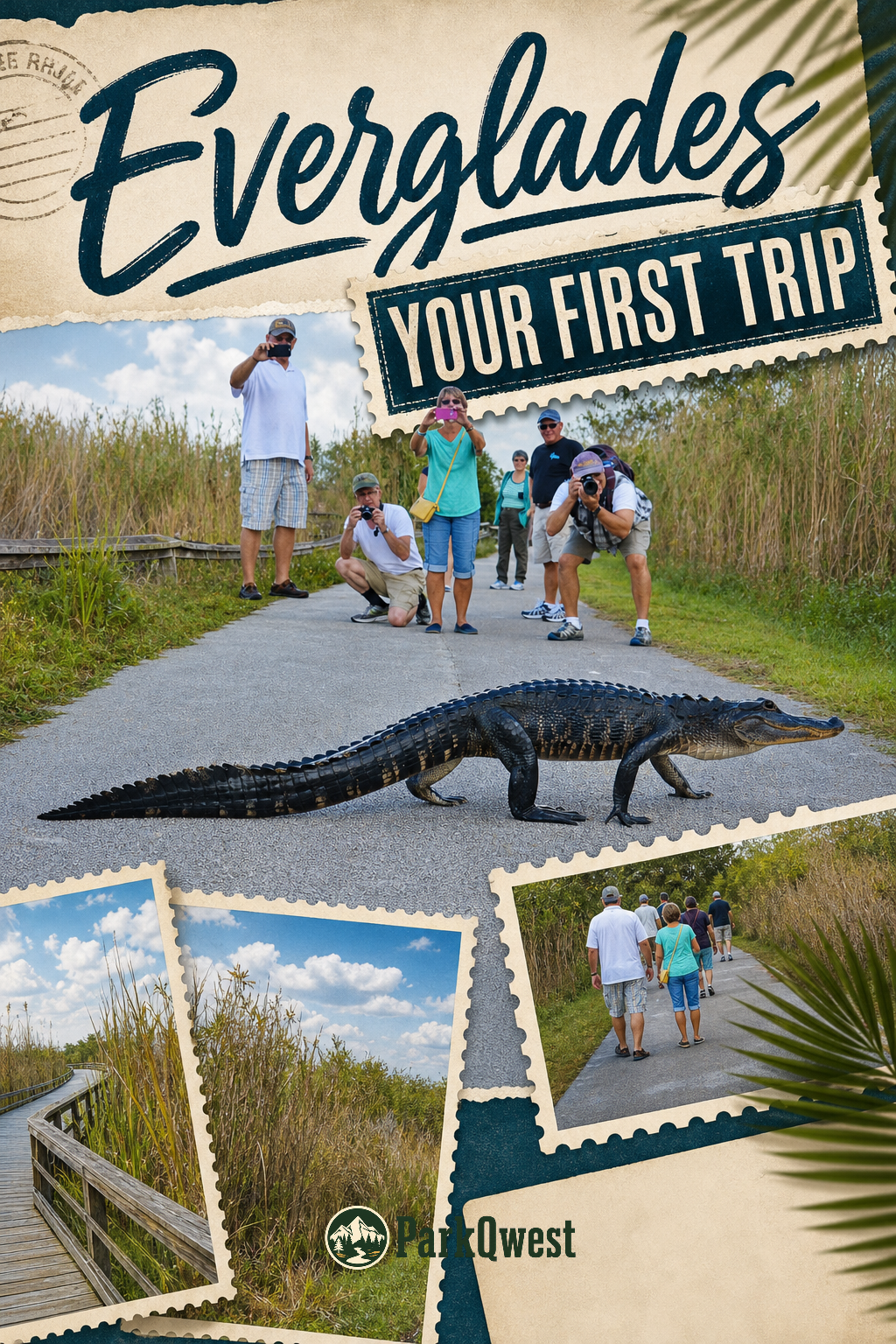
Your best wildlife strategy is simple: move quietly, pause often, and give one place time. Treat animals as wild and unpredictable, not as scheduled photo opportunities.
Set a realistic pace
A half day is enough for an introduction; a full day gives the landscape room to register. If you only have a few hours, prioritize arrival, orientation, and one activity. If you have a full day, add a second experience only after you have confirmed travel time and current conditions.
The park has a wet season from mid-May through November and a dry season from December to mid-May. That seasonal pattern affects the feel of a visit, but it should not turn your first-trip plan into a rigid calendar exercise. Florida’s climate is generally mild and sunny, with average annual temperatures in South Florida and the Keys ranging from 74° to 77°F; still, day-of weather and water conditions matter more than averages.
Common first-timer mistakes to avoid
- Trying to cover the entire park: The park’s size makes this a recipe for windshield time. Choose an area and accept that another visit can reveal another side of the Everglades.
- Skipping the orientation stop: The visitor center is not merely a brochure stop; it helps you convert changing conditions into a practical same-day plan.
- Planning around a guaranteed animal sighting: Build your day around habitat and experience, not one species or one viral-photo expectation.
- Assuming online details are permanent: Verify current access, services, programs, and recreation options on the official NPS Everglades page.
- Overloading the day: A first visit should leave time to look, listen, and understand what you are seeing.
A practical first-day rhythm
- Arrive with a single priority: Decide whether your day is mainly for walking, wildlife observation, scenic stops, or a currently available water-based activity.
- Begin at Ernest Coe Visitor Center: Confirm conditions and ask staff which current option best fits your available time.
- Spend the middle of the day on one immersive activity: Avoid stacking multiple major plans before you know how long the first one takes.
- Build in an observation stop afterward: This is your chance to slow down, review what you noticed, and let the landscape be more than a route between destinations.
- Leave while the plan still feels complete: A focused first day is a better introduction than an exhausted scramble for one more stop.
Everglades National Park works best when you approach it as a living system, not a highlight reel. Start through the official entrance route, use the visitor center to make current decisions, choose one meaningful way to spend time in the landscape, and resist the urge to measure the day by miles covered. That is how a first visit becomes the beginning of understanding the Everglades rather than simply passing through it.
Before you go
- Review official alerts, closures, hours, and reservation requirements.
- Allow extra travel time and keep an alternate plan.
- Use official NPS information as the final authority.
Sources
- Everglades National Park — official National Park Service site — National Park Service, accessed 2026-10-15
Continue planning Everglades
Learn more about Everglades and find other helpful guides, trails, and trip information in the ParkQwest guide.
ParkQwest is a QwestLyfe Community.
QwestLyfe helps you track your lifelong bucket lists, collections, recipes, and the places you've been. Document your experiences, add notes and pictures, and share them with your friends — and the world.