Death Valley National Park: Park Inspiration
Plan with current information. Conditions, roads, services, fees, and rules can change. Verify details with the National Park Service before your visit.
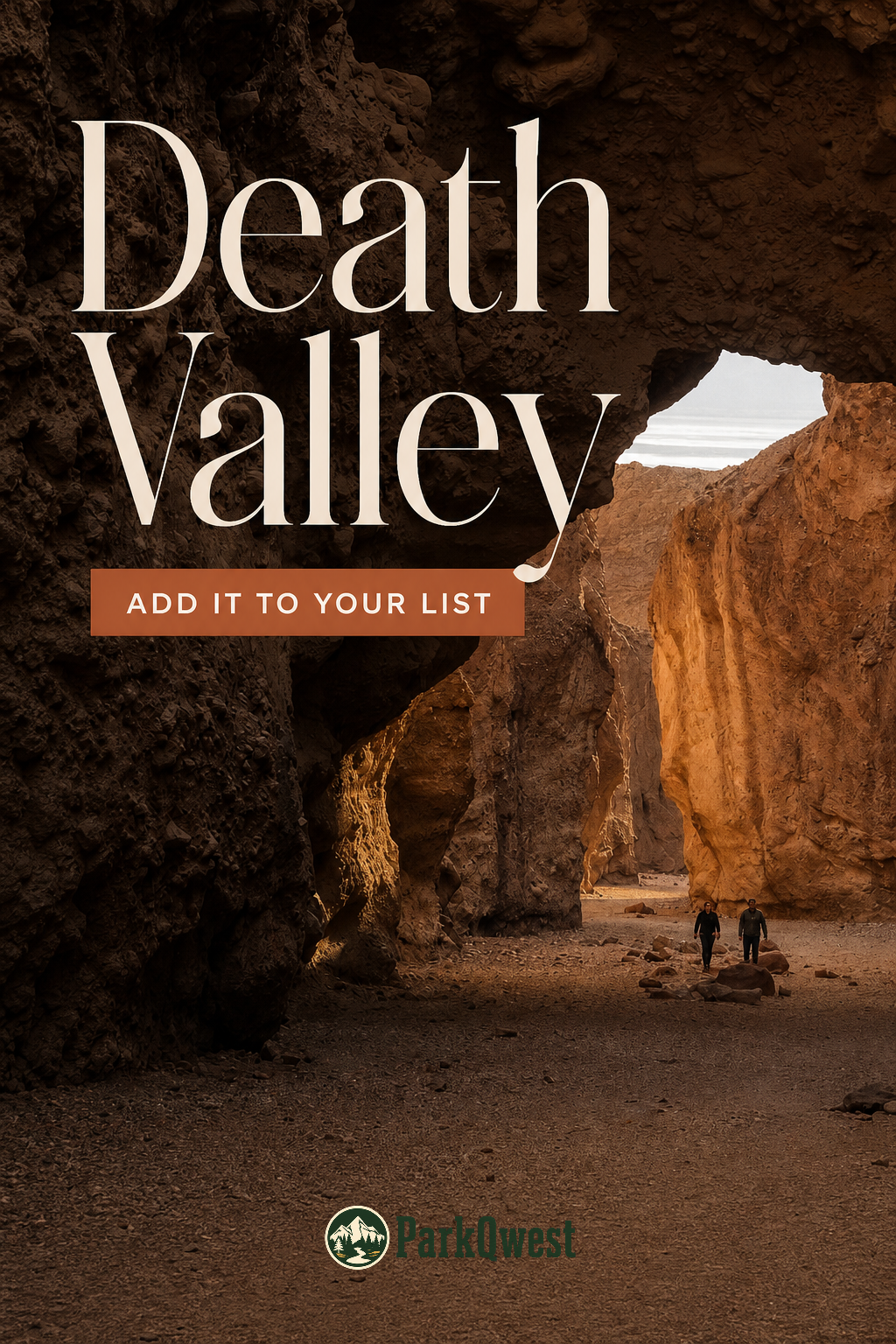
Death Valley National Park is not a place that asks for a quick stop. It asks you to slow down long enough to notice scale: the basin dropping below sea level, the mountains rising beyond it, the dry ground holding color instead of emptiness. The first impression may be starkness, especially if you arrive under a hard blue sky. Then the contrasts begin to work on you—salt-toned flats, shadowed slopes, distant snowy peaks in winter, an improbable green oasis, and the realization that life persists here with remarkable precision.
This is a park for travelers who like landscapes that change their mood over the course of a day. Morning can feel cool and hushed; midday makes the desert’s intensity impossible to ignore; evening softens the terrain into layers of gold, rose, and violet. Plan well, give yourself permission to do less, and Death Valley becomes less about checking off overlooks and more about feeling wonderfully small in a place built on extremes.
Why Death Valley belongs on a lifelong list
The drama is real, but it is not one-note. Death Valley National Park is a below-sea-level basin shaped by steady drought and record summer heat, according to the National Park Service. That description is useful, but it does not quite prepare you for the visual contradictions: high peaks can hold winter snow while the valley floor lies far below; rare rain can produce broad wildflower displays; oases provide water, shade, and habitat in a landscape that otherwise seems stripped to its essentials.
The park’s name suggests an empty, forbidding place. Its deeper story is more interesting. Death Valley is a lesson in adaptation. Tiny fish survive in lush oases, wildlife finds refuge where water appears, and plants make the most of narrow windows of favorable conditions. A visit is more meaningful when you look for those signs of persistence rather than treating the desert as scenery alone.
Quick take
Come to Death Valley for contrast, not conquest. The most satisfying day usually pairs one big, open view with one quieter moment: low winter light on the basin, the sound of water at an oasis, or the first stars after sunset.
Build a visit around changing light
Death Valley rewards early starts and unhurried evenings. In a large, exposed landscape, the angle of the sun changes what you can see and how the place feels. Early and late light brings out ridges, textures, and long shadows that flatten under a high sun. It also gives you a more comfortable window for stepping outside, especially during warmer parts of the year.
Morning: let the scale arrive slowly
Start with a broad view rather than immediately trying to cover ground. The basin can be hard to read at first: distances are deceptive, mountains seem close when they are not, and the valley floor can look almost abstract. A quiet morning is the best time to absorb the dimensions of the park and decide what kind of day you want—scenic wandering, a short walk, photography, geology-focused observation, or simply time in the desert air.
Midday: choose observation over endurance
When the day heats up, especially from May onward, use the middle hours thoughtfully. The park’s heat is not a backdrop; it is a planning factor. Shift toward shorter outdoor stops, shaded breaks where available, interpretive reading, map review, and scenic viewing that does not require turning the hottest hours into a test of will.
Evening: stay for the emotional payoff
As the sun lowers, the same landscape often feels gentler and more dimensional. This is the time to seek stillness: sit somewhere safe, watch the colors pull back from the valley walls, and notice how quickly a day of heat can become a cool desert night in winter. If you are choosing between adding one more stop and allowing time for sunset, the sunset is often the better memory.
- For photographers: Prioritize side light, long shadows, and a modest itinerary. Chasing every viewpoint can leave little time to wait for the landscape to change.
- For first-time visitors: Pair a high, expansive perspective with a closer look at the valley floor or an oasis environment. The contrast makes the park’s story easier to understand.
- For reflective travelers: Leave open space in the day. Death Valley’s strongest moments are often the ones that cannot be scheduled beyond “be here before the light changes.”
Choose the season for the experience you want
There is no single best season—only different versions of the park. Spring is the most popular period, with warm, sunny days and the possibility of wildflowers. Autumn brings generally clear skies and warm but more pleasant conditions beginning in late October. Winter offers cool days, chilly nights, low-angled light, and the possibility of snow on the high peaks; summer begins early and can be dangerously hot by May.
| Season | What it feels like | Best planning mindset |
|---|---|---|
| Spring | Warm, sunny, popular; wildflowers are possible after the right conditions. | Enjoy comfortable exploration, but do not plan a trip around a flower display that may not occur. |
| Summer | Extreme heat arrives early and can dominate the entire experience. | Treat heat avoidance and conservative timing as the trip’s central design choices. |
| Autumn | Warm, generally clear, and more pleasant from late October. | Use the longer comfortable windows to combine scenic stops with time outdoors. |
| Winter | Cool days, chilly nights, rare rainstorms, and snow possible on high peaks. | Pack layers and lean into the low light, crisp air, and dramatic mountain-to-basin contrast. |
Quick take
If your dream is a wide-open, unhurried desert day, winter and late autumn offer a compelling balance of light and more comfortable conditions. If you visit in spring, enjoy the possibility of flowers—but regard them as a gift from recent weather, not a promise.
Make the practical choices that protect the magic
The park is enormous, and multiple entrances lead into it. That means route planning matters more here than in a park where every major sight branches from one central road. Before leaving, decide which part of the landscape matters most to you, map your approach, and check the official park page for current directions, road conditions, alerts, and available services. Do not assume that a route shown on a general map is appropriate for your vehicle or current conditions.
It is also wise to design your day with margins. In an extreme environment, a plan that includes a buffer for heat, weather, changing road conditions, rest, and turning around is better than a packed schedule that depends on everything going exactly right.
- Water and food: Carry more than you expect to need for the time you plan to be out, and do not let a scenic drive replace basic preparation.
- Clothing: Use sun-protective layers and a hat in warm weather; bring insulating layers for winter mornings and evenings, when temperatures can feel very different from daytime conditions.
- Vehicle decisions: Match your route to your vehicle, your experience, and current NPS information. Verify conditions before committing to less-developed routes.
- Wildflower expectations: Rare rainstorms can create vast fields of wildflowers, but bloom timing and abundance vary. Check the official NPS page rather than relying on old social posts.
- Respect for life: Oases and desert habitats are not empty margins of the park. Stay on appropriate routes and give plants, wildlife, and fragile ground the space they need.
What to carry home besides photos
Death Valley National Park has a way of resetting your sense of abundance. The memorable details are not always the grandest ones: a patch of green where you expected none, a snowy summit beyond a sun-warmed basin, the strange calm after a hot afternoon, or the sight of a landscape continuing beyond what your eyes can comfortably measure.
Save this park for a trip when you want to feel the planet’s extremes without losing sight of its resilience. Plan with humility, check current information at the official National Park Service page, and leave the basin, oases, wildlife, and quiet exactly as the next traveler—and the life already thriving there—needs to find them.
Before you go
- Review official alerts, closures, hours, and reservation requirements.
- Allow extra travel time and keep an alternate plan.
- Use official NPS information as the final authority.
Sources
- Death Valley National Park — official National Park Service site — National Park Service, accessed 2026-10-14
Continue planning Death Valley
Learn more about Death Valley and find other helpful guides, trails, and trip information in the ParkQwest guide.
ParkQwest is a QwestLyfe Community.
QwestLyfe helps you track your lifelong bucket lists, collections, recipes, and the places you've been. Document your experiences, add notes and pictures, and share them with your friends — and the world.