Big Bend National Park: Family Adventure Guide
Plan with current information. Conditions, roads, services, fees, and rules can change. Verify details with the National Park Service before your visit.
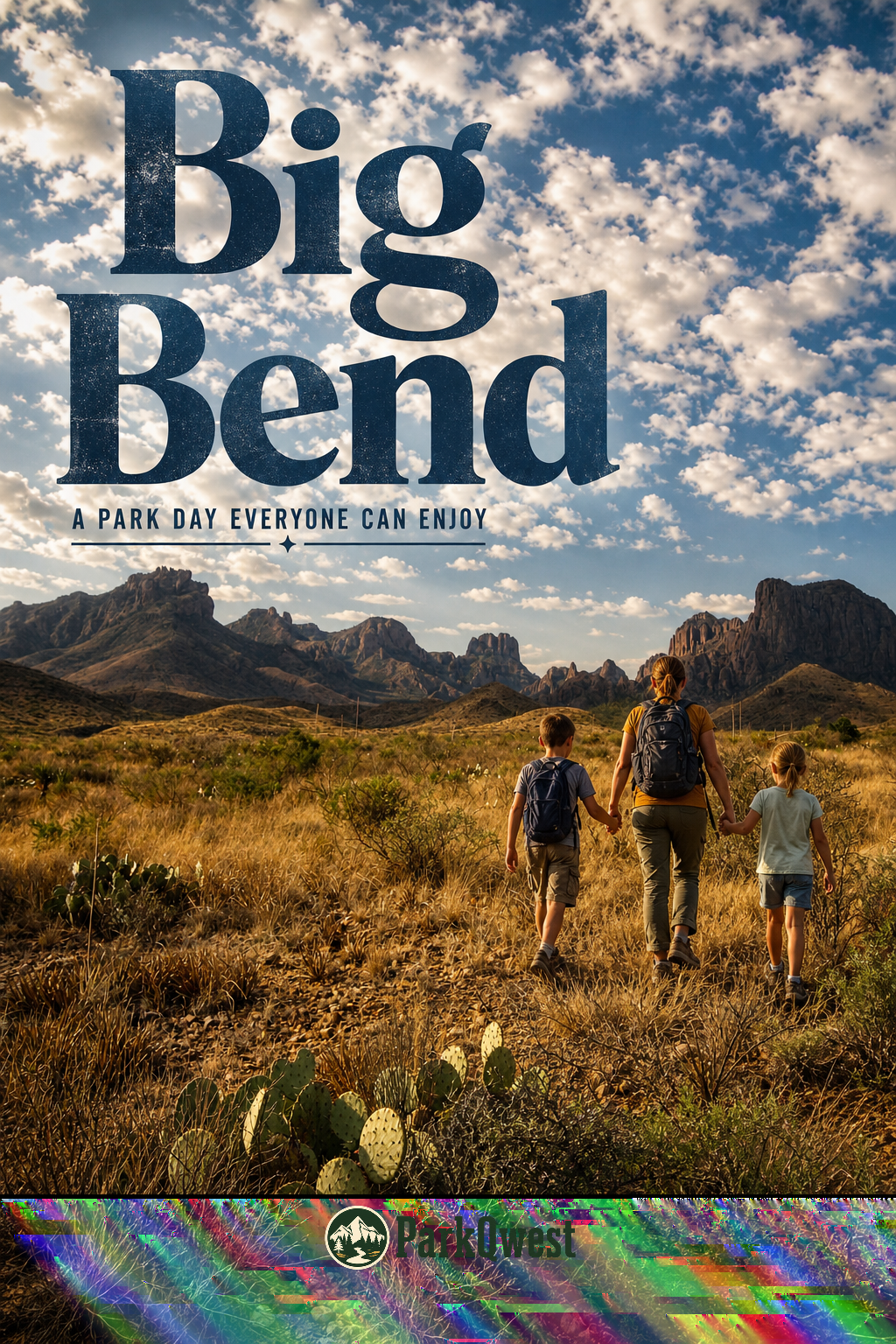
Big Bend National Park works best for families who plan in chapters, not marathons. This is a huge desert-and-mountain landscape where the drive between stops can be part of the day, the sun can change everyone’s mood by late morning, and a short outing can feel more memorable than an overstuffed itinerary. Build your visit around one main adventure, one easy scenic or visitor-center stop, dependable food-and-water breaks, and an early return before tired kids turn a beautiful place into a negotiation.
For children, Big Bend can feel wonderfully oversized: dark night skies, desert plants that look engineered for another planet, canyon walls, birds, and a river landscape unlike most family road trips. For adults, the practical challenge is pacing. The park sits in the Chihuahuan Desert, services are far apart, and weather deserves to shape the plan rather than merely appear in the packing list.
Plan the Day Around Energy, Not Just Miles
A successful family day usually has one “must-do” and two optional layers. The must-do might be a short walk, a scenic viewpoint, a visitor center stop, or time near a canyon or river setting. The first optional layer is a second short activity if everyone is doing well. The second is a low-effort backup: a picnic, a wildlife-watching pause from the vehicle, a junior-ranger-style activity sheet if available, or simply a quiet drive with snacks.
This approach matters because Big Bend’s scale can make a map look deceptively manageable. A child may be happy to ride for an hour, then need time to move; another may handle a longer walk but melt down if lunch is late. Rather than asking, “Can we fit in one more stop?” ask, “Do we have enough water, shade, food, and patience for one more stop?”
Quick take
For most families, the best Big Bend itinerary is deliberately underplanned: choose one outdoor priority before midday, protect a long lunch or rest window, then decide on an afternoon stop based on heat, wind, road time, and everybody’s energy.
Use a “20-minute test” with younger children
At the first outdoor stop, commit only to the first 20 minutes. Let children look for tiny details—spines, seed pods, bird calls, lizard tracks, layers in rock—rather than treating every walk as a distance challenge. If they are engaged, continue. If they are hot, hungry, or bored, turning around early is not failure; it preserves the rest of the day.
Give kids a job before leaving the vehicle. One can be the water captain, one can choose the snack break, and one can be the “notice something new” reporter. Older children can help read the map, compare route choices, track changing elevation or temperature, and decide which optional stop earns the afternoon vote.
Start With Information, Then Let the Day Unfold
A visitor center or park contact point is especially useful on a first family visit because conditions can change. Ask about current weather, road status, short family-appropriate walks, restroom locations, water availability, and any ranger-led or Junior Ranger opportunities. Do not assume a particular program, schedule, or activity is running. Check the official Big Bend National Park website or ask park staff when you arrive.
If a Junior Ranger booklet or similar activity is available, use it as a pacing tool rather than homework. Choose a few pages connected to what your family is already doing: identifying a desert adaptation, observing a bird, sketching a landscape, or learning why the night sky is so dark. A child who has a mission is often more patient during a drive or short interpretive stop.
Turn the landscape into a family scavenger hunt
- Desert detective: Find three ways plants appear to conserve water or protect themselves from heat.
- Sky watcher: Notice how clouds, wind, sun angle, and visibility change from morning to evening.
- Rock reader: Look for color bands, layers, cracks, and signs that water once shaped the terrain.
- Bird listener: Pause for one minute without talking and count distinct calls or wingbeats.
- Night-sky planner: Before sunset, have each child choose one thing they hope to see after dark—stars, a bright planet, a bat, or simply a darker sky than at home.
Keep the activity observational. Children should not collect rocks, plants, feathers, or other natural objects. A phone photo, sketchbook page, or made-up field-journal entry becomes a better souvenir anyway.
Heat Is the Main Itinerary Constraint
Big Bend receives abundant sunshine year-round, and the National Park Service notes that summer heat begins in May. From May through August, conditions can be extremely hot, with desert temperatures usually well above 100°F by late morning. The Chisos Mountains can be 10 to 15 degrees cooler than the desert, but “cooler” is not the same as cool enough to ignore hydration, sun protection, or exertion.
| Season pattern | Family planning emphasis |
|---|---|
| Spring, especially March | Warm, generally pleasant conditions, but this is typically the busiest season. Start early and expect popular areas to feel less spontaneous. |
| May through August | Make mornings the adventure window. Treat midday as recovery time: food, shade, air-conditioned driving where available, and low-exertion stops. |
| November through February | Mild, pleasant days are possible, but freezing conditions can occur. Pack layers and avoid assuming desert equals warm after sunset. |
Quick take
In hot weather, move the family’s biggest outdoor effort to early morning and protect the middle of the day. A shorter walk completed comfortably is more valuable than a longer one that leaves everyone depleted for the drive back.
Pack for the child who gets thirsty first
Carry more water than you expect to use, and make drinking routine rather than reactive. Offer water before getting out of the vehicle, at the turnaround point of a walk, and when everyone gets back in. Salty snacks, filling lunch food, hats, sun-protective clothing, sunscreen, and a basic first-aid kit all earn their place in the car.
- Footwear: Closed-toe shoes are the sensible default for uneven ground, spiny vegetation, and hot surfaces.
- Shade: Bring hats and seek existing shade during breaks; do not count on finding it exactly when needed.
- Comfort kit: Keep wipes, a spare shirt for younger children, a small trash bag, and a familiar snack within reach.
- Offline planning: Save maps and essential information before entering remote areas, since connectivity should not be your family’s safety plan.
A Realistic Family Day at Big Bend
Early morning: Eat before the drive, fill every water bottle, and choose one outdoor priority. If you are visiting during warm months, this is the time for your family’s most active portion of the day. Keep the goal modest enough that a younger child can still enjoy looking around rather than being hurried along.
Late morning: Shift to a viewpoint, a slower scenic drive, or a visitor-center stop if one is open and practical for your route. Use this window for bathrooms, refilling supplies where available, reviewing conditions with staff, and letting children reset. A 15-minute indoor or shaded pause can prevent a rough afternoon.
Midday: Make lunch a full stop, not food eaten while everyone is strapped into the car. Afterward, use a low-energy option: drawing what you saw, working on a park activity if available, reading in the vehicle, or taking a scenic drive. If a child naps, protect it; a rested kid is often the difference between a pleasant evening and a rushed departure.
Late afternoon and evening: Reassess rather than automatically launching a second major outing. If the group is fresh and conditions are suitable, choose a brief outdoor stop. If not, enjoy dinner, tell stories from the day, and set aside time for the park’s famously dark skies from a safe, appropriate location. Bring a layer even when the daytime felt hot.
Build In Breaks Before You Need Them
Big Bend is not a place to rely on frequent stores, quick fuel stops, or easy rerouting. The NPS specifically advises travelers to carry plenty of gas, food, water, and supplies because distances between towns and services are considerable. There are no electric-vehicle charging stations in Big Bend National Park, and the closest charging station is 130 miles away in Fort Stockton.
That reality makes family logistics part of the adventure plan. Fuel up before the park, pack a meal that does not depend on finding a table, and keep enough food for an unplanned delay. Before departing, review the official NPS page for current conditions and verify what facilities, water sources, restrooms, food options, roads, and visitor services are available for your route.
Choose the low-energy backup on purpose
Wind, heat, sibling friction, or a long drive can derail the original plan. Your backup does not need to be a lesser day. It can be a visitor-center exhibit, a short accessible-to-your-family overlook or paved-area stop after verifying current conditions, a picnic with a nature journal, or an early return for rest before stargazing.
The family win at Big Bend is not checking off the most places. It is helping children leave with a real sense of desert scale: the quiet between bird calls, the toughness of cactus in hard sun, the surprise of cooler mountain air, and a night sky dark enough to make them look up without being asked.
Before you go
- Review official alerts, closures, hours, and reservation requirements.
- Allow extra travel time and keep an alternate plan.
- Use official NPS information as the final authority.
Sources
- Big Bend National Park — official National Park Service site — National Park Service, accessed 2026-10-14
Continue planning Big Bend
Learn more about Big Bend and find other helpful guides, trails, and trip information in the ParkQwest guide.
ParkQwest is a QwestLyfe Community.
QwestLyfe helps you track your lifelong bucket lists, collections, recipes, and the places you've been. Document your experiences, add notes and pictures, and share them with your friends — and the world.