
Park of the Day: Hovenweep National Monument
Plan with current information. Conditions, roads, services, fees, and rules can change. Verify details with the National Park Service before your visit.
A high-desert monument worth seeking out
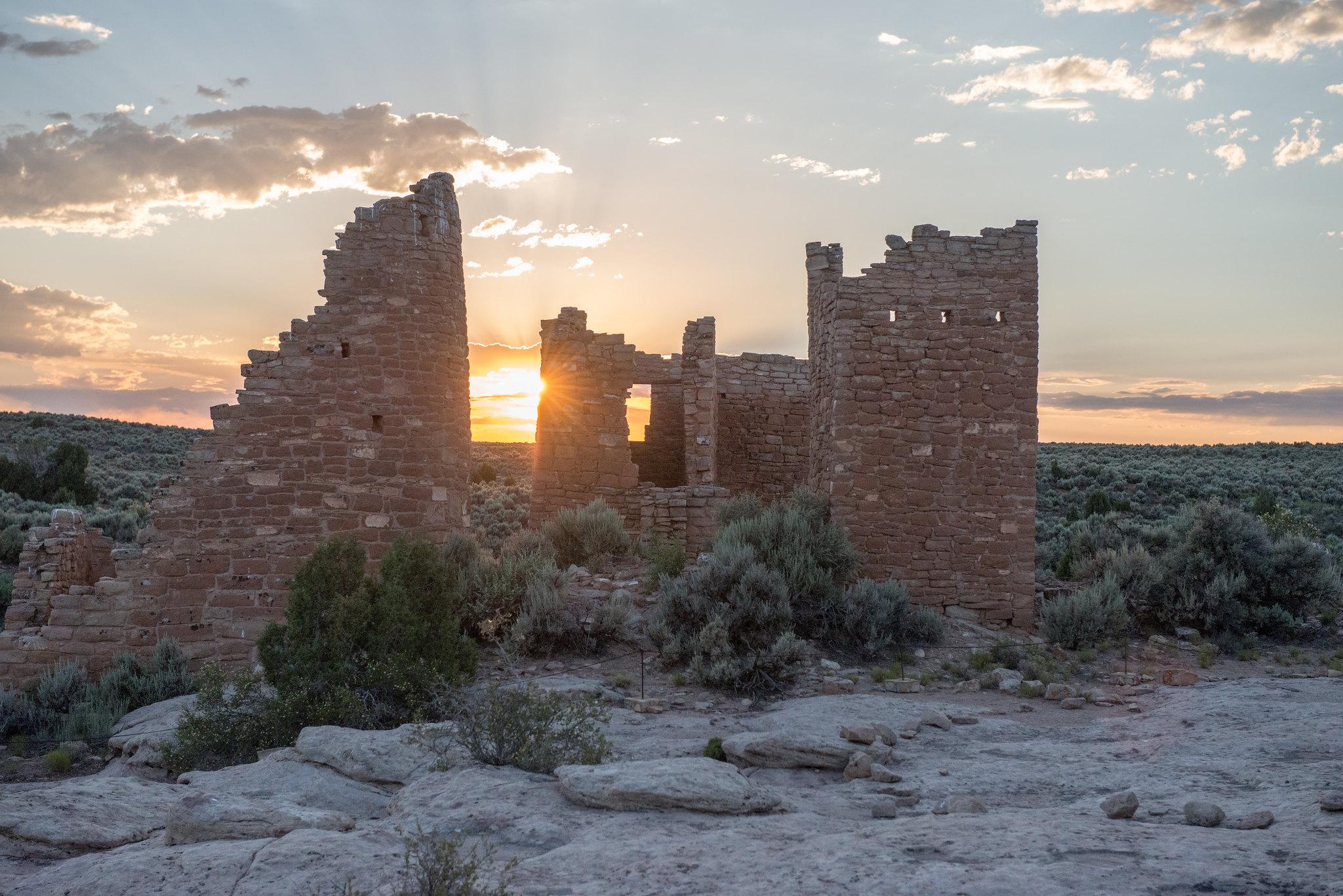
Hovenweep National Monument deserves a place on today’s travel list because it pairs remarkable ancestral architecture with a setting that asks us to slow down and look closely. Preserving six prehistoric sites built between 1200 and 1300 CE, the monument offers a direct encounter with places whose construction still inspires questions about purpose, skill, and community.
This is not a destination defined by a single overlook or one easily summarized landmark. Its power is in the details: multistory towers on canyon rims, structures balanced on boulders, and stonework that makes us consider the motivation and care behind every built form.
Quick take
Come to Hovenweep for an unhurried look at prehistoric structures built with extraordinary attention to detail, and plan around the realities of high-desert weather and remote roads.
What makes Hovenweep distinctive
The monument preserves six sites, each connected by the broader story of people building here in the 1200s and 1300s CE. The structures may have served as ceremonial centers, adding a compelling layer of possibility without reducing the sites to a single easy explanation.
Hovenweep’s towers are its defining visual experience. Some stand on canyon rims; others are balanced on boulders. That combination of placement, design, and precision is what gives the monument its particular character and makes a visit feel less like checking off a landmark than studying a landscape shaped with intention.
What a visit asks of us
We should arrive ready to pay attention rather than rush. Hovenweep rewards a measured pace, whether we are considering the scale of a multistory tower, the relationship between a structure and its surrounding terrain, or the evident care in the construction.
The setting is part of the experience, too. Hovenweep lies on the Colorado Plateau, a high-desert region where temperatures can fluctuate by more than 40 degrees in a single day. That range is a practical consideration, but it also encourages us to plan thoughtfully and stay aware of changing conditions.
Signature moments to build into the day
First, make time simply to encounter the towers. Their locations—perched along canyon rims and balanced on boulders—are central to what makes Hovenweep memorable. We can appreciate both the larger composition of the sites and the close-up evidence of detailed construction.
Second, let the unanswered questions remain part of the experience. The sites may have been ceremonial centers, and the monument’s structures invite reflection on the people who built them between 1200 and 1300 CE. We do not need a definitive explanation to recognize the accomplishment represented by these places.
Planning a practical visit
The Hovenweep Visitor Center is located about 40 to 45 miles from Cortez, Colorado, and from Blanding and Bluff, Utah. If we are using GPS or a phone navigation app, it is important to set the destination specifically as the Hovenweep National Monument Visitor Center and to make sure the route matches the directions provided on the monument’s website.
Route choice matters here. Alternate routes to the visitor center, as well as any roads to the monument’s remote outlying units, can be very rough. We should treat navigation as part of the day’s preparation rather than assuming every suggested route will be suitable.
Spring, from April through May, and fall, from mid-September through October, are the temperate and most popular seasons. During those periods, daytime highs average 60 to 80 F and lows average 30 to 50 F. Summer temperatures often exceed 100 F, making strenuous exercise difficult, while winter highs average 30 to 50 F and lows average 0 to 20 F.
Give Hovenweep the time it deserves: enough flexibility to travel carefully, account for weather swings, and absorb more than one structure or site. This is a monument best approached with water, layers, reliable directions, and an open schedule for looking closely.
Before you go
- Review official alerts, closures, hours, and reservation requirements.
- Allow extra travel time and keep an alternate plan.
- Use official NPS information as the final authority.
Sources
- Hovenweep National Monument — official National Park Service site — National Park Service, accessed 2026-10-14
Continue planning Hovenweep
Learn more about Hovenweep and find other helpful guides, trails, and trip information in the ParkQwest guide.
ParkQwest is a QwestLyfe Community.
QwestLyfe helps you track your lifelong bucket lists, collections, recipes, and the places you've been. Document your experiences, add notes and pictures, and share them with your friends — and the world.