Big Bend National Park: Don't-Miss Experiences
Plan with current information. Conditions, roads, services, fees, and rules can change. Verify details with the National Park Service before your visit.
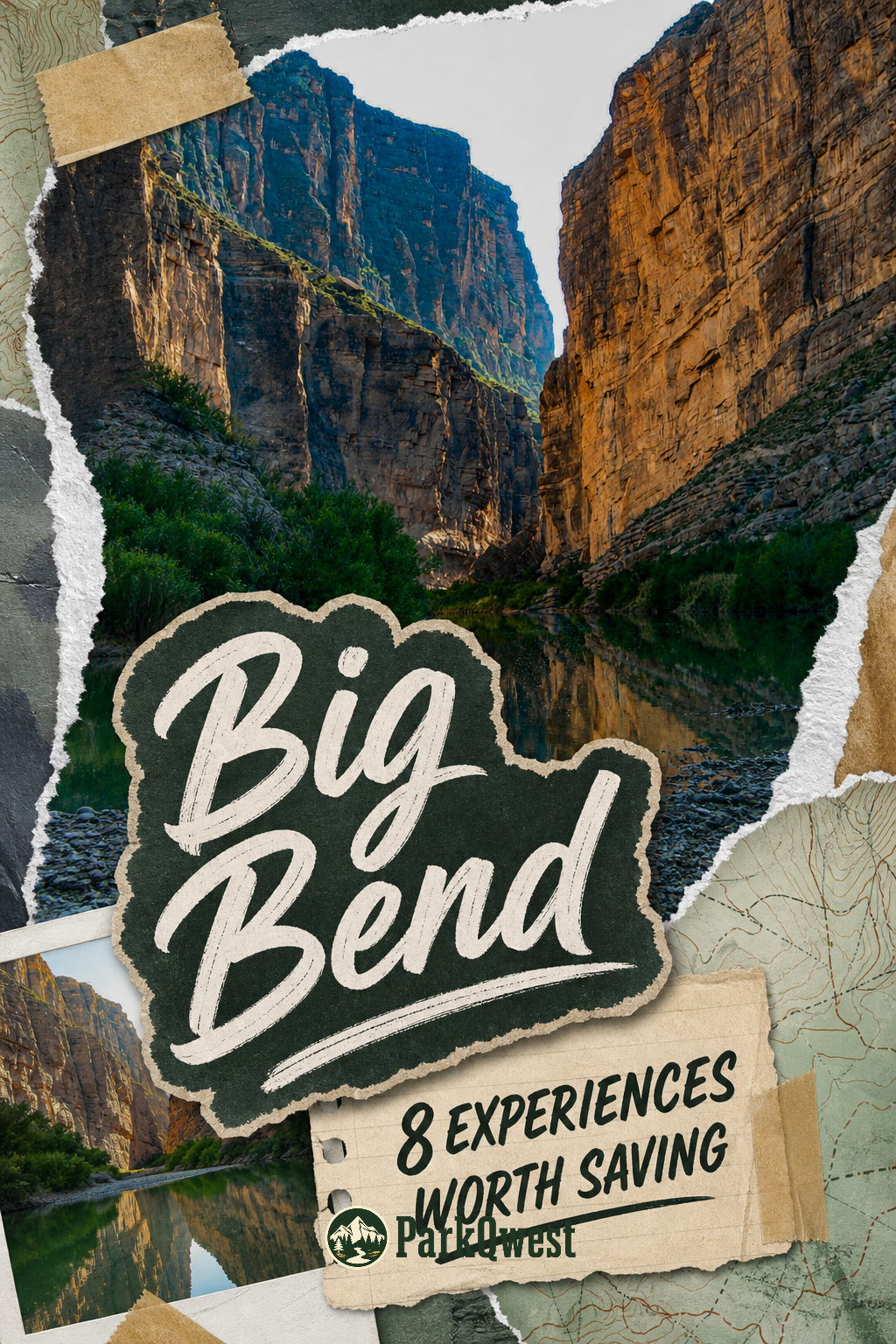
Big Bend National Park rewards travelers who plan for scale, heat, and distance rather than trying to check off every viewpoint or trail. This is Far West Texas at the end of long roads: a Chihuahuan Desert landscape shaped by a river, a solitary mountain range, and unusually rich wildlife. The best Big Bend trip is usually not the most packed one. It is the one that pairs a few well-chosen experiences with enough time, water, fuel, and daylight to enjoy them without turning every mile into a rush.
Quick take
Choose Big Bend experiences by your preferred temperature, pace, and time of day. Desert-focused days reward early starts; mountain time can be cooler, often by 10–15 degrees; and the park’s dark skies make an unhurried evening worth protecting.
How to Choose Your Big Bend Priorities
Rather than treating all eight ideas as a mandatory list, start with three questions: Do you want movement, scenery, wildlife, or quiet? Then match your choices to the season and your available daylight. Spring, especially March, is typically warm and pleasant but busy; May through August bring extreme desert heat; and November through February are generally mild, though freezing temperatures can occur.
- For a first short visit: Pick one daylight landscape experience, one early-morning nature experience, and the night sky.
- For warm-weather travel: Prioritize mountains, sunrise, birding, and stargazing over long midday desert outings.
- For a slower multi-day trip: Add river-country scenery, botanical detail, and time for an intentionally unhurried drive.
Eight Don’t-Miss Ways to Experience Big Bend
1. Give the Dark Sky a Full Evening, Not a Leftover Half Hour
Why it matters: The National Park Service describes Big Bend’s night skies as “dark as coal,” and this is one of the park’s most distinctive resources. A truly dark landscape changes the scale of the trip: the desert stops feeling empty and starts feeling immense, with the mountains and open country fading into a much larger night horizon.
Best for: Stargazers, photographers who understand low-light preparation, couples, families with patient older children, and anyone who wants a memorable experience without adding a strenuous daytime outing.
Planning note: Protect one evening from a long return drive and bring layers even when days are warm. Let your eyes adjust, use a dim red light if you need illumination, and check the official NPS page for current night-sky programming or site-specific guidance rather than assuming an event will be offered.
2. Spend a Day in the Chisos Mountains for a Change of Scale
Why it matters: Big Bend is not only desert. Its solitary mountain range creates a striking contrast with the surrounding Chihuahuan Desert, and temperatures in the Chisos Mountains can run 10–15 degrees cooler than the desert. That temperature difference can make mountain time the sensible centerpiece of a hot-weather itinerary, not merely a scenic detour.
Best for: Hikers, travelers who prefer cooler daytime conditions, landscape photographers, and visitors whose idea of desert travel includes elevation and changing terrain.
Planning note: Choose an outing that fits your actual fitness, daylight, and water capacity, then verify current trail conditions on the NPS website. Cooler does not mean cold-proof or risk-free: weather, exposure, and elevation still deserve attention.
3. See Where the River Carves Limestone into Canyon Country
Why it matters: The Rio Grande is central to the park’s identity, carving what the NPS describes as temple-like canyons through ancient limestone. Looking into river country offers a different kind of Big Bend grandeur than the wide desert: geology becomes vertical, and the international border landscape becomes tangible.
Best for: Scenic-drive travelers, geology fans, painters, photographers, and visitors who want dramatic terrain without committing to an all-day hike.
Planning note: Build this around the current access and road information published by NPS. If you are considering any river-based activity, verify conditions, safety requirements, permits, and available services directly with the park; river conditions can change and should never be treated as a fixed attraction.
Heat-smart rule
From late morning onward, desert temperatures can be well above 100°F in the hottest months. Put exposed desert walking first thing in the day, save driving or indoor stops for the hottest hours, and carry more water than feels convenient.
4. Take a Sunrise-First Desert Walk
Why it matters: Sunshine is abundant year-round in Big Bend, but the desert is most comfortable and visually revealing when the day is young. Early light brings out texture in rock, cactus, and dry washes, while also making a short walk feel like an experience rather than an endurance test.
Best for: Early risers, casual walkers, photographers, and travelers visiting from May through August, when heat management should shape the whole day.
Planning note: Pick a route only after checking current NPS guidance, and turn around well before you feel depleted. Footwear, sun protection, navigation, and water matter even on a modest outing; distance is only one part of desert difficulty.
5. Bird at a Patient Pace Instead of Chasing a Checklist
Why it matters: Big Bend supports hundreds of bird species, with refuge found across a landscape where mountains, desert, and river corridors meet. Even travelers who do not identify birds by name can appreciate the value of slowing down in a park known for exceptional species diversity.
Best for: Birders, families with binoculars, wildlife photographers, repeat visitors, and travelers looking for a lower-impact alternative to a long hike.
Planning note: Go early, keep expectations realistic, and let habitat guide your attention rather than expecting a guaranteed sighting. Bring binoculars, a field guide or identification app downloaded for offline use, and check the official park page for seasonal birding information and current access notes.
6. Look Closely at the Desert’s Toughest Plants
Why it matters: Big Bend’s cactus and other desert plants are easy to overlook from a vehicle, yet they are part of what makes the park feel alive rather than barren. The NPS notes that tenacious cactus bloom in the southwestern sun; a close-looking stop turns the desert from a backdrop into a working ecosystem.
Best for: Gardeners, naturalists, macro photographers, children who enjoy spotting small details, and visitors who prefer observation over mileage.
Planning note: Treat flowers and wildlife as seasonal possibilities, not promises. Stay on durable, permitted surfaces, avoid touching plants or collecting anything, and check current NPS updates if a bloom season is a major reason for your visit.
7. Make the Long Approach Part of the Trip
Why it matters: Big Bend feels remote because it is remote. The park’s approach through Far West Texas is not dead time between attractions; it is part of the transition into a place where services are far apart and the landscape steadily becomes more open, drier, and less hurried.
Best for: Road-trippers, travelers who enjoy wide-open country, first-time visitors trying to understand the park’s logistics, and anyone building a realistic arrival day.
Planning note: The NPS specifically advises carrying plenty of gas, food, water, and supplies because distances between towns and services are considerable. There are no EV charging stations in Big Bend National Park, and the closest listed charging station is 130 miles away in Fort Stockton. Do not arrive assuming you can easily resupply after dark or recharge inside the park.
8. Reserve Time for a Desert Sunset Without Trying to “Do” It
Why it matters: A sunset pause is not filler in Big Bend; it is a way to notice how quickly color, temperature, and the apparent size of the land can change. After a day of driving, hiking, or wildlife watching, stillness helps tie the park’s mountain-and-desert contrasts together.
Best for: Travelers with limited mobility, weary hikers, families needing a low-effort evening plan, artists, and anyone who wants a quieter counterweight to a busy itinerary.
Planning note: Choose a legal, safe place to stop well before daylight fades, and allow enough time to return without rushing. Bring a warm layer, water, and a plan for navigation after dark; sunset should be the beginning of an evening experience, not the moment your preparation ends.
The Most Useful Big Bend Itinerary Is a Selective One
Big Bend National Park does not reward overstuffed days as reliably as it rewards good timing and sensible margins. Pair a mountain outing with a dark-sky evening, an early desert walk with a slow birding stop, or canyon scenery with a sunset pause. Before leaving for the park, confirm current conditions on the official NPS page, fill the tank, stock water and food, and choose fewer experiences than you think you can fit. That is how the park’s distance becomes part of the appeal rather than the thing that undoes the trip.
Before you go
- Review official alerts, closures, hours, and reservation requirements.
- Allow extra travel time and keep an alternate plan.
- Use official NPS information as the final authority.
Sources
- Big Bend National Park — official National Park Service site — National Park Service, accessed 2026-10-12
Continue planning Big Bend
Learn more about Big Bend and find other helpful guides, trails, and trip information in the ParkQwest guide.
ParkQwest is a QwestLyfe Community.
QwestLyfe helps you track your lifelong bucket lists, collections, recipes, and the places you've been. Document your experiences, add notes and pictures, and share them with your friends — and the world.