
Biscayne National Park: 3-Day Itinerary
Plan with current information. Conditions, roads, services, fees, and rules can change. Verify details with the National Park Service before your visit.
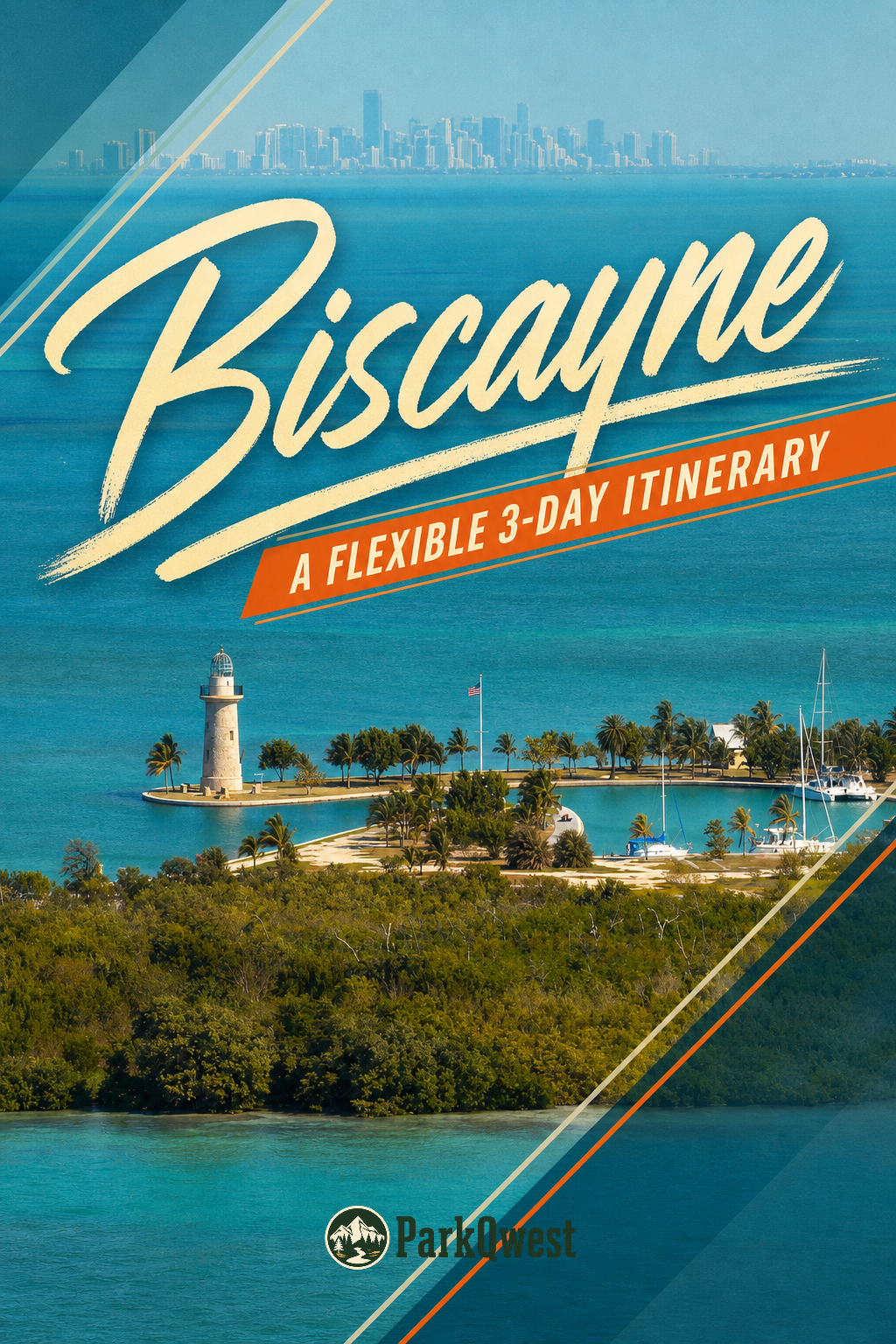
Biscayne National Park is best planned as a water-first park, not a drive-through park. From the mainland, you can take in the aquamarine bay, islands, and the feel of a place that sits within sight of Miami but operates on boat schedules, wind, weather, and marine conditions. This three-day itinerary gives Day 1 to orientation and the shoreline, Day 2 to the park’s island-and-reef experience, and Day 3 to the human history and a practical second chance at whatever conditions changed. It is intentionally flexible: the best version of Biscayne depends less on checking boxes than on choosing the right activity for the forecast.
Quick take
Treat the mainland visitor area as your planning base, not the whole park. Most of Biscayne National Park is water, and the experiences people remember most—boating, snorkeling, diving, fishing, islands, and shipwreck country—usually require a vessel, suitable conditions, and advance confirmation of what is operating.
Day 1: Get Oriented at the Mainland Edge
Purpose: learn how the park is laid out, read the conditions, and enjoy a low-commitment first day that does not depend on a perfect marine forecast. This is especially smart after a flight, a long drive, or an arrival during summer thunderstorm season.
Morning: Start at Dante Fascell Visitor Center
Begin at the Dante Fascell Visitor Center, the mainland gateway near Homestead Bayfront Marina. Use this stop to understand the basic reality of the park: the islands and coral reefs are not reached by scenic park roads. Ask about current weather, wind, water access, safety guidance, and any boat-based options you are considering for the following day.
If you are arriving from the Florida Turnpike, NPS directions identify Exit 6 at Speedway Boulevard, followed by a southbound route to SW 328th Street/North Canal Drive. Because navigation, construction, and local access can change, confirm the current route and visitor-center information on the official NPS page before leaving your lodging.
Afternoon: Slow Down Along the Bay
Keep the afternoon deliberately open. Spend time with the shoreline scenery, exhibits, and available visitor information rather than trying to force an island day into a partial afternoon. Biscayne’s appeal is partly visual—the contrast of emerald islands and clear water against the Miami-area horizon—but this first afternoon should also help you decide whether tomorrow should be a boat outing, a snorkeling or diving day, or a weather-conscious pivot.
- If conditions look calm: prioritize a water-based outing for Day 2 and confirm the meeting point, check-in expectations, required gear, and cancellation policy directly with the operator or NPS source.
- If wind or storms are likely: plan Day 3 as your possible water window instead, and make tomorrow a lighter mainland-and-history day.
- If you brought your own boat: use the first day to review current marine conditions, navigation needs, launch logistics, and park rules rather than assuming a normal road-trip rhythm applies.
Evening: Eat Early, Pack Once
Use the evening for logistics, not ambition. Have an early dinner in the Homestead or Miami-area location that fits your lodging, then pack a dedicated water-day bag: drinking water, sun protection, a hat, dry layers for wind, a towel, and any personal medications. A reef or island outing can feel cooler than expected when the boat is moving, even in a subtropical climate.
Check the official NPS site and your chosen provider again that evening. Confirming departure instructions is more useful than chasing a late-night itinerary addition.
Alternate for Weather or Closures: Make Day 1 Your Full Park Day
If boat trips are canceled or marine conditions are poor, give the visitor center and waterfront more time rather than treating the day as a loss. Biscayne protects not only coral reefs and islands but also evidence of roughly 10,000 years of human history, including connections to prehistoric peoples, shipwrecks, pineapple farming, and presidents. Use the interpretive material to add context to the water views you may see more clearly on another day.
Day 2: Commit to the Water—Islands, Reefs, or Both
Purpose: make this the centerpiece day, with one main marine objective rather than an overstuffed checklist. Biscayne National Park is known as a boating, fishing, and diving destination for a reason: reaching the park’s most distinctive landscapes often means getting out on the water.
Morning: Choose One Primary Experience
Book or organize your most weather-sensitive activity for the morning portion of the day when possible. In summer, NPS notes that hot, humid weather and scattered afternoon thunderstorms are common; in winter, conditions are often dry and mild but occasional fronts can bring wind. Neither pattern guarantees a particular kind of day, so the current forecast matters more than a seasonal stereotype.
- Island-focused outing: best for travelers who want a calmer-paced day with scenery, shoreline time, and a sense of the park’s geography.
- Snorkeling or diving-focused outing: best for confident swimmers or divers who want the fish-bejeweled coral reef side of Biscayne. Verify experience requirements, equipment arrangements, and conditions with the provider.
- Private boating or fishing plan: best for experienced boaters who are prepared to manage marine navigation, weather, and park regulations.
Do not schedule all three as if they are interchangeable stops. A good reef day may not be a good island day, and a family that wants time ashore may be happier choosing that over rushing through a water activity solely because it sounds iconic.
Quick take
For most first-time visitors, one well-chosen boat outing is better than two rushed ones. Build in room for boarding, safety briefings, changing weather, post-water cleanup, and a meal afterward. The park rewards patience more than tight scheduling.
Afternoon: Leave Recovery Time on Purpose
Plan a real buffer after your outing. Saltwater, heat, sun, motion, and wind can drain more energy than a standard sightseeing day. Bring enough food and water for the activity itself, but assume you will want a substantial meal afterward rather than relying on a tightly timed restaurant reservation.
If your boat experience returns with time to spare, revisit the mainland viewpoint or simply rest at your lodging before dinner. This is not wasted time: a slower afternoon makes Day 3 usable, especially if you want a second water attempt or if you are traveling with children, less-confident swimmers, or anyone prone to motion sickness.
Evening: Keep the Story Going, Not the Schedule
Choose an easy dinner and look back at what you actually saw: islands, open bay, reef water, seabirds, boat traffic, or the changing color of the sky. Biscayne is close to a major metro area, but the experience can still feel remote once you are offshore. Let the evening remain unscheduled enough to accommodate a delayed return or an exhausted crew.
Alternate for Weather or Closures: Swap in a History-and-Planning Day
If the water is too rough, storms are active, or an operator cancels, do not immediately abandon the trip. Return to the visitor center if appropriate, learn more about the park’s human history, and use the rest of the day to check whether a Day 3 departure is possible. Ask only for current, verified options; boat availability and weather decisions are changing conditions, not durable itinerary promises.
Day 3: History, Second Chances, and a Graceful Finish
Purpose: use the final day as the itinerary’s release valve. If Day 2 delivered the reef or island experience you wanted, today can be gentler and more reflective. If weather interrupted it, today is the natural place to try again.
Morning: Take the Better of Two Paths
Choose based on what happened yesterday, not on a rigid plan.
| If Day 2 Went Well | If Day 2 Was Lost to Conditions |
|---|---|
| Choose a shorter, lower-pressure shoreline and visitor-center morning, then focus on the park’s cultural story. | Use this as your backup water window, confirming conditions and availability before you drive to the park. |
| Leave time for a relaxed departure, especially if you are continuing through South Florida. | Keep the rest of the day light; a successful boat outing may take more time and energy than expected. |
Afternoon: Put Biscayne in Context
Whether or not you get back on the water, use the afternoon to connect the pieces of the park: reefs and shipwrecks, islands and agricultural history, coastal waters and the people who have moved through them for millennia. That context is what keeps Biscayne from becoming just a pretty-blue-water stop on a South Florida itinerary.
For summer travel, keep an eye on the sky and official alerts. Hurricane season runs from June through November, and scattered afternoon thunderstorms are part of the normal summer pattern. In winter, do not assume sunny skies mean smooth water; wind associated with passing fronts can be the deciding factor for marine plans.
Evening: End Before You Are Rushed
Finish with an unhurried meal near your next overnight stop or travel route. If you have an early flight or long drive, resist adding a final ambitious detour. The practical success of a Biscayne National Park trip is often measured by one excellent water day, one informed mainland visit, and enough margin to let the weather make the final call.
Before you go
- Review official alerts, closures, hours, and reservation requirements.
- Allow extra travel time and keep an alternate plan.
- Use official NPS information as the final authority.
Sources
- Biscayne National Park — official National Park Service site — National Park Service, accessed 2026-10-12
Continue planning Biscayne
Learn more about Biscayne and find other helpful guides, trails, and trip information in the ParkQwest guide.
ParkQwest is a QwestLyfe Community.
QwestLyfe helps you track your lifelong bucket lists, collections, recipes, and the places you've been. Document your experiences, add notes and pictures, and share them with your friends — and the world.