Big Bend National Park: Packing Guide
Plan with current information. Conditions, roads, services, fees, and rules can change. Verify details with the National Park Service before your visit.
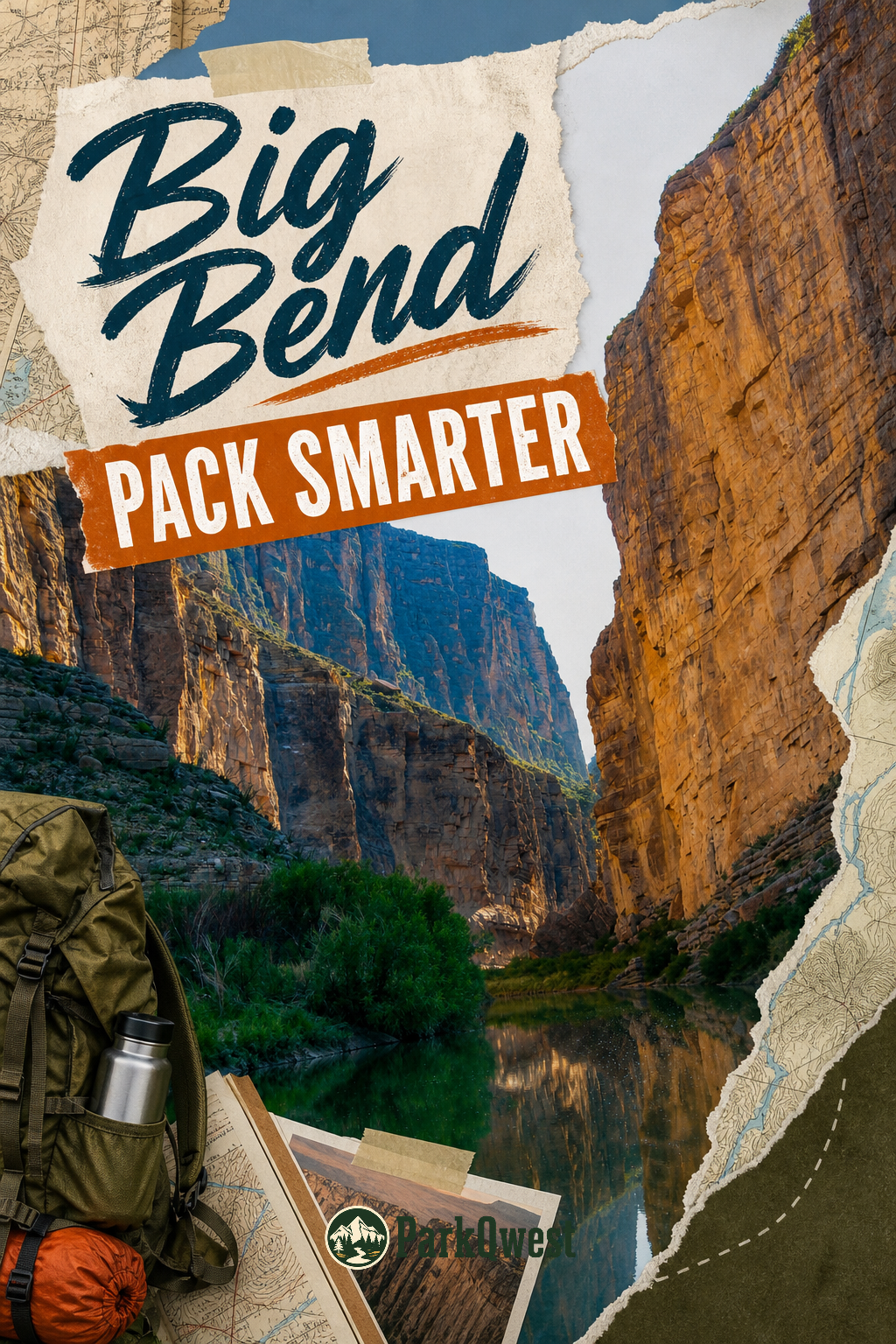
Big Bend National Park rewards deliberate packing more than overpacking. This is a large, remote desert park where the desert can be well above 100°F by late morning while the Chisos Mountains may run 10–15 degrees cooler. Add intense sun, dry air, long drives between services, occasional winter freezes, and famously dark skies, and the useful kit looks different from a standard national-park weekend bag. Pack for exposure, self-sufficiency, and quick temperature changes—not for convenience-store resupply.
Start With a Layering System, Not a “Desert Outfit”
Big Bend sits in the Chihuahuan Desert, where abundant sunshine is a year-round fact, but a hot afternoon and a cool evening can belong to the same day. Clothing should manage sun, sweat, wind, and the cooler temperatures that come with elevation or winter conditions.
Clothing That Earns Its Space
- Lightweight long-sleeve sun shirt: A breathable, loose-fitting long sleeve protects arms and shoulders without requiring constant sunscreen reapplication. It is especially useful during exposed walks, scenic stops, and roadside exploration.
- Quick-drying base layer: Choose synthetic or wool over heavy cotton for active days. Cotton can feel fine in dry heat, but it stays damp after sweat and becomes much less comfortable when temperatures drop.
- Wide-brim hat: A cap protects the face, but a brim that shades ears and neck is more useful in Big Bend’s broad, open desert light. Add a chin strap if you expect wind.
- Light insulating layer: A fleece, light wool sweater, or compact insulated jacket belongs in the car and often in the daypack outside summer. Fall and winter are generally mild, but freezing temperatures do occur.
- Wind-resistant outer layer: Bring a light shell rather than assuming dry weather means no outerwear. It can make a chilly overlook, mountain morning, or post-sunset stargazing session far more comfortable.
- Long pants or sun-protective hiking pants: These are practical for brushy edges, cooler mountain conditions, and evening bugs. Shorts are still reasonable in heat; the best choice is often packing both rather than committing to one.
Quick take
For Big Bend, a sun shirt, broad-brim hat, light warm layer, and wind shell are more useful than a bulky wardrobe. The goal is to cover up comfortably in the desert, then add warmth after the sun drops or when heading into cooler mountain air.
Footwear: Match the Shoe to Your Actual Day
You do not need stiff, expedition-style boots for every Big Bend itinerary. What matters is secure footing, enough protection from hot, rough ground, and a fit that will not create blisters when feet swell in heat.
- Trail shoes for most visitors: Supportive hiking shoes or trail runners work well for maintained paths and active sightseeing. Prioritize a grippy sole and enough toe protection for uneven desert terrain.
- Boots for ankle support or rougher routes: If you prefer more structure, boots are sensible—but break them in before the trip. New boots plus heat plus long walking days is a predictable blister combination.
- Camp or lodge sandals: Pack a lightweight pair for downtime, showers, or giving tired feet a break. They are not a replacement for closed-toe walking footwear.
- Two pairs of socks: Carry a spare pair in the daypack, not just in the suitcase. Dry socks can be a major comfort upgrade after sweat, an unexpected wet crossing, or a long drive.
Build a Daypack for Distance From Services
Big Bend is not the place to assume you can easily replace a forgotten item. The NPS specifically advises visitors to carry plenty of gas, food, water, and supplies because distances between towns and services are considerable. A compact daypack should carry the essentials for a delay, not merely a short walk.
The Core Daypack Load
- Navigation backup: Download maps before entering remote areas and bring a paper park map or printed route notes. Phone navigation is useful, but it should not be the only plan.
- Sun protection: Pack sunscreen, lip balm with SPF, sunglasses, and a hat even if you applied sunscreen at the lodging. Desert sun exposure adds up during stops that feel too short to prepare for.
- Light and battery: A headlamp is better than relying on a phone flashlight, particularly if you will be out around sunset or enjoying Big Bend’s dark night skies. Bring a charged power bank and the correct cable.
- Basic first-aid supplies: Include blister care, bandages, antiseptic wipes, any personal medication, and an elastic wrap if appropriate for your group. The useful kit is the one you know how to use.
- Emergency warmth: A compact warm layer and emergency blanket take little room. They matter more in cooler months and at higher elevations, but are smart insurance year-round.
- Waste bag: Keep a small bag for snack wrappers, tissues, and other trash. Remote landscapes stay cleaner when every item that arrives with you leaves with you.
Pack by Season, but Respect the Desert Every Month
| Travel period | Packing emphasis |
|---|---|
| March / spring | Warm-weather clothing, sun coverage, and extra patience for the park’s busiest season. Keep a light layer for mornings and evenings. |
| May–August | Maximum heat management: more water capacity, electrolyte options, ventilated clothing, sun protection, and a cooler for food and drinks. |
| November–February | Layering, warm sleepwear, gloves or beanie for cold evenings, and footwear that works if conditions are chilly. Freezing temperatures can occur. |
Heat is the defining exposure from late spring through summer. NPS guidance notes that summer heat begins in May and that the desert is usually well above 100°F by late morning. Schedule strenuous activity for cooler parts of the day, use shade deliberately, and recognize that a mountain area being cooler does not make it automatically cool.
Food and Water: Bring More Capacity Than Feels Elegant
Water is the item most likely to determine whether a Big Bend day stays enjoyable. Carry water in a system you can monitor easily: marked bottles, a hydration reservoir, or both. A large reservoir is convenient while walking; separate bottles make it easier to track how much remains and keep a reserve in the vehicle.
- For the vehicle: Bring a substantial water reserve in addition to the day’s hiking water, plus shelf-stable food that does not depend on finding a store at the right time.
- For the daypack: Carry water, salty snacks, calorie-dense food, and an electrolyte option you will actually drink. In extreme heat, plain water alone may not be the most comfortable choice for every person.
- For warm days: Use an insulated bottle for a portion of your water and keep a cooler in the car. Cold water is easier to drink consistently than water that has spent hours in a hot vehicle.
- For families: Pack familiar snacks in individual portions. Children may not recognize thirst early, so regular drink-and-snack breaks work better than waiting for complaints.
Quick take
Do not treat Big Bend like a destination where a forgotten bottle of water is a minor inconvenience. Keep drinking water, food, and supplies in the vehicle as well as in the daypack, and begin each outing with a full supply rather than hoping to restock later.
Safety Gear for a Remote Park
Big Bend’s appeal includes its isolation. That same isolation means a small car problem, wrong turn, or heat-related issue can become more consequential than it would near a city. Before departure, check the official NPS Big Bend National Park page for current alerts, weather information, road conditions, and any location-specific guidance.
- Vehicle basics: Carry a full-size spare if your vehicle has one, tire tools you can operate, jumper cables or a jump starter, windshield fluid, and a simple roadside kit. Check fuel early and often; the NPS warns that distances between towns and services are considerable.
- Fuel and charging plan: Start with plenty of gas and do not count on electric-vehicle charging inside the park. NPS states there are no EV charging stations in Big Bend National Park, and the closest listed charging station is 130 miles away in Fort Stockton.
- Communication plan: Tell someone your route and expected return time, particularly for independent hiking or long drives. Save important information offline before entering the park.
- Weather response: Bring a rain shell even during predominantly sunny periods, and avoid treating washes or low areas casually when storms are possible. Verify current conditions rather than relying on a forecast checked days earlier.
Photography, Stargazing, and Family Extras
Big Bend’s dark skies and wide-open terrain can justify a few purposeful extras. Keep them compact enough that they do not displace water, layers, or safety supplies.
- For night skies: Pack a tripod, remote shutter option, spare battery, and red-light headlamp mode if your equipment has it. A warm layer and sit pad make nighttime photography more comfortable than standing around in daytime clothing.
- For daytime photography: A lens cloth and sealed pouch are useful for dust. Bring only the lenses you expect to use; changing gear repeatedly in dry, windy conditions is rarely worth it.
- For birding and wildlife viewing: Binoculars offer more value than trying to approach animals. Keep viewing respectful and at a distance.
- For children: Add sun hats, extra water, a small notebook, binoculars sized for small hands, and a change of clothes in the car. Give each child a whistle only after explaining when and how to use it.
What to Leave Behind
- Heavy cotton layers: They take up room, dry slowly, and are less adaptable than lightweight layers.
- Brand-new shoes: Big Bend is not the place to discover a pressure point after several hot miles.
- Single-use plastic bottles as your only water strategy: They are hard to track, warm quickly, and create unnecessary waste. Use refillable containers with a clear capacity.
- Overly large camera kits: The park’s conditions favor a prepared, portable setup over gear that stays in the vehicle because it is too cumbersome.
- Assumptions about easy resupply: Do not leave food, water, fuel planning, or charging logistics to chance.
Big Bend National Park Packing Checklist
- Wear: Sun shirt, breathable base layer, hiking pants or shorts, broken-in trail footwear, moisture-wicking socks, hat, sunglasses.
- Carry daily: Full water supply, snacks, sunscreen, map backup, phone battery, headlamp, first aid, spare socks, warm layer, wind or rain shell.
- Keep in the vehicle: Extra water, extra food, cooler, roadside kit, spare tire tools, paper route information, and a charged power bank.
- Add for cold nights: Insulated jacket, beanie, gloves, warm sleepwear, and thicker socks.
- Add for stargazing or photography: Tripod, spare batteries, lens cloth, red-light option, sit pad, and an extra warm layer.
- Verify before leaving: Current NPS alerts, weather, road conditions, your fuel level, and whether your route requires supplies beyond what you have packed.
The smartest Big Bend packing list is built around margins: more water than seems necessary, more fuel than feels urgent, one more layer than the afternoon temperature suggests, and enough food and safety gear to handle the long spaces between services. That preparation leaves more room to enjoy the desert, mountains, canyons, birds, and coal-dark skies that make this park distinct.
Before you go
- Review official alerts, closures, hours, and reservation requirements.
- Allow extra travel time and keep an alternate plan.
- Use official NPS information as the final authority.
Sources
- Big Bend National Park — official National Park Service site — National Park Service, accessed 2026-10-12
Continue planning Big Bend
Learn more about Big Bend and find other helpful guides, trails, and trip information in the ParkQwest guide.
ParkQwest is a QwestLyfe Community.
QwestLyfe helps you track your lifelong bucket lists, collections, recipes, and the places you've been. Document your experiences, add notes and pictures, and share them with your friends — and the world.