
Biscayne National Park: Park Inspiration
Plan with current information. Conditions, roads, services, fees, and rules can change. Verify details with the National Park Service before your visit.
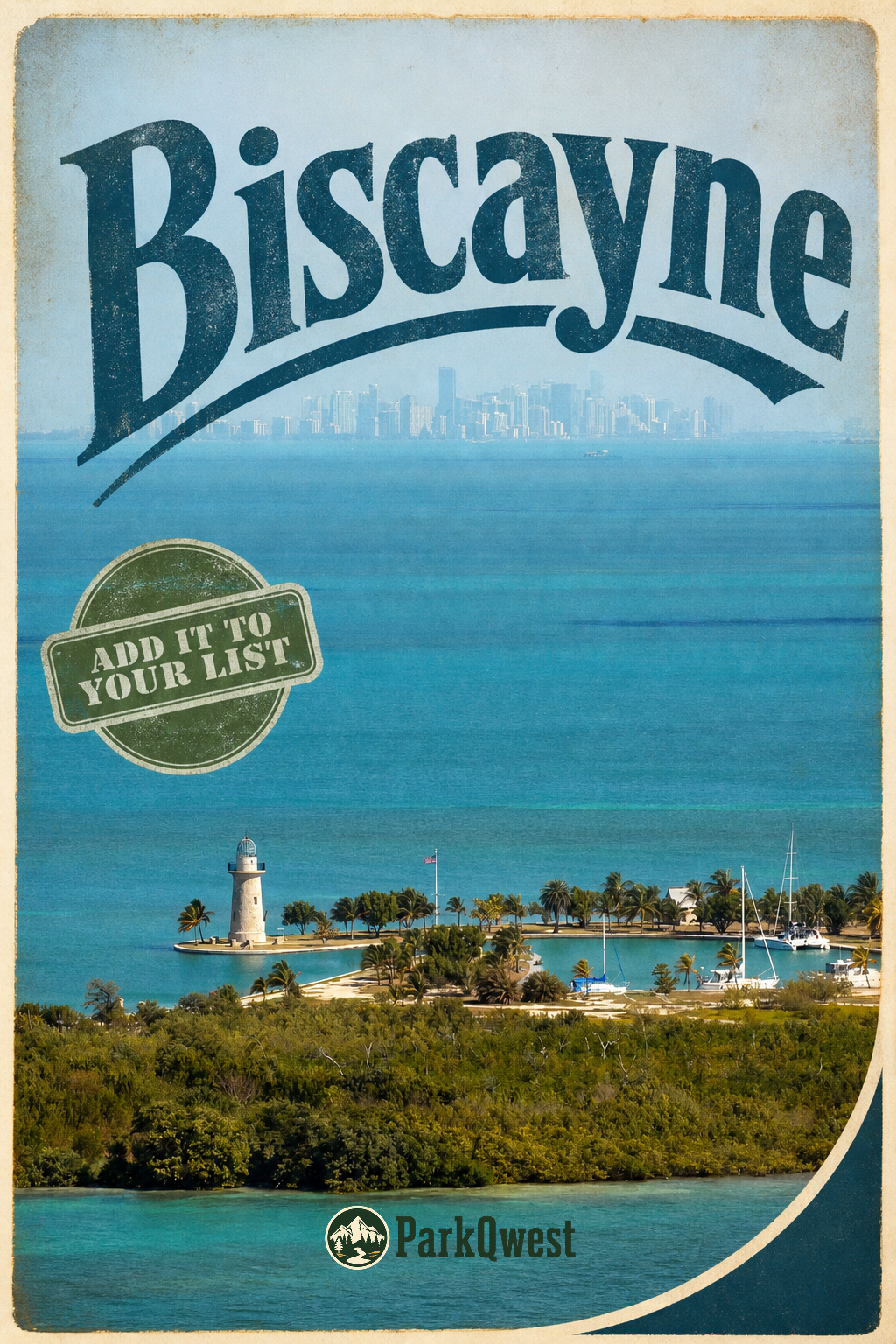
Biscayne National Park asks you to rethink what a national park can be. From the mainland, Miami is still within sight; beyond it, the experience tilts toward open water, low green islands, salt air, and a horizon that feels improbably calm for a place so close to a major city. This is not a park built around a single roadside overlook or a long list of land trails. It is a watery landscape of aquamarine shallows, coral reefs, mangrove-fringed edges, and human stories that stretch back roughly 10,000 years. Put it on a lifelong list if you want a park that rewards curiosity, time on the water, and the willingness to let the day move at the pace of wind and tide.
Why Biscayne feels like an escape before you are far from town
The first surprise is the contrast. Biscayne National Park sits near Miami, yet its defining scenery is not skyline or traffic; it is water in shifting shades of blue-green, islands that appear almost level with the horizon, and the long, bright openness of Biscayne Bay. A warm breeze can make even a simple pause at the shore feel like the beginning of an expedition.
The park’s geography shapes the whole visit. Much of Biscayne is water, so its most memorable moments tend to happen from a boat, through a mask, along a shoreline, or while watching the bay from the mainland. That makes it especially appealing for travelers who prefer an active day with a purpose over a checklist of stops.
Quick take
Think of Biscayne as a water-first national park. The mainland visitor center is an excellent place to orient yourself, but the park’s signature island, reef, boating, fishing, and diving experiences generally require planning for time on the water.
There is also a quieter reason to come: scale. On a clear day, the bay can feel broad and uncluttered, with small details becoming the point—a pelican gliding low over the surface, light catching on ripples, the hush after a boat motor fades. The reward is not constant spectacle. It is the rare chance to be near a city and still feel the world simplify.
The moments worth building a trip around
See the park from the water, not just toward it
If you can make one choice that changes your Biscayne experience, make it this: give yourself a way to get onto the water. Boating is central to the park’s identity, and the view from the bay reveals why the protected islands and reefs matter. The mainland offers context; the water delivers the feeling of distance, space, and discovery.
That does not mean every visitor needs to operate a boat. The practical choice is to decide early whether you want to arrange a guided water-based outing, use a private boat, or enjoy a mainland-focused visit. Available concessions, boat access details, safety information, and current offerings can change, so verify options on the official NPS page before making firm plans.
- Guided water experience: Best for travelers who want interpretation, local navigation knowledge, and a lower logistical load.
- Private boat day: Best for experienced boaters who understand that weather, wind, marine conditions, navigation, and park rules shape the day.
- Mainland visit: Best for a shorter stop, a first look at the park, or a day when conditions make a water plan less appealing.
Let the reefs change the scale of the visit
Biscayne protects fish-bejeweled coral reefs, and that phrase is more than a pretty description. Beneath the surface is a different version of South Florida: living structure, moving color, and a habitat that makes the park feel less like a scenic bay and more like a layered marine world.
Snorkeling or diving can turn a beautiful day into a deeply memorable one, but it should be approached as a conditions-dependent activity rather than a guaranteed vacation image. Visibility, wind, currents, sea state, boat access, your comfort level, and the needs of the resource all matter. If this is the experience you most want, plan the trip around a reputable current option and check NPS guidance rather than assuming a particular reef trip will operate.
Look for the human story beneath the postcard view
The park’s beauty is inseparable from its history. Biscayne holds evidence of approximately 10,000 years of human presence, including connections to prehistoric tribes, shipwrecks, pineapple farmers, and presidents. That range gives the landscape an unusual depth: these waters have been a food source, travel route, workplace, refuge, and site of ambition long before they became a national park.
When you are looking across the bay, try not to see the islands as empty scenery. They are part of a lived-in, worked-on, traveled-through landscape. Read current interpretive material at the visitor center or through the official NPS site before you go; a small amount of context makes the view feel much more specific.
Plan for the mood you want, not just the forecast
Biscayne’s subtropical climate means sunshine is possible year-round, but each season asks for a different kind of trip. Winter is normally dry and mild, though fronts can bring wind and a little rain. Summer is hot and humid, with scattered afternoon thunderstorms, while June through November is hurricane season.
| Seasonal pattern | What it can feel like | Best planning response |
|---|---|---|
| Winter | Usually mild and drier; occasional fronts may bring wind. | Pack a light layer and treat wind as a real factor for boating comfort. |
| Summer | Hot, humid, and prone to afternoon thunderstorms. | Favor earlier starts, sun protection, water, and a weather-aware water plan. |
| Hurricane season | June through November can bring changing tropical conditions. | Check official alerts and confirm any water-based arrangements close to departure. |
The averages tell part of the story: January averages 68°F, while July averages 82°F. Average rainfall is 2.17 inches in January and 3.95 inches in July. But for a park centered on the bay and ocean, wind, thunderstorms, and marine conditions can matter as much as the temperature on your phone.
Quick take
For a water-centered day, use the forecast as a starting point—not the final decision. Check current NPS alerts, marine conditions, and the status of any booked outing shortly before you leave.
A simple way to make the day feel unhurried
Begin at the Dante Fascell Visitor Center, where you can get your bearings before deciding how much of the day belongs on land and how much belongs on the water. It is reached from Florida’s Turnpike via Exit 6 at Speedway Boulevard; from there, official NPS directions lead south to SW 328th Street/North Canal Drive and continue four miles to the end of the road. The park entrance is on the left before Homestead Bayfront Marina.
Arrive with one main ambition and one quieter backup. Your main ambition might be getting offshore, snorkeling or diving if conditions and arrangements allow, or spending a meaningful stretch of time on a boat. Your backup might be learning the park’s history, taking in bay views, and using the visitor center as the place to understand what you will return to do next time.
- Choose your anchor experience: water outing, private boating, diving or snorkeling plan, fishing within current regulations, or a mainland orientation visit.
- Build in time for interpretation: Biscayne is richer when you understand the reefs, shipwrecks, and long human history behind the scenery.
- Pack for exposure: sun protection, drinking water, a hat, weather-appropriate layers, and secure dry storage are sensible considerations for a day around open water.
- Check the official NPS page close to travel: confirm alerts, weather guidance, access information, rules, and current opportunities before committing to a plan.
Leave with a reason to care for the blue on the map
Biscayne National Park can look effortless from a distance: turquoise water, green islands, a reef alive below the surface. But that apparent ease depends on protection. Coral reefs, seagrass, fisheries, mangroves, archaeological places, and historic sites are not interchangeable scenery; they are connected systems with long memories and real limits.
The best Biscayne souvenir is a stronger instinct to protect marine places. Follow park rules, avoid treating wildlife or reefs as props, bring back every bit of waste, respect closures and conditions, and learn why the park’s waters were protected in the first place. Save Biscayne National Park not merely for a future Florida trip, but as a reminder that some of America’s most extraordinary national landscapes begin where the road ends and the water opens.
Before you go
- Review official alerts, closures, hours, and reservation requirements.
- Allow extra travel time and keep an alternate plan.
- Use official NPS information as the final authority.
Sources
- Biscayne National Park — official National Park Service site — National Park Service, accessed 2026-10-12
Continue planning Biscayne
Learn more about Biscayne and find other helpful guides, trails, and trip information in the ParkQwest guide.
ParkQwest is a QwestLyfe Community.
QwestLyfe helps you track your lifelong bucket lists, collections, recipes, and the places you've been. Document your experiences, add notes and pictures, and share them with your friends — and the world.