Park of the Day: Rainbow Bridge National Monument
Plan with current information. Conditions, roads, services, fees, and rules can change. Verify details with the National Park Service before your visit.
A monument worth seeking out
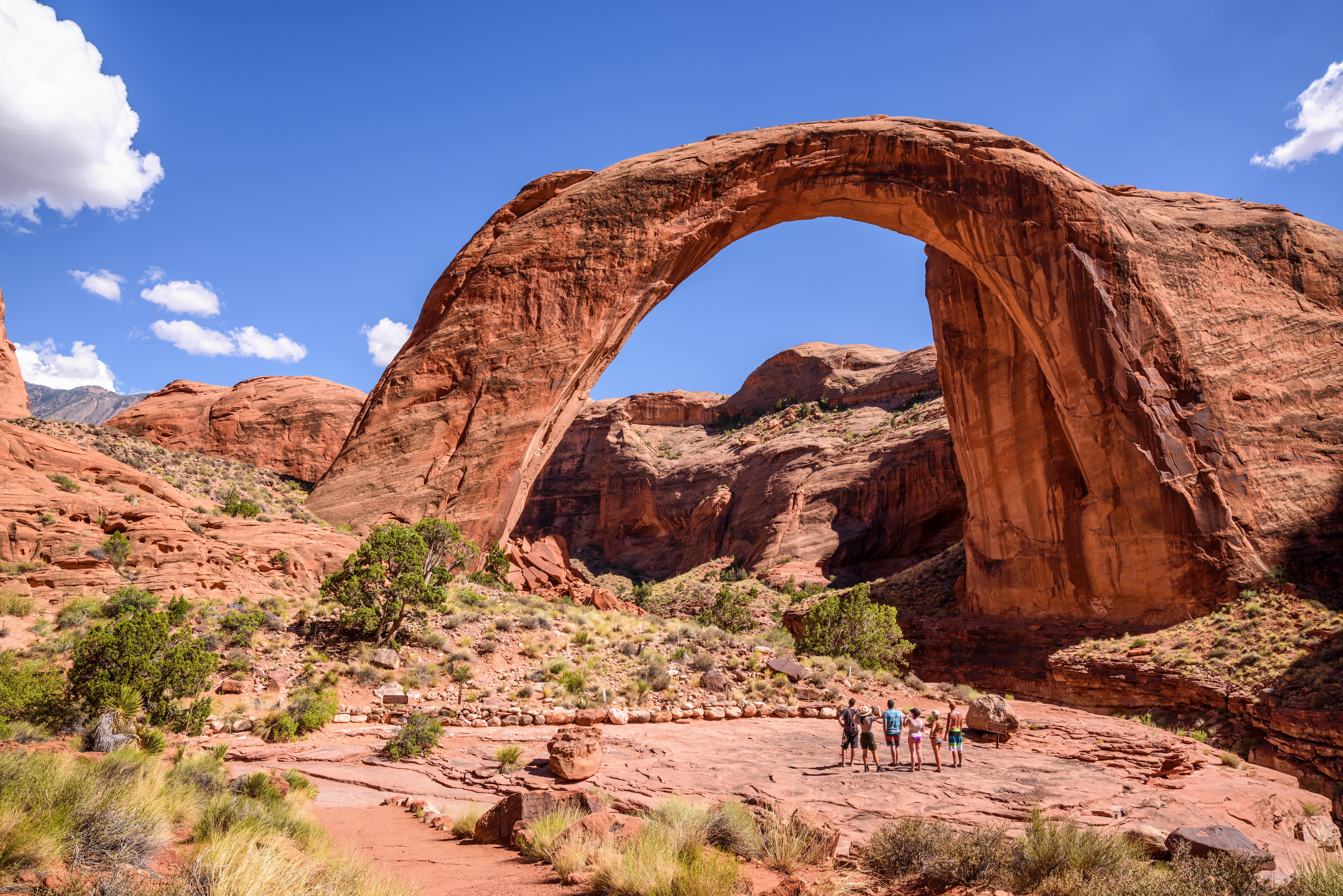
Rainbow Bridge National Monument deserves a traveler’s attention because it protects one of the world’s largest known natural bridges—and because reaching it asks us to slow down, plan carefully, and arrive with respect. Set between Glen Canyon National Recreation Area and the Navajo Nation in Utah, this is not a roadside stop or a place to squeeze into an already crowded itinerary.
Its significance reaches beyond its remarkable geology. Neighboring Native American tribes consider Rainbow Bridge sacred, and the National Park Service asks visitors to approach the monument in a spirit that honors and respects the cultures to whom it is sacred.
Quick take
Rainbow Bridge is a destination for travelers willing to plan ahead: there are no roads to or near the monument, access is by boat on Lake Powell or by permitted hiking routes on the Navajo Nation, and weather can be severe in every season.
What makes Rainbow Bridge distinctive
The bridge’s scale is part of the draw, but its setting and cultural importance give the place its real character. This is a national monument where the experience is shaped as much by the journey as by the destination itself.
Rainbow Bridge has inspired people throughout time, from the Native American communities connected to this landscape to visitors who arrive from around the world. We should keep that long history in mind when we visit: this is not simply a scenic landmark, but a sacred place with continuing meaning.
What the visit feels like
Because no roads reach the monument, a visit begins with a sense of commitment. Whether we arrive by boat or travel on foot by permit, the route requires more preparation than a typical pull-off or short walk from a parking area.
That remoteness can make the monument feel especially focused. Rather than rushing from viewpoint to viewpoint, we have an opportunity to pay attention to the landscape, the conditions, and the responsibility of being a guest in a place held sacred by neighboring tribes.
Two ways to experience it
The most direct option for many visitors is reaching Rainbow Bridge by boat on Lake Powell. Boat tours may be available, while independent boaters should be familiar with the Aids to Navigation buoy system and use a navigational map; the entrance to Forbidding Canyon is at buoy 49 on Lake Powell.
For a more demanding approach, Rainbow Bridge can also be reached by hiking one of two trails around Navajo Mountain on the Navajo Nation. These hiking routes require a permit, so this option calls for advance planning and an understanding that access is governed by the Navajo Nation.
Plan for heat, cold, wind, and changing conditions
Weather is a central part of any Rainbow Bridge plan. Summers are extremely hot and offer little, if any, shade, with temperatures reaching 110°F (43°C) in June and July. Winters are moderately cold, and nighttime lows often fall below freezing, with December and January temperatures reaching 20°F (-7°C).
Spring brings highly variable weather and extended periods of strong winds, while fall is generally mild. Even in a landscape that receives less than 6 inches of precipitation annually, heavy rains and flash flooding can occur, particularly during the summer monsoon season.
How much time to allow
We should treat Rainbow Bridge as the main purpose of a day rather than an add-on. Travel by boat requires navigation and a route across Lake Powell, while the hiking options involve permitted travel around Navajo Mountain; either approach deserves time for preparation, travel, and changing weather.
Before setting out, check current information through the official National Park Service page and confirm the access details that apply to your chosen route. Most importantly, bring patience, prepare for the season, and let respect for the monument’s sacred significance guide the visit.
Before you go
- Review official alerts, closures, hours, and reservation requirements.
- Allow extra travel time and keep an alternate plan.
- Use official NPS information as the final authority.
Sources
- Rainbow Bridge National Monument — official National Park Service site — National Park Service, accessed 2026-10-09
Continue planning Rainbow Bridge
Learn more about Rainbow Bridge and find other helpful guides, trails, and trip information in the ParkQwest guide.
ParkQwest is a QwestLyfe Community.
QwestLyfe helps you track your lifelong bucket lists, collections, recipes, and the places you've been. Document your experiences, add notes and pictures, and share them with your friends — and the world.