Glacier National Park: Don't-Miss Experiences
Plan with current information. Conditions, roads, services, fees, and rules can change. Verify details with the National Park Service before your visit.
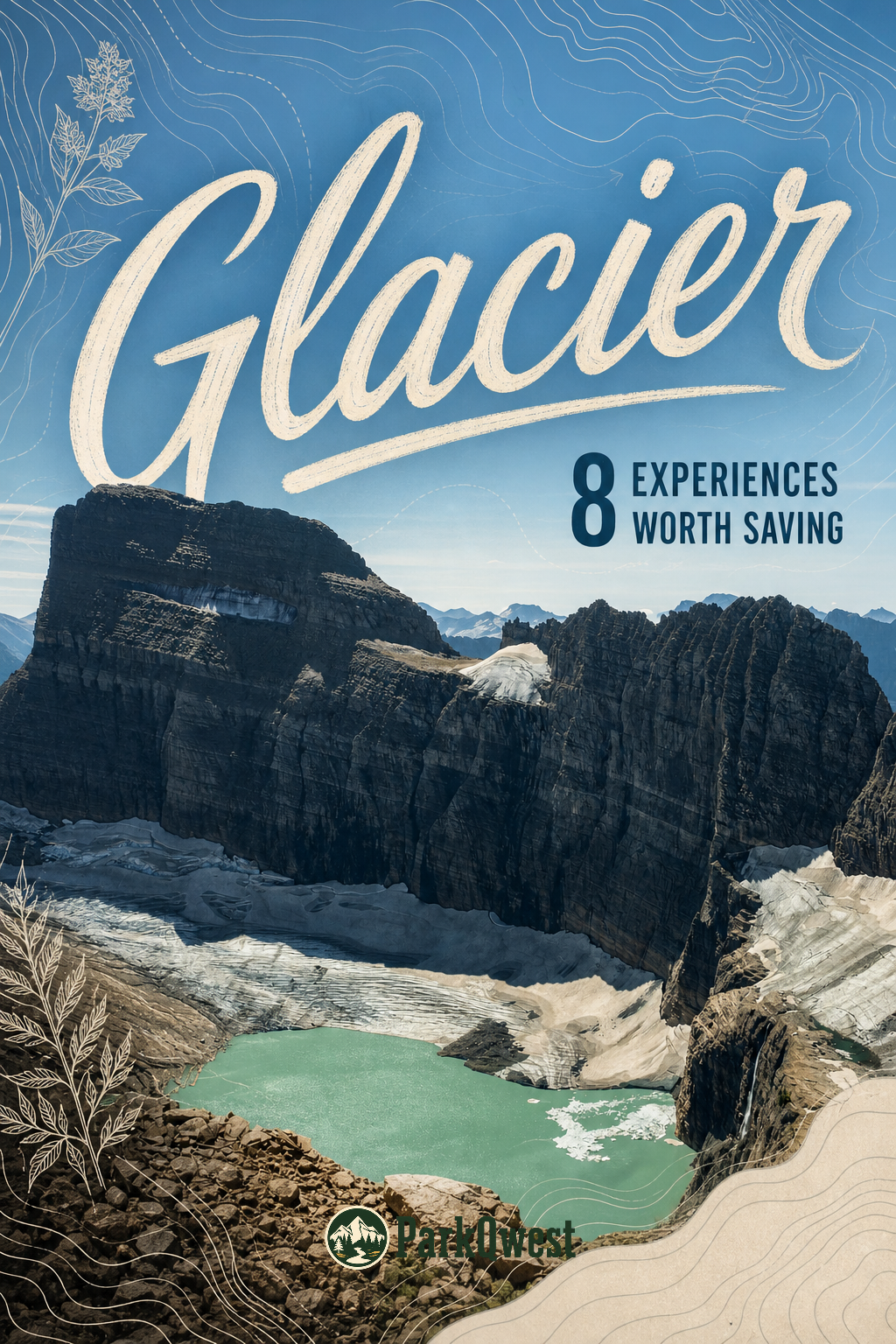
Glacier National Park is the kind of place where a saved itinerary can look simple—one famous road, a lake, a hike—but the right version depends on how you travel. Its landscape combines melting glaciers, alpine meadows, carved valleys, and spectacular lakes across a park with more than 700 miles of trails. Rather than treating every landmark as a universal requirement, use these eight experiences as a practical menu: choose the ones that match your time, comfort with changing weather, and interest in driving, walking, history, or big landscape views.
How to Choose Your Glacier National Park Priorities
Start with your trip shape, not a checklist. Glacier sits along the Continental Divide in northwest Montana, where warm, wet Pacific air and cold, dry Arctic air can meet abruptly. A road-centered day, a long walking day, and a lodge-based day each ask for different energy, timing, and backup plans.
- If you have one day: Choose one scenic-drive experience and one short, place-based experience near a lake, lodge, or trail access point.
- If you want to hike: Make trail time the anchor, then treat drives and historic stops as supporting pieces rather than trying to fit in everything.
- If weather is uncertain: Prioritize views and activities that can be shortened or swapped without turning the day into a disappointment.
- If you are arriving from one side: Build around your access route. Highway 2 follows the southern boundary, while Highway 89 provides access to the east side.
Quick take
The most useful Glacier plan is usually a “two-anchor day”: one activity that depends on conditions, such as a drive or hike, plus one that remains worthwhile if clouds, wind, rain, or timing change the first plan.
Eight Don’t-Miss Experiences to Build Around
1. Let Going-to-the-Sun Road Set the Pace
Why it matters: Going-to-the-Sun Road is not merely transportation; it is one of Glacier National Park’s signature ways to understand the scale of its mountains, valleys, lakes, and changing elevations. It works especially well for travelers who want major scenery without committing their entire day to a long hike.
Best for: First-time visitors, multigenerational groups, photographers, and travelers with limited time or mixed mobility needs.
Planning note: Treat the road as a flexible scenic experience rather than a race from one end to the other. Road access, vehicle rules, construction, weather impacts, and any required reservations can change, so verify current conditions and regulations on the official NPS Glacier National Park page before deciding whether it can be your day’s main anchor.
2. Spend Unhurried Time at a Glacier Lake
Why it matters: The park’s lakes are where Glacier’s carved valleys become easiest to read: steep terrain, water, changing light, and mountain weather all show up in one frame. A lake stop gives a trip breathing room that a drive-through viewpoint often does not.
Best for: Families, contemplative travelers, casual photographers, and anyone who would rather have one meaningful pause than a packed list of stops.
Planning note: Build in enough time to sit, walk a little if conditions allow, and notice how wind and cloud cover alter the scene. Confirm which shoreline areas, paths, facilities, and access points are available during your visit rather than assuming a location shown in an older pin or guide will be open.
3. Choose One Trail That Matches Your Actual Day
Why it matters: With more than 700 miles of trails, Glacier offers far more walking choices than any one trip can cover. The value is not in selecting the most talked-about route; it is in spending enough time on a trail to move beyond roadside views and into alpine meadows, forest, valley terrain, or higher-country perspectives.
Best for: Active travelers, repeat visitors, people who want solitude from the main road corridor, and anyone happy to let physical effort shape the day.
Planning note: Choose by terrain, daylight, forecast, group ability, and turnaround discipline—not by social-media popularity. Check current NPS trail status, weather alerts, closures, wildlife guidance, and any area-specific requirements before setting out; conditions in Glacier can be materially different across the Continental Divide.
4. Make a Historic Chalet or Lodge Part of the Story
Why it matters: Glacier’s historic chalets and lodges connect the scenery to the park’s human history. They add useful context to a landscape that can otherwise feel like a sequence of overlooks: this is a national park shaped not only by geology and ice, but also by travel traditions, design, and generations of visitors.
Best for: Architecture fans, history-minded travelers, non-hikers, and groups looking for a lower-exertion counterpoint to a trail or scenic drive.
Planning note: Do not assume historic buildings are available for lodging, tours, meals, or interior visits on your dates. Check the official NPS page and the relevant operator information for current access, services, and any seasonal limitations; even an exterior stop can be worthwhile when approached as a piece of the park’s larger story.
5. Look at the Glaciers as a Changing Landscape, Not a Backdrop
Why it matters: Glacier National Park’s melting glaciers are central to what makes the park scientifically and emotionally compelling. Seeing ice, snowfields, high basins, and the terrain shaped by former glaciers turns a scenic visit into a clearer understanding of how the park’s valleys and lakes came to be.
Best for: Curious first-time visitors, students, photographers, and travelers who want a stronger reason to slow down at viewpoints or on trails.
Planning note: Focus on observation rather than trying to chase a specific dramatic sight. Visibility depends on cloud cover, smoke, weather, route access, and your chosen vantage point; use current NPS information to learn what is visible and safely reachable during your visit.
Quick take
For a more memorable Glacier day, pair a wide view with a close-scale experience: a scenic road or overlook explains the landscape’s scale, while a lakeshore, trail, or historic building gives the day texture.
6. Give Alpine Meadows Their Own Time Window
Why it matters: Alpine meadows are one of the park’s defining landscape types, but they are easy to reduce to a quick photo stop. Allowing time to walk, watch the weather move, and notice the transition between forest, meadow, rock, and snow makes the mountains feel less like a distant panorama.
Best for: Walkers, nature-focused travelers, artists, photographers, and visitors who prefer details over a fast circuit of major landmarks.
Planning note: Meadow access and conditions are seasonal, and mountain weather can turn quickly. Bring layers even on a warm, sunny summer morning, protect fragile vegetation by staying where travel is permitted, and confirm current trail information before choosing an alpine route.
7. Experience the Continental Divide’s Weather Drama Responsibly
Why it matters: Glacier’s geography creates a genuine planning reality: Pacific moisture approaches from the west while cold, dry Arctic air arrives from the northeast. The Divide is where those climates meet, helping explain why a bright morning can become a very different afternoon.
Best for: Travelers who enjoy landscape photography, weather watching, scenic driving, or learning why Glacier demands more preparation than a fair-weather postcard suggests.
Planning note: Make weather awareness part of the experience, not an afterthought. Carry rain protection and insulating layers, monitor the forecast and NPS alerts, and be willing to substitute a lower-commitment stop when wind, visibility, lightning risk, or temperature changes make a longer outing a poor choice.
8. Plan a Side-Specific Glacier Day Instead of Trying to “Do the Park”
Why it matters: Glacier is large enough that access shapes the experience. The park lies in northwest Montana along the Rocky Mountain spine, with Highway 2 along the southern boundary and Highway 89 providing east-side access, so arrival direction can influence how much time is spent enjoying the park versus repositioning between plans.
Best for: Road-trippers, visitors flying into Kalispell or Great Falls, short-stay travelers, and anyone deciding where to stay before booking.
Planning note: Pick an area and give it a full day rather than building an itinerary around crossing the entire park on a tight schedule. Before locking in lodging or a route, verify current driving conditions, road access, and seasonal operations on the NPS site—especially if your plan depends on a particular corridor.
Make the List Work for Your Trip
A strong Glacier itinerary is selective. A first visit might pair Going-to-the-Sun Road with a lake stop and a historic lodge; an active visit might center on one trail, then use weather and road conditions to choose the rest. In winter, when temperatures can fall well below freezing and considerable snow is typical, shift expectations toward conditions-aware planning and confirm what is accessible rather than relying on summer itineraries.
Before you go, check the official Glacier National Park NPS page for the current picture on weather, roads, trails, closures, regulations, and seasonal services. That final check is what turns an inspiring saved plan into one that fits the park you will actually find.
Before you go
- Review official alerts, closures, hours, and reservation requirements.
- Allow extra travel time and keep an alternate plan.
- Use official NPS information as the final authority.
Sources
- Glacier National Park — official National Park Service site — National Park Service, accessed 2026-08-16
Continue planning Glacier
Learn more about Glacier and find other helpful guides, trails, and trip information in the ParkQwest guide.
ParkQwest is a QwestLyfe Community.
QwestLyfe helps you track your lifelong bucket lists, collections, recipes, and the places you've been. Document your experiences, add notes and pictures, and share them with your friends — and the world.