
Glacier National Park: Park Inspiration
Plan with current information. Conditions, roads, services, fees, and rules can change. Verify details with the National Park Service before your visit.
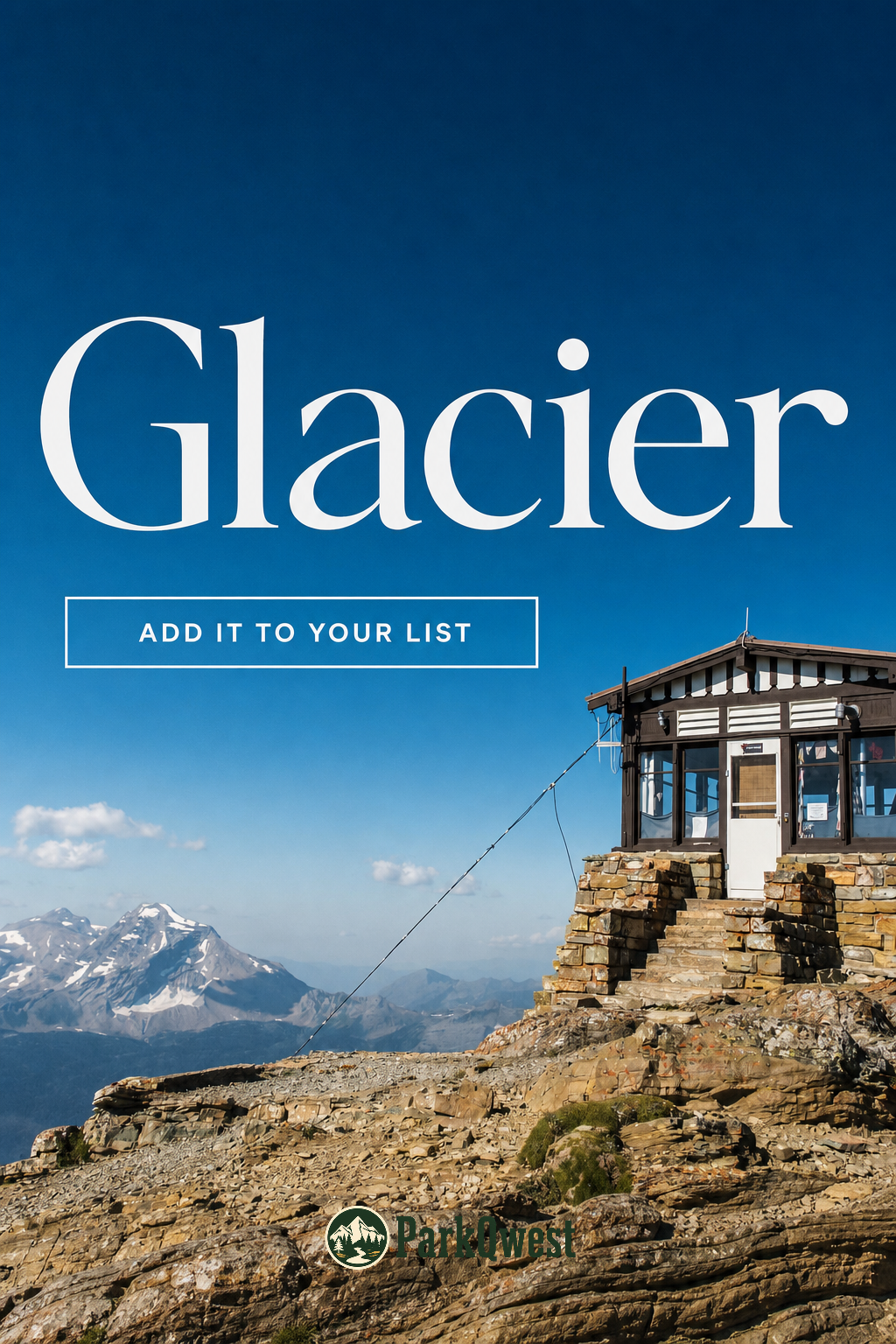
Glacier National Park is the kind of place that changes scale every few minutes. One moment, you are looking across a lake that seems to hold the whole sky; the next, a road or trail draws your eye upward into a wall of rock, snow, and high-country weather. In northwest Montana, along the spine of the Rocky Mountains, Glacier brings together melting glaciers, alpine meadows, carved valleys, spectacular lakes, and more than 700 miles of trails. It belongs on a lifelong list not because every minute needs to be dramatic, but because the park gives you room to feel small, alert, and fully present.
This is a park for travelers who like a day to have an arc. Start in the cool quiet of morning, let the light reveal the slopes and water gradually, then spend the afternoon choosing between a roadside viewpoint, a historic lodge stop, or a trail that earns its views one step at a time. By evening, Glacier can feel less like a checklist and more like a landscape you have briefly been invited to inhabit.
The feeling worth traveling for
Glacier’s great gift is contrast. Its lakes can look calm enough to make you slow down, while the surrounding terrain constantly reminds you that this is a mountain environment shaped by ice, elevation, and weather. The park’s geography straddles the Continental Divide, where warm, wet Pacific air and cold, dry Arctic air meet. That collision helps explain why a bright summer morning can turn into an entirely different kind of day.
For a first visit, it helps to resist the urge to treat every landmark as a finish line. The more memorable moments are often unplanned: stopping because the light has shifted across a valley, hearing water move through a drainage below the road, or noticing how quickly a meadow gives way to steep, rocky country. Glacier rewards attention more than speed.
Quick take
Come to Glacier National Park for the scale, but plan your days around a few unhurried windows: an early start, one meaningful walk or drive, and time to stop when the weather and light make the landscape feel alive.
Choose your version of a Glacier day
There is no single “right” Glacier itinerary. The better question is what kind of encounter you want: a day centered on mountain travel, a day built around walking, or a slower day that lets the park’s historic and scenic layers come into focus. The choices below are not competing definitions of the park; they are different ways to feel its character.
For the road-trip dreamer: let the landscape unfold
Going-to-the-Sun Road is part of Glacier’s story, not merely a route between stops. The famous road offers a way to experience the park’s dramatic changes in terrain without making a long hike the centerpiece of the day. It is especially compelling for travelers who want to see how valleys, lakes, alpine terrain, and the Continental Divide relate to one another.
Build in more stopping time than you think you need. A scenic drive can become frustrating when it is treated like a race, but it becomes memorable when you leave room for changing clouds, short walks, and the simple act of looking outward rather than constantly checking the next destination.
For the walker: seek a smaller piece of the big landscape
More than 700 miles of trails means Glacier can meet many different ambitions. You do not need to attempt an all-day objective to feel the park on foot. A modest walk can be enough to exchange the perspective of a windshield for the texture of the place: uneven ground, wind in the trees, a meadow opening ahead, or the sound of water close by.
Choose a hike based on the day you actually have, not the version you imagined months earlier. Conditions, weather, trail status, and your group’s energy matter more than a popular name on a saved post. Before committing, use the official NPS page to verify current trail information, safety notices, and any restrictions.
For the lingerer: make room for the human story
Glacier is also a landscape steeped in human culture. Historic chalets and lodges offer a useful counterpoint to the rawness of the mountains: they remind you that people have been finding ways to travel, rest, and make meaning here for generations. Even if you are not planning an overnight stay at a historic property, pausing to notice this layer of the park adds depth to a scenic day.
This is an especially good approach for travelers moving at different paces. One person may want a longer trail, another may want a scenic drive and a place to sit with a view. A shared stop at a historic lodge or chalet can give the day a common center without forcing everyone into the same itinerary.
What to prioritize when time is limited
Glacier can create a strange kind of pressure: there is so much terrain that visitors can feel they must see it all. In practice, a shorter trip is better when it is designed around a few strong impressions rather than a rushed attempt to cross off every corner of the map.
- If you have a half day: Choose one scenic area, allow time for the drive itself, and take one short walk if conditions allow. The goal is not coverage; it is arriving at a viewpoint or lakeshore with enough time to absorb it.
- If you have one full day: Pair a scenic drive with one hike or extended walk. Start early enough that your walk is not squeezed into the hottest, busiest, or most uncertain part of the day.
- If you have several days: Give different parts of the park different moods: one day for road-based scenery, one for a longer trail, and one with extra margin for weather or a slower historic stop.
- If your group has mixed abilities: Avoid making the longest hike the only meaningful event. Scenic roads, lake views, historic places, and short walks can create a fuller shared trip.
Quick take
A successful Glacier plan has a primary experience and a backup experience. If weather, road conditions, or energy levels change, you can trade a long outing for a scenic drive, a shorter walk, or time at a lake or historic site without feeling that the day has been lost.
Pack for the Glacier you get, not the forecast you prefer
The NPS is direct about Glacier’s weather: it is highly variable and can be extreme. Summer days may be warm and sunny, but any type of conditions is possible. In winter, temperatures can fall well below freezing and the park typically receives considerable snow. Those facts are not a reason to avoid the park; they are a reason to pack and plan with respect.
- Layers: Bring an insulating layer and a weather-resistant outer layer even when the morning looks mild. Mountain conditions can shift quickly near the Continental Divide.
- Footwear: Choose shoes that are comfortable for uneven ground and changing conditions, not just for photos at a viewpoint.
- Water and food: Carry what you need for the outing you choose, especially if a scenic drive turns into a longer stop than planned.
- Navigation and updates: Download or carry the information you need before entering areas with limited connectivity, then check the official NPS page for current conditions.
- Patience: Treat a clouded view, wind, rain, or snow as part of the mountain experience—not a personal failure of itinerary design.
Arriving with fewer surprises
Glacier National Park is accessible by car via Highway 2 along its southern boundary, while Highway 89 reaches the east side. The nearest airports are in Kalispell and Great Falls, Montana. Those are durable orientation points, but the details that determine your actual day—road access, seasonal operations, entry procedures, construction, and any required reservations—can change.
Before you leave, open the official Glacier National Park NPS page and verify the current information for the areas you hope to visit. That one check can shape the entire trip more usefully than a dozen old social posts. It also helps you decide whether your ideal base is a road-focused day, a trail-focused day, or a trip with room to explore both sides of the park.
Leave with a reason to protect it
Glacier is inspiring partly because it is not static. Its glaciers are melting; its weather is forceful; its valleys and lakes reflect long geological change while also carrying the pressures of the present. A visit can make those large ideas feel tangible without needing a lecture: you see water, ice, rock, meadow, and weather working on one another in real time.
Save Glacier National Park for the day you want to remember what wild scale feels like. Save it for the drive that makes conversation go quiet, the trail that asks you to look up, the historic place that adds human texture to the mountains, and the weather that reminds you to pay attention. Then plan carefully, travel gently, and give this extraordinary landscape the time it deserves.
Before you go
- Review official alerts, closures, hours, and reservation requirements.
- Allow extra travel time and keep an alternate plan.
- Use official NPS information as the final authority.
Sources
- Glacier National Park — official National Park Service site — National Park Service, accessed 2026-08-16
Continue planning Glacier
Learn more about Glacier and find other helpful guides, trails, and trip information in the ParkQwest guide.
ParkQwest is a QwestLyfe Community.
QwestLyfe helps you track your lifelong bucket lists, collections, recipes, and the places you've been. Document your experiences, add notes and pictures, and share them with your friends — and the world.