Glacier National Park: 3-Day Itinerary
Plan with current information. Conditions, roads, services, fees, and rules can change. Verify details with the National Park Service before your visit.
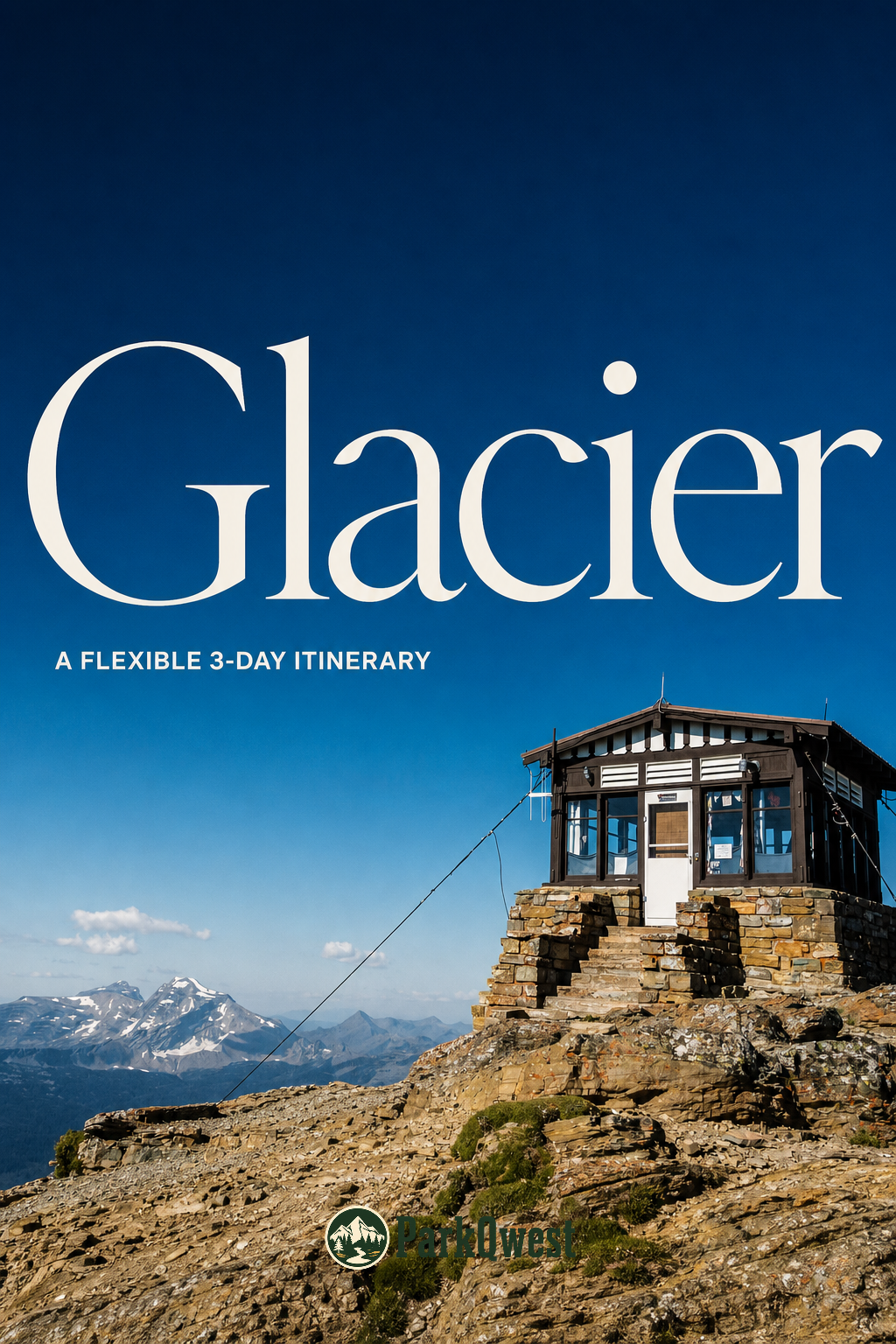
Glacier National Park works best as a three-day trip when you give each day one job: get oriented without overcommitting, devote one day to the park’s signature high-country drive if conditions allow, and reserve one day for a trail or slower lakes-and-valleys experience. That order matters. Glacier’s weather can shift quickly on either side of the Continental Divide, and road access, trail conditions, and services can change by season. This itinerary is built to be useful whether you are arriving through the west side, the east side via Highway 89, or using Highway 2 along the park’s southern boundary.
Quick take
Treat Glacier as a place to sequence, not squeeze. Pick one major corridor per day, keep one weather-proof substitute in mind, and avoid building your whole trip around a road, trail, or facility you have not checked on the official NPS page immediately before heading out.
Day 1: Settle In, Read the Conditions, and Explore One Valley
Purpose: use your first day to absorb Glacier’s scale without spending it in the car. The park contains carved valleys, alpine meadows, lakes, and more than 700 miles of trails, but your first decision should be geographic: choose the area closest to where you are sleeping and stay there. Crossing the park simply to “check off” a sight can turn an otherwise pleasant arrival day into a long, weather-dependent drive.
Morning: Start with the official conditions page
Before packing lunch, check the official Glacier National Park page for current road status, trail information, weather alerts, seasonal access, and any required entry or transportation details. This is not busywork: Glacier sits along the Continental Divide, where warmer, wetter Pacific air and colder, drier Arctic air meet. A clear morning in one location does not promise the same conditions later in the day or elsewhere in the park.
- Choose a nearby valley or lakeshore area: prioritize scenery and short walking options over a large driving loop.
- Pack for a stop-and-go day: bring water, food, insulating layers, rain protection, sun protection, and footwear suited to uneven ground.
- Set a turnaround point: decide in advance when you will return to lodging or town for a proper reset rather than pushing into the evening tired.
Afternoon: Take a modest first walk, then leave room to linger
Pick a walk length that fits your arrival energy, the weather, and the daylight—not the most ambitious hike on your list. Glacier rewards unhurried time: a lakeside pause, a viewpoint, a historic lodge exterior or public area where available, or a short section of trail can provide more value than racing toward a distant destination. If you are traveling with hikers of different abilities, make this the day to find out everyone’s realistic pace.
Lunch logic: eat a packed lunch before you are hungry and keep a backup snack accessible. Food options and operating periods vary, so it is smarter to treat any in-park purchase as a bonus rather than the foundation of your schedule.
Evening: Make tomorrow easier
Return before dark if possible, dry out gear, charge phones and cameras, and review the next day’s route. If you are staying on one side of the park, do not assume you can casually switch sides in the morning; confirm the route you intend to use and identify what you will do if it is unavailable.
Alternate for weather or closures: A low-elevation scenery day
If rain, wind, smoke, snow, or a closure makes hiking unattractive, keep Day 1 close to your base. Use viewpoints and short walks only where conditions are appropriate, spend time learning about the park’s human culture and historic architecture where access permits, and save your bigger outdoor commitment for the clearest available window. A quieter first day is not a wasted day; it protects the rest of the itinerary.
Day 2: Give Going-to-the-Sun Road Your Best Conditions
Purpose: reserve the day with the widest weather margin for Going-to-the-Sun Road, Glacier’s famous route through the mountains. It is the trip’s natural centerpiece, but it should never be treated as guaranteed. Seasonal openings, vehicle restrictions, construction, temporary closures, traffic management, and weather can all affect how much of the road is available, so verify current details with the NPS rather than relying on an old pin, map screenshot, or travel video.
Quick take
Do not turn Going-to-the-Sun Road into a stopwatch challenge. Build the day around a few intentional stops, a packed meal, and enough daylight to reverse course calmly if weather, congestion, or a closure changes the plan.
Morning: Begin early enough to preserve choices
Start with a full fuel tank, water, food, layers, and the NPS road report already loaded on your phone or written down where useful. The goal is not to promise an exact arrival time; it is to give yourself room for overlooks, changing weather, and the possibility that you will decide one area deserves more time than expected.
Drive with a “stop less, notice more” mindset. Rather than pulling over at every opportunity, choose a handful of safe, legal stops that match the day’s visibility and your group’s interests. On a clear day, favor high-country views and short walks where open; in low cloud, shift your attention to forests, waterfalls, lakes, and the changing character of the valleys.
Afternoon: Build in a real rest break
Meal logic: plan lunch as a deliberate pause, not something squeezed between stops. A road day can feel deceptively easy until everyone is hungry, cold, or overstimulated. Eat before continuing into the afternoon, add dry layers if the temperature drops, and decide whether the better choice is a second short walk or a slower return with more scenic pauses.
| If conditions are... | Use the road day for... |
|---|---|
| Clear and stable | Longer scenic stops and an open high-country walk. |
| Cool, wet, or cloudy | A shorter drive, lower-elevation stops, and an earlier return. |
| Partly closed or inaccessible | One accessible section plus a nearby valley plan, without forcing a cross-park detour. |
Evening: Keep the night intentionally light
A major driving day is not the evening to schedule another big hike. Have an easy dinner plan, review your photos, and check the forecast again. If Day 2 turned out to be the best weather day, you used it well; if it did not, you still avoided sacrificing every other part of Glacier to one road.
Alternate for weather or closures: Split the road into a partial experience
If the full route is unavailable, drive only the portion that is officially open and worthwhile from your side of the park, then pair it with a nearby short walk or lakeside stop. Avoid trying to “make up” for a closure by adding hours of driving on unfamiliar routes. Glacier’s mountain geography is the reason a partial road day can still feel complete.
Day 3: Choose Your Own Glacier—Trail Day or Slow Scenic Day
Purpose: spend the final day on the experience you actually came for, rather than repeating yesterday’s driving. For many visitors, that means a hike. For others, especially families, mixed-ability groups, photographers, or travelers facing uncertain weather, it means a slower day focused on one lake, one valley, and unplanned pauses.
Morning: Commit to one trail category, not a named trail from an old list
Because conditions and access change, select a currently open route from the official NPS information based on your group’s fitness, experience, footwear, weather tolerance, and turnaround discipline. Do not choose a route merely because it is popular online. A shorter trail with good visibility, dry layers, enough food, and a confident return plan is often the stronger Glacier day.
- For a hiking-focused group: choose one primary trail and one shorter backup nearby.
- For a mixed group: choose a destination with flexible walking lengths so people can turn around independently without splitting the day geographically.
- For a scenic final day: combine a modest walk, a long lunch, and one area where you can sit and observe rather than continually relocate.
Afternoon: Protect your energy for the return
Turn back with enough daylight, water, and energy to get out comfortably. Weather can become extreme, even when summer begins warm and sunny, so do not let a pleasant start erase your rain layer or warm layer from the plan. Back at the vehicle, change into dry clothing if needed and eat something substantial before the drive out.
Evening: Leave Glacier without a rushed final lap
Use the final evening for an easy meal, packing, and a last check of your onward route. Glacier National Park is in northwest Montana; travelers often connect via roads including Highway 2 and Highway 89, while the nearest airports are in Kalispell and Great Falls. Build departure-day driving around current conditions rather than assuming mountain travel will move like a city-to-city trip.
Alternate for weather or closures: Make Day 3 a deliberate reset
If your planned trail is closed or conditions are poor, do not replace it with an unresearched longer route. Choose a lower-commitment walk in an open area, revisit the most meaningful viewpoint from Day 1 or Day 2, and use the extra time to travel safely, rest, and enjoy the park at a human pace. In Glacier, the best itinerary is not the one that covers the most ground; it is the one that still works when the mountains decide otherwise.
Before you go
- Review official alerts, closures, hours, and reservation requirements.
- Allow extra travel time and keep an alternate plan.
- Use official NPS information as the final authority.
Sources
- Glacier National Park — official National Park Service site — National Park Service, accessed 2026-08-16
Continue planning Glacier
Learn more about Glacier and find other helpful guides, trails, and trip information in the ParkQwest guide.
ParkQwest is a QwestLyfe Community.
QwestLyfe helps you track your lifelong bucket lists, collections, recipes, and the places you've been. Document your experiences, add notes and pictures, and share them with your friends — and the world.