Glacier National Park: Best Time to Visit
Plan with current information. Conditions, roads, services, fees, and rules can change. Verify details with the National Park Service before your visit.
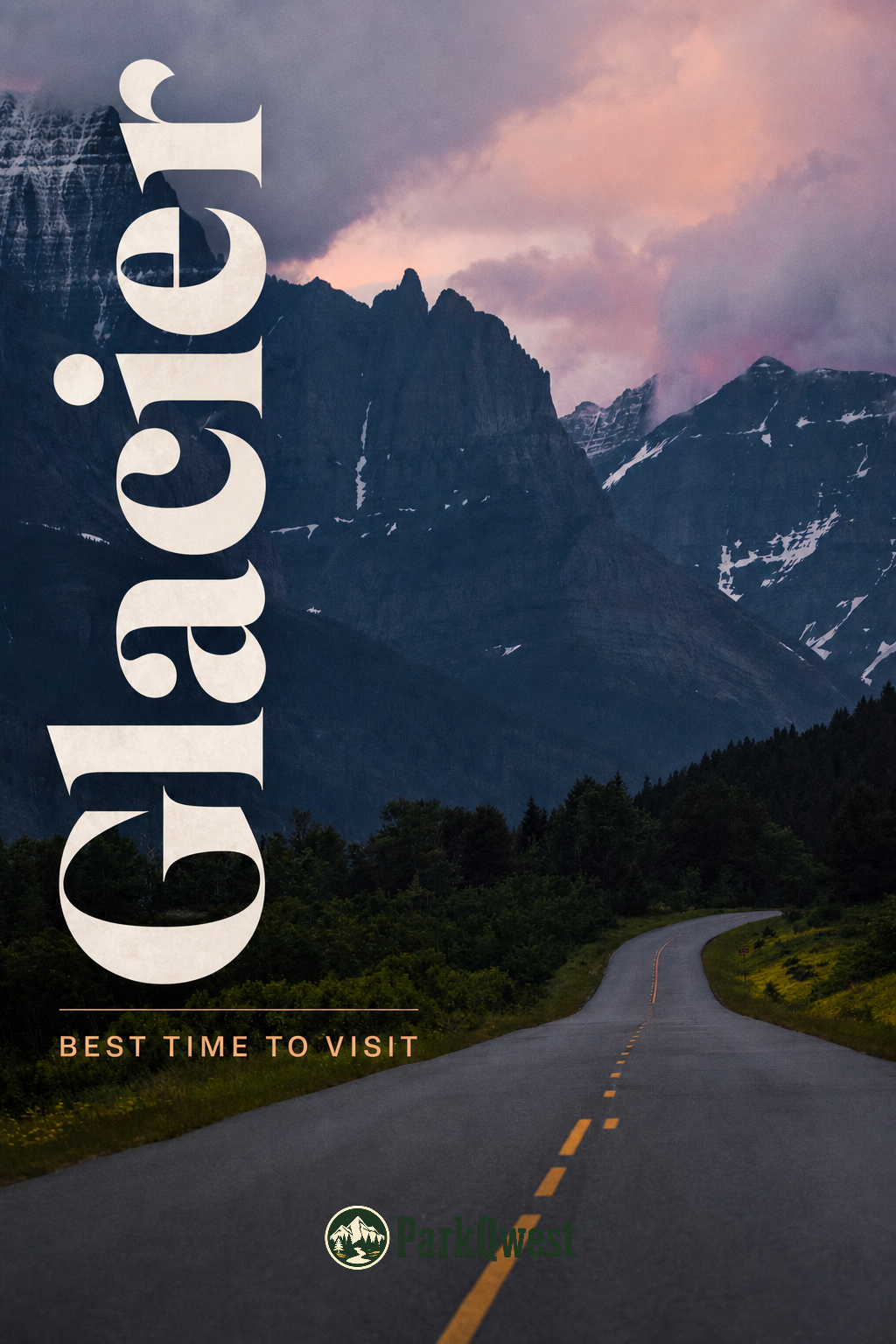
The best time to visit Glacier National Park depends less on a single “perfect” month and more on what you need the park to do for your trip. A summer traveler hoping to link big scenic drives with high-country walks is making a different choice from a photographer who wants snow lingering above blue lakes, a couple seeking quieter lodging towns, or a winter visitor comfortable with a largely road-limited landscape. Glacier’s position along the Continental Divide brings sharply variable weather: warm, wet Pacific systems push in from the west while cold, dry Arctic air arrives from the northeast. That collision is why season matters here more than it does at many parks.
Use this guide as a decision tool rather than a calendar of promises. Road access, snowpack, trail conditions, construction, reservations, services, and weather can change from year to year. Before locking in transportation or lodging, check current conditions and seasonal updates on the official Glacier National Park website.
Glacier at a Glance: What Each Season Actually Delivers
| Season | Best for | Main advantage | Main tradeoff |
|---|---|---|---|
| Spring | Quiet drives, lower crowds, changing landscapes | A more spacious, transitional park | Snow and limited high-elevation access |
| Summer | First visits, long hikes, broadest access | Most complete menu of park experiences | Crowds, demand, weather exposure |
| Fall | Quieter hiking, crisp light, flexible travelers | A calmer balance of access and atmosphere | Fast-changing weather and seasonal wind-down |
| Winter | Snow-season recreation and solitude | A quiet, wintry version of Glacier | Severe cold, snow, and restricted mobility |
Spring: Choose It for Transition, Not Full Access
Spring is Glacier’s most misunderstood season. It can be a rewarding choice for travelers who enjoy watching a mountain park wake up, but it is not the reliable answer for a high-elevation road trip or a long list of alpine hikes. Lower areas may feel green and fresh while snow remains a major factor above them, and conditions can shift quickly between sun, rain, mud, wind, and late-season snow.
What spring feels like
Spring brings longer days than winter and often lighter visitor traffic than summer, making it appealing if you value room to pause rather than an all-day itinerary. Water features can be energetic as snow melts, and the contrast between low-elevation greenery and snowy peaks can be especially striking. But that same thaw creates uncertainty: trails may be muddy or snow-covered, and access farther into the park may remain limited.
- Access: Expect a patchwork. Lower-elevation opportunities are generally the most realistic, while higher terrain and the famous Going-to-the-Sun Road may not yet offer through travel. Verify current road status rather than using a prior year’s opening pattern.
- Weather character: Cool, wet, windy, and changeable. Layering matters more than packing for a single forecast.
- Daylight: Increasing quickly, which gives you more useful daytime than winter without summer’s very long evenings.
- Who should go: Scenic drivers with modest expectations, flexible photographers, repeat visitors, and travelers whose priority is a quieter park.
Quick take
Pick spring if you would be happy with the park’s lower-elevation scenery even if high-country routes remain inaccessible. Do not pick it if a specific alpine hike or a full crossing of Going-to-the-Sun Road is the nonnegotiable centerpiece of your trip.
Summer: The Best Bet for the Broadest Glacier Trip
Summer is the strongest all-purpose choice because it offers the greatest chance of combining Glacier’s signature elements in one visit: mountain scenery, lakes, historic lodges and chalets, long daylight, and access to more of the park’s 700-plus miles of trails. It is the practical season for a first trip when your goal is to see why Glacier is known for carved valleys, alpine meadows, and dramatic high-country terrain.
The cost of that access is demand. Summer is when visitors most often compete for lodging, parking, road access, and space at popular viewpoints. It is also not a guarantee of benign weather. NPS guidance is clear that Glacier can be extreme and highly variable; a warm, sunny morning can still become a day requiring rain protection, insulation, and a revised plan.
Why summer works so well for first-time visitors
- Access: This is generally the season with the widest practical reach into the park, including the best chance for the full scenic-road experience and high-country hiking. Check the NPS site for the current status of Going-to-the-Sun Road and any vehicle, reservation, or construction requirements.
- Weather character: Often warm and sunny by mountain standards, but never reliably uniform. Bring sun protection and warm, waterproof layers in the same daypack.
- Daylight: Long days make it easier to spread out a drive, start walks early, or wait out a brief weather window.
- Scenery: This is the clearest fit for travelers hoping to pair open alpine views with meadow season and lake-focused sightseeing.
Choose summer if your trip has little flexibility and you want the highest odds of broad access. Choose a weekday-oriented, early-start strategy if you dislike crowds: it will not make the park empty, but it can make a meaningful difference in how much of the day feels like waiting versus exploring.
Fall: The Smart Compromise for Quiet-Seeking Hikers
Fall is often the most appealing season for travelers who want a more relaxed version of Glacier without committing to winter conditions. Crowds commonly ease after the summer peak, the air can feel crisper, and the lower-angle light gives landscapes more texture than the flatter midday look of high summer. It is a particularly good match for people who value walking, scenic stops, and unhurried mornings over checking every famous location off a list.
Its weakness is timing. Fall can offer a satisfying stretch of hiking weather, then change abruptly as cold systems arrive and snow returns to higher elevations. Seasonal services and facilities can also wind down, so the trip works best for travelers who can accept a shorter menu of options and verify details close to departure.
Make fall your choice if your priorities look like this
- You want fewer people: Fall usually offers a calmer social atmosphere than peak summer, especially outside holiday periods.
- You prefer cool-weather movement: Hiking and scenic wandering can feel more comfortable when daytime heat is less of a factor.
- You can tolerate uncertainty: A weather disruption is less frustrating when your plan has several interchangeable lower- and higher-elevation options.
- You care about atmosphere over maximum access: You may trade some road, trail, or service certainty for a quieter park.
Quick take
Fall is Glacier’s best “I want the park to breathe” season. It is a better fit than summer for flexible couples, photographers, and experienced mountain travelers—but only if they can accept that early winter may arrive before the calendar says it should.
Winter: A Different Trip, Not a Cheaper Summer Substitute
Winter turns Glacier into a snow-country destination rather than a drive-and-hike vacation. NPS notes that temperatures can fall well below freezing and that the park typically receives considerable snow. That creates extraordinary visual quiet and the possibility of winter recreation, but it also sharply narrows ordinary sightseeing access and raises the importance of vehicle readiness, route knowledge, and cold-weather judgment.
Do not book winter expecting to reproduce a summer itinerary with fewer people. The famous road network and high terrain are central to Glacier’s warm-season appeal, and winter conditions can restrict where and how you travel. Daylight is shorter, road conditions can be consequential, and an itinerary needs more margin for travel time and weather.
- Best suited to: Visitors specifically prepared for snowy landscapes and winter recreation, plus travelers who find solitude more valuable than convenience.
- Less suited to: First-time visitors with a must-see list centered on high-country driving, long alpine hikes, or easy point-to-point touring.
- Plan around: Current road conditions, weather forecasts, available services, and the equipment needed for the conditions you may encounter.
How to Choose Your Season in One Minute
- Choose summer if broad access and a classic first Glacier trip matter more than avoiding crowds.
- Choose fall if you want a quieter hiking-and-scenery trip and can handle changing access.
- Choose spring if lower-elevation exploration is enough and you enjoy an in-between season with fewer people.
- Choose winter only when snow, cold, and limited mobility are part of the goal—not obstacles you hope will disappear.
The durable rule is simple: match your season to your least flexible priority. If that priority is high-country access, lean summer. If it is quiet, fall or spring may be more satisfying. If it is snow and stillness, winter is the point. Glacier National Park rewards travelers who plan for the season it is actually having, not the season they hoped to find.
Before you go
- Review official alerts, closures, hours, and reservation requirements.
- Allow extra travel time and keep an alternate plan.
- Use official NPS information as the final authority.
Sources
- Glacier National Park — official National Park Service site — National Park Service, accessed 2026-08-16
Continue planning Glacier
Learn more about Glacier and find other helpful guides, trails, and trip information in the ParkQwest guide.
ParkQwest is a QwestLyfe Community.
QwestLyfe helps you track your lifelong bucket lists, collections, recipes, and the places you've been. Document your experiences, add notes and pictures, and share them with your friends — and the world.