
Glacier National Park: First-Trip Guide
Plan with current information. Conditions, roads, services, fees, and rules can change. Verify details with the National Park Service before your visit.
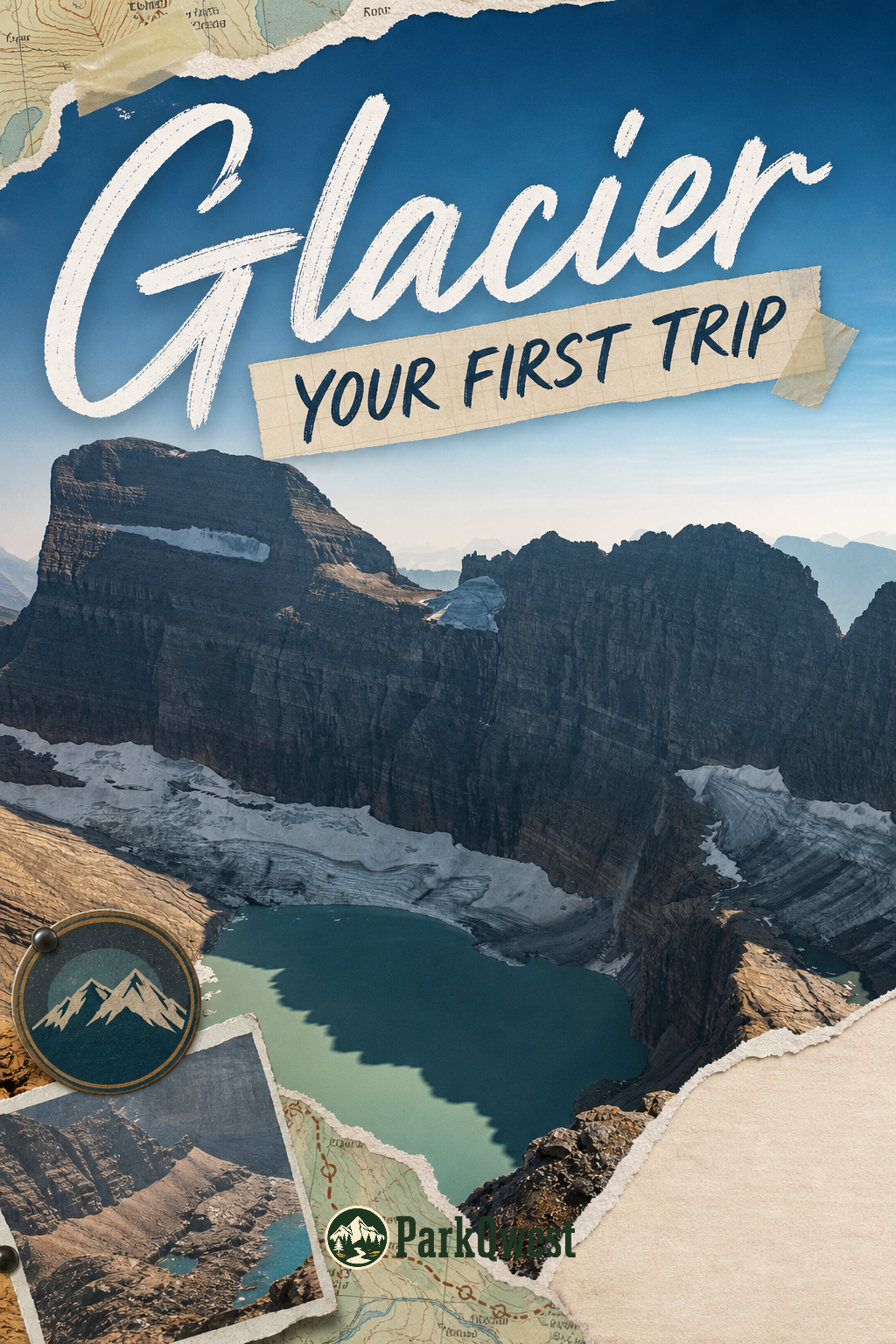
Glacier National Park is not a park to “cover” in one sweep. It is a long, mountainous landscape divided by the Continental Divide, with major experiences spread across different approaches, changing road access, and weather that can redraw your plan within a few hours. For a first visit, the winning strategy is simple: choose one side or corridor to prioritize, build one anchor experience around it, and leave room for the park’s real personality—glacially carved valleys, alpine meadows, clear lakes, historic lodges and chalets, and a road trip that is as much a destination as the stops along it.
Why Glacier Feels Different on a First Visit
Glacier National Park is a showcase of melting glaciers, high-country scenery, and enormous physical scale. The views are not concentrated around one overlook or visitor area; they unfold through valleys, lake shores, trailheads, historic buildings, and the famous Going-to-the-Sun Road. That spread is what makes the park memorable, but it is also why first-time planning needs more structure than “we’ll just drive around.”
The park sits along the Rocky Mountains in northwestern Montana and straddles the Continental Divide. That geography matters beyond the scenery: warm, wet Pacific air arrives from the west while colder, drier Arctic air can move in from the northeast. The result is highly variable weather, sometimes on the same day and sometimes between one side of the park and the other.
Quick take
Treat Glacier as a choose-your-own-corridor park, not a checklist park. A well-paced first day centered on one area will usually feel fuller—and far less rushed—than trying to cross the park, hike, sightsee, and return to a distant lodging base before dark.
Organize the First Trip Around One Big Question
Which part of the park will be easiest for you to reach and return from? Glacier is accessible by car via Highway 2 along its southern boundary, while Highway 89 provides access to the east side. That does not mean every route, facility, or high-elevation section will be available on your dates; current conditions are a separate question and should be checked on the official NPS Glacier page.
For first-timers, think in terms of a west-side focus, east-side focus, or road-corridor focus. The best choice depends on where you are sleeping, the direction you are arriving from, whether scenic driving is a priority, and what is currently open. Trying to make both sides equal priorities in a short stay can turn a mountain trip into a windshield marathon.
- Choose the west side if your arrival route, lodging, or airport plan makes Kalispell the more practical gateway. This can reduce first-day driving and make it easier to start with orientation rather than a long transfer.
- Choose the east side if you are approaching via Highway 89 or coming from the Great Falls direction. The east-side approach is not merely a backup plan; it is a distinct starting point for seeing the park’s mountain-and-prairie contrast.
- Choose the Going-to-the-Sun Road corridor if road access is confirmed and your first-visit goal is to understand Glacier’s big landscape quickly. Build in time for viewpoints, short walks, weather pauses, and traffic rather than treating the drive as transportation.
Build a “must do” and a “would be nice” list
A first visit goes better when only one experience is non-negotiable. That might be a scenic drive, a lakeside walk, a hike of a length appropriate for your group, or time at a historic lodge or chalet. Everything else should be ranked as optional, because road status, weather, parking, and energy level can change the day’s order.
Before committing, verify current vehicle-access requirements, road conditions, construction notices, shuttle information, trail status, and any required reservations or timed-entry procedures directly with the National Park Service. Those details change and should never be assumed from a saved social post, an old map, or a previous visitor’s itinerary.
Arrival: Make the First Few Hours Count
If you are flying, the nearest airports are in Kalispell and Great Falls, Montana. If you are driving, Highway 2 runs along Glacier’s southern boundary, and Highway 89 is the principal route named by NPS for reaching the east side. Either way, do not schedule your most ambitious park experience immediately after a long travel day.
Your arrival job is orientation, not accomplishment. Confirm the route you expect to use, check the forecast for the specific area you are entering, look at the NPS alerts, and identify a modest nearby activity that still feels worthwhile if your travel runs late. This is also the right moment to decide whether tomorrow should be a driving day, a hiking day, or a hybrid.
- Check official conditions first: Review the current NPS Glacier page before leaving lodging or the airport. Pay special attention to road access and weather notices.
- Set a turnaround time: Mountain days grow long quickly when stops, traffic, photos, and changing weather are involved. Pick a time to begin heading back before you begin exploring.
- Keep one short option in reserve: A viewpoint, lake-edge stop, brief walk, or historic-building visit can rescue an arrival afternoon without forcing a rushed hike.
First-timer rule
Do not use a clear morning as proof that the whole day will stay clear. Glacier’s weather is highly variable, and conditions near the Continental Divide can differ sharply from lower elevations or from the opposite side of the park.
Signature Experiences Worth Prioritizing
With more than 700 miles of trails, Glacier offers far more than a first trip can absorb. The smart move is to pair one landscape-scale experience with one on-the-ground experience: for example, a scenic road segment plus a walk, or a hike plus time at a lake or historic lodge. That pairing gives you both the wide view and the slower, more sensory side of the park.
1. The Going-to-the-Sun Road—when conditions allow
The Going-to-the-Sun Road is Glacier’s defining scenic drive and part of the park’s historic character. It is not a route to speed through. Plan it as the main event, with time to stop safely where permitted, watch the weather, and let the scenery dictate a slower pace.
Because road openings, closures, restrictions, and access systems can change, confirm the road’s current status with NPS before making it the centerpiece of the day. If a planned section is unavailable, shift the goal from “complete the drive” to “experience the available corridor well.”
2. A trail selected for your actual day
For a first Glacier hike, select by current conditions, daylight, group ability, and turnaround discipline, not by the most-photographed trail name online. The NPS site is the right place to verify trail alerts and seasonal conditions. A shorter trail completed comfortably is better planning than a longer objective that leaves no margin for weather or a slow return.
3. Historic places and lake time
Glacier’s historic chalets and lodges help explain that the park is not only wilderness scenery; it is also a landscape shaped by travel, design, and human history. Allowing time to sit near a lake, look through a lodge, or pause at a historic structure creates a useful counterweight to driving and hiking. It is often the part of the day that makes the park feel less like a series of stops.
Where to Base Yourself Without Overcomplicating It
Base location should protect your mornings and evenings. The best lodging choice is generally the one that minimizes the drive to the park area you actually plan to explore first. A less glamorous location close to your chosen entrance can be more valuable than a prettier option that requires repeated cross-region driving.
| If your priority is… | A practical base strategy |
|---|---|
| An easy first arrival from Kalispell | Use a west-side-oriented base and concentrate your first full day there or along the accessible road corridor. |
| An east-side approach via Highway 89 | Choose lodging that keeps east-side access simple rather than planning repeated long crossings. |
| A very short stay | Stay near the area you will visit most; do not make lodging changes unless they clearly save substantial driving. |
Common First-Timer Mistakes
- Planning from a map without checking conditions: A route that looks straightforward may not be usable on your dates. Official alerts are part of the itinerary, not fine print.
- Underestimating weather: Warm sun at one point in the day does not remove the need for rain, wind, temperature, or rapidly changing mountain conditions.
- Making every stop mandatory: Glacier rewards unhurried observation. Overloaded plans create pressure to skip the moments you came for.
- Ignoring the return drive: A trail or scenic stop can feel easy at midday and much less appealing when you still have a long drive back to lodging.
- Assuming wildlife encounters are scheduled: Appreciate wildlife if it appears, but do not build the day around a promised sighting. Follow current NPS wildlife guidance and give animals appropriate space.
A Realistic First Full Day
Here is a useful model for a first full day in Glacier National Park, whether you are entering from the west or east: start with the currently accessible scenic corridor closest to your base, then add one walk or hike that fits the conditions. It is intentionally flexible because Glacier’s road and weather realities matter more than a rigid sequence.
- Morning: Check NPS alerts, weather, and road information before departure. Drive toward your chosen scenic area early enough to avoid turning the entire morning into parking and positioning.
- Late morning: Make a few deliberate stops rather than every possible stop. Use this time to orient yourself to the valleys, lakes, and mountain walls that define the park.
- Midday: Take one hike or substantial walk suited to the day’s conditions and your group’s pace. Keep a firm turnaround point.
- Afternoon: Slow down at a lake, viewpoint, historic lodge, or chalet area if accessible. This is the right time to absorb Glacier rather than chase another major objective.
- Evening: Begin the return with enough daylight and energy to spare. Recheck the next day’s conditions after dinner, when you can adjust without pressure.
A successful first trip to Glacier is not measured by how many trailheads, overlooks, or park sides you can claim. It is measured by whether you gave this immense, weather-shaped landscape enough time to register—and whether your plan left room to enjoy what the park actually offered that day.
Before you go
- Review official alerts, closures, hours, and reservation requirements.
- Allow extra travel time and keep an alternate plan.
- Use official NPS information as the final authority.
Sources
- Glacier National Park — official National Park Service site — National Park Service, accessed 2026-08-16
Continue planning Glacier
Learn more about Glacier and find other helpful guides, trails, and trip information in the ParkQwest guide.
ParkQwest is a QwestLyfe Community.
QwestLyfe helps you track your lifelong bucket lists, collections, recipes, and the places you've been. Document your experiences, add notes and pictures, and share them with your friends — and the world.