
Biscayne National Park: First-Trip Guide
Plan with current information. Conditions, roads, services, fees, and rules can change. Verify details with the National Park Service before your visit.
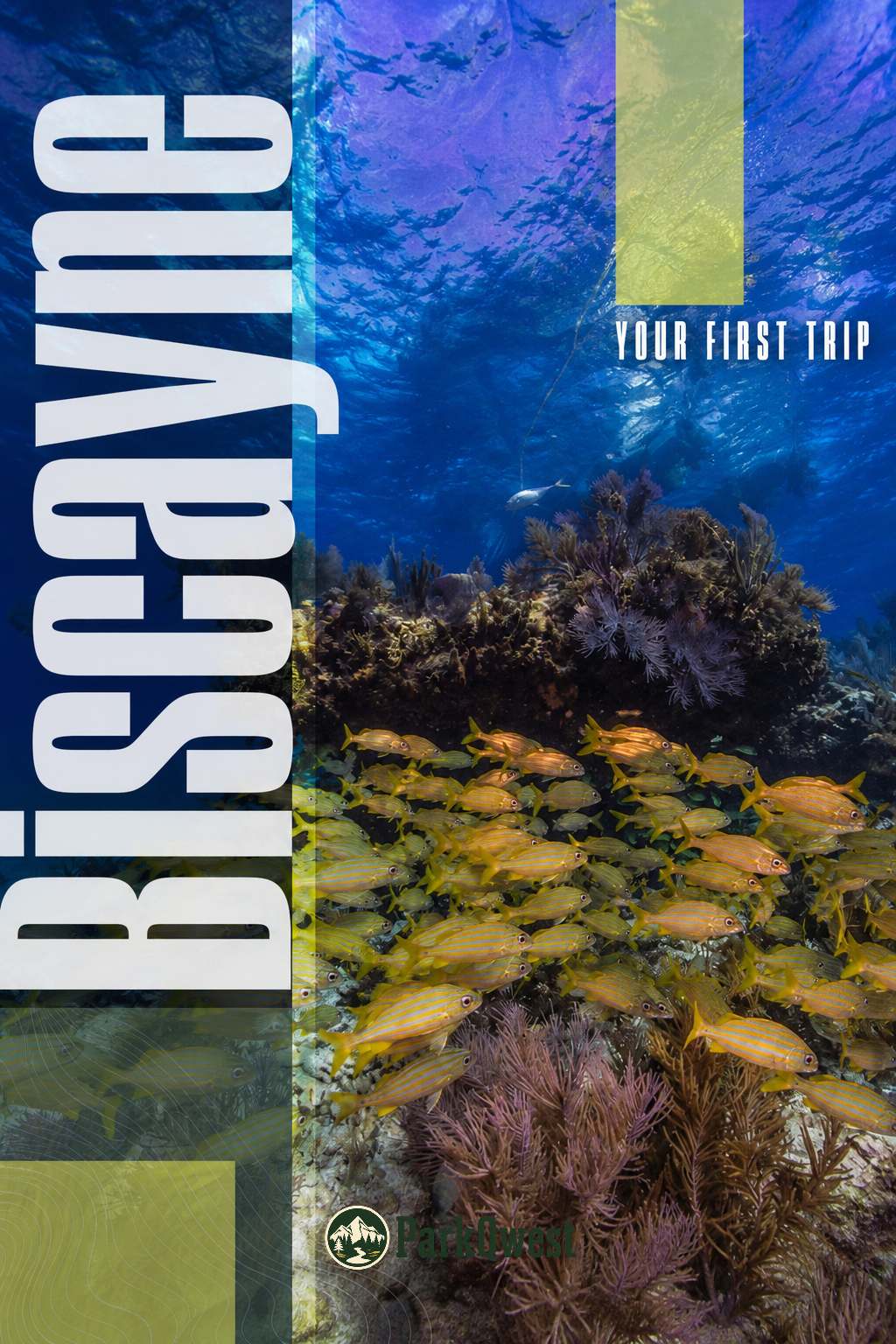
Biscayne National Park is a first-trip park that rewards a change in expectations. You can drive to the Dante Fascell Visitor Center from the Miami area, look out over aquamarine water, and still be only at the threshold of the experience. The park’s defining places—emerald islands, fish-filled coral reefs, and shipwreck-related stories—are reached on or in the water. For a satisfying first visit, treat the visitor center as your orientation point, then decide early whether your day is a shoreline-and-history visit or a water-based outing with enough time to feel like you actually entered the park.
Understand What Makes Biscayne Different
Many national parks put their main scenery directly at a roadside overlook or trailhead. Biscayne is organized around the bay and offshore experiences. That changes how you plan: transportation on the water, weather conditions, operator availability, and the time needed to get out to islands or reef areas can matter more than the mileage on your map.
The setting is also unusually layered. Biscayne National Park protects waters, islands, and coral reefs, while its human-history story stretches from prehistoric peoples to shipwrecks, pineapple farmers, and presidents. A first visit is stronger when you do not try to “cover” all of that in one rushed outing. Pick one primary experience, then use the visitor center and waterfront setting to give it context.
Quick take
Biscayne is not a park to judge by how far you can drive inside it. The essential planning question is: How will I experience the water? If the answer is “I’m not,” build a shorter, orientation-focused visit rather than expecting a full island-and-reef day from the road.
Build Your First Visit Around One Main Choice
Start by choosing the version of Biscayne that fits your time, budget, comfort on the water, and interest level. The official NPS site should be your final check for current tours, concessions, boating information, closures, weather alerts, and any required arrangements. Those details can change; the basic planning tradeoffs do not.
- Visitor center and shoreline orientation: Best for travelers with a few hours, families testing the waters, or anyone arriving without a boat plan. Use the visit to understand the park’s geography, take in the bay setting, and learn what lies beyond the mainland.
- Guided or arranged water outing: Best for a first-time visitor who wants islands, reef scenery, snorkeling, diving, or a more complete park experience without handling the boating logistics personally. Confirm what is offered, how long it lasts, what is included, and the weather policy before committing your day.
- Independent boating, fishing, or diving: Best for visitors who already have the appropriate vessel, experience, equipment, and a realistic understanding of marine conditions. This is not the category to improvise after arriving at the visitor center.
The most common planning mismatch is allocating only an hour or two to a water-centered park. That can be enough for the visitor center and a scenic pause, but it is not enough to casually add an offshore experience. If getting on the water matters to you, protect a substantial block of the day from the beginning.
A useful decision rule
If this is your only chance to visit Biscayne National Park, prioritize one meaningful water-related experience over a long list of minor stops. If you are fitting the park into a larger South Florida trip, the visitor center can work well as a shorter introduction—especially if time, weather, or comfort on a boat makes a longer outing impractical.
Arrive With a Plan, Not Just a Pin Dropped on a Map
The mainland arrival point is the Dante Fascell Visitor Center. From the Florida Turnpike, NPS directs visitors to take Exit 6 at Speedway Boulevard, turn left from the exit ramp, continue south to SW 328th Street (North Canal Drive), turn left, and follow it for four miles to the end of the road. The park entrance is on the left just before the entrance to Homestead Bayfront Marina.
That final detail is useful because it prevents a classic first-timer error: assuming the marina entrance and the park entrance are the same destination. Use current navigation tools for traffic, but keep the NPS directions handy and look for the park entrance before reaching the marina entrance.
Make the visitor center your first stop
Even visitors with a water reservation should leave time to orient themselves. Biscayne’s geography is not instantly obvious from a road map: the mainland viewpoint, nearby bay, islands, and reef environments are part of one park experience but require different ways of reaching them. Ask about current conditions and the day’s practical realities rather than relying on an old social-media itinerary.
Useful questions to confirm on arrival or through the official NPS page include:
- Water conditions: Is wind, weather, or another condition likely to affect a planned outing?
- Current access: Which visitor services, boat-related options, and areas are operating that day?
- Timing: How much lead time is sensible before a scheduled departure or return?
- Park protection: What rules apply to the places and activities you plan to enjoy?
Where to Base Yourself: Optimize for the Morning You Want
Biscayne National Park sits within sight of Miami, but your lodging choice shapes the day more than that broad location suggests. Choose your base according to departure logistics, not just the name recognition of the city. A stay closer to the visitor center area may make an early start and a water outing simpler; a Miami stay may make more sense if Biscayne is one stop in a city-focused trip.
The tradeoff is straightforward: a farther-away base can offer more dining, neighborhoods, and urban activities, but it can also turn a weather-sensitive or timed park day into a traffic-sensitive one. Before booking, map the route to the Dante Fascell Visitor Center at the time you expect to travel, then check the official NPS page for current visitor information. Do not assume lodging, food, rentals, guided trips, or launch arrangements are available in every location near the park.
Quick take
For a water outing, the best “base” is the one that makes an early, unrushed arrival realistic. For a short mainland visit, Biscayne can fit more easily into a Miami or South Florida sightseeing day—but keep expectations aligned with the fact that the park’s signature environments are offshore.
Give the Day a Realistic Shape
A first visit goes better when it has a clear center of gravity. Think in terms of an anchor experience plus an orientation period, rather than stacking multiple activities whose timing depends on the water. This is particularly important in a subtropical climate where conditions can affect comfort and operations.
| If you have... | A realistic first-visit focus |
|---|---|
| A few hours | Visitor center orientation, waterfront views, and a clearer understanding of the park for a future water-based return. |
| Most of a day | A planned water activity, with enough margin before and after it to arrive calmly and absorb the park’s history and setting. |
| An independent boat day | A conservative route and activity plan based on current NPS guidance, marine conditions, experience, and the time needed to return safely. |
NPS notes that winters are normally dry and mild, though fronts can bring wind and little rain. Summers are hot and humid, with scattered afternoon thunderstorms; hurricane season runs from June through November. Use that information as a planning lens, not a promise about a specific day. Current forecasts, marine conditions, and park updates should decide whether a water plan is sensible.
First-Timer Mistakes Worth Avoiding
- Treating the park like a drive-through destination: The road gets you to the gateway, not automatically to the islands and reefs that define Biscayne.
- Booking a water experience without reading the specifics: Confirm duration, meeting location, physical expectations, weather policies, and what you need to bring through the official source or provider.
- Assuming a calm-looking shoreline means calm offshore conditions: Water conditions can vary, so use current local and NPS guidance for decisions.
- Overpacking the schedule: A rushed visitor-center stop before a timed departure can leave you stressed without adding much value.
- Forgetting the history: Reef and island scenery is the headline, but the park’s 10,000-year human story gives the place much of its meaning.
A Practical Sample Day for a First Visit
- Start with the official NPS page the evening before: Check current conditions, alerts, visitor information, and the status of any planned water activity.
- Arrive at the Dante Fascell Visitor Center with time to spare: Use the NPS directions, allow for the final approach near Homestead Bayfront Marina, and avoid planning your arrival down to the minute.
- Orient before you commit: Learn how the bay, islands, reefs, and historical sites fit together, then confirm the day’s conditions and practical guidance.
- Make one signature experience the centerpiece: Join a currently available water-based option, or, if you are staying on the mainland, give the waterfront setting and interpretation enough time to feel intentional rather than incidental.
- End by deciding what you would return for: Many first visits reveal whether your next Biscayne day should be focused on boating, fishing, diving, snorkeling, history, or simply more time on the water.
The best first trip to Biscayne National Park is not the one with the fullest checklist; it is the one built around the park’s actual geography. Arrive oriented, reserve enough time for the kind of experience you want, verify the day’s changing conditions, and let the visitor center be the bridge between mainland arrival and the watery world that makes Biscayne distinctive.
Before you go
- Review official alerts, closures, hours, and reservation requirements.
- Allow extra travel time and keep an alternate plan.
- Use official NPS information as the final authority.
Sources
- Biscayne National Park — official National Park Service site — National Park Service, accessed 2026-10-07
Continue planning Biscayne
Learn more about Biscayne and find other helpful guides, trails, and trip information in the ParkQwest guide.
ParkQwest is a QwestLyfe Community.
QwestLyfe helps you track your lifelong bucket lists, collections, recipes, and the places you've been. Document your experiences, add notes and pictures, and share them with your friends — and the world.