Yellowstone National Park: Family Adventure Guide
Plan with current information. Conditions, roads, services, fees, and rules can change. Verify details with the National Park Service before your visit.
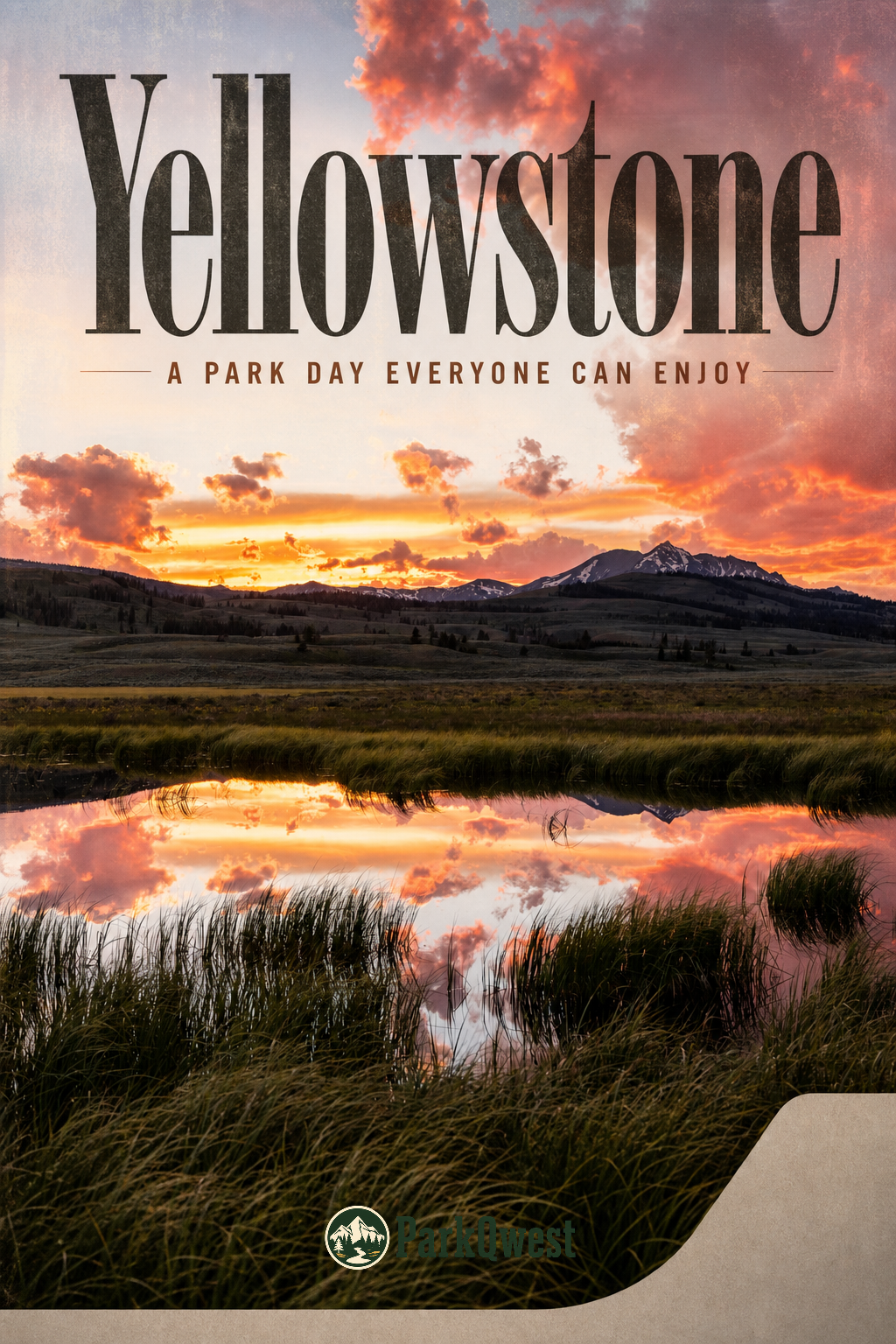
Yellowstone National Park works best for families when you plan it as a series of short wins, not one epic all-day push. The park spans nearly 3,500 square miles across Wyoming, Montana, and Idaho, and drives between entrances can take many hours. That scale is part of the adventure, but it also means a good family day usually has one main area, a few flexible stops, dependable food-and-rest breaks, and permission to skip the “last thing” when kids are done.
Build the trip around what your crew can handle now—not around a map full of pins. Younger children may be thrilled by a boardwalk, a wildlife-viewing pullout, and a picnic; older kids may want more choice, a longer walk, or a Junior Ranger-style mission. The most useful Yellowstone itinerary leaves room for both.
Quick take
For a happier family day, choose one park zone, one “must-do” stop, one easy backup, and one place to reset. Yellowstone is too large to treat as a checklist destination, especially with children in the car.
Plan Yellowstone in Kid-Sized Chapters
Use a two-stop rhythm. Rather than hopping out at every viewpoint, aim for one substantial stop followed by one short, low-commitment stop. A substantial stop might include a visitor center, a geothermal boardwalk area, a picnic, or a family walk; the shorter stop can be a scenic pullout, restroom break, or fifteen-minute wildlife scan from a safe viewing area.
This rhythm gives children a predictable answer to “What are we doing next?” It also makes it easier to pivot when a parking area is busy, a storm moves in, or a toddler falls asleep at exactly the wrong moment.
Match the day to your children’s energy
| Family pace | A realistic pattern | What to protect |
|---|---|---|
| Little-kid day | One main attraction, one boardwalk-style outing, a long lunch or nap-window drive, then a short afternoon stop. | Warmth, snacks, bathrooms, and an early exit option. |
| Elementary-age day | Two main stops with a child-led scavenger hunt between them. | A sense of choice and a non-rushed meal break. |
| Teen-friendly day | One longer outing plus time for photography, sketching, wildlife viewing, or a self-chosen stop. | Ownership of part of the plan and enough time off the road. |
Do not confuse a short walk with a short outing. Parking, bathroom needs, layers, snack negotiations, and getting everyone safely back into the vehicle all take time. For families, a stop that looks quick on a map can easily become a 45-minute break—and that is often time well spent.
Let Children Help Run the Day
Giving kids a real job reduces the feeling that they are simply being transported between adult priorities. Keep the choices narrow and practical: “Do you want to look for steam, water, or animal tracks at the next stop?” works better than asking them to design the whole day.
- Map reader: Let one child follow the day’s route and announce the next planned break.
- Weather watcher: Put an older child in charge of checking whether everyone has a jacket, rain layer, and water before leaving the car.
- Nature recorder: Bring a small notebook for sketches, colors spotted, cloud shapes, animal observations, or one surprising fact learned that day.
- Snack captain: Let a child choose the next snack break from a parent-approved stash. This sounds minor; it can prevent a lot of roadside friction.
- Photo curator: Ask each child to take three photos that tell the day’s story: one wide scene, one tiny detail, and one family moment.
Junior Ranger activities can be a useful anchor, but treat them as a bonus rather than a promise. Visitor centers and ranger-led opportunities may offer age-appropriate ways to learn, but availability, schedules, and operations can change. Check the official Yellowstone National Park website before your visit to see what is currently offered, where to pick up materials, and whether a particular visitor center is open.
Quick take
A visitor center is more than a rainy-day detour. For families, it can be the reset button: bathrooms, maps, exhibits, current conditions, questions answered, and a chance to turn “Why is that steaming?” into the day’s next activity.
Build in the Breaks That Keep Everyone Civil
Plan restrooms and food before the kids need them. Yellowstone’s distances make “we’ll stop soon” a risky strategy. Before leaving your lodging or a developed park area, identify the next likely restroom opportunity and make sure every water bottle is filled.
For meals, bring enough food to turn an unexpected delay into a picnic rather than a crisis. Choose items that can be eaten in the car only after you are parked, and pack a small trash bag so the vehicle does not become the day’s third challenge.
- Morning buffer: Start with breakfast, water, and a bathroom stop before the first scenic stop.
- Midday reset: Give lunch a full block of time rather than eating while navigating to the next attraction.
- Quiet-car window: Use the longest drive for naps, audiobooks, drawing, or a low-stakes family trivia game.
- Late-afternoon decision point: Ask whether the group has energy for one more stop. A unanimous “no” is a successful answer.
Weather Is Part of the Itinerary
Yellowstone’s weather can change sharply within a single day. Summer daytime temperatures can exceed 70°F (21°C), then drop 20 degrees or more when a thunderstorm arrives; snow is possible in any month. Winter nights frequently fall below 0°F (-18°C), so the clothing plan matters as much as the sightseeing plan.
Dress in removable layers instead of chasing a perfect forecast. A warm jacket and rain gear belong in the vehicle even in summer, along with dry socks, hats, sun protection, and a spare kid layer that does not require a parent to surrender theirs.
Low-energy and rainy-day backups
A weather change does not have to erase the day. Shift from outdoor mileage to a visitor center, a scenic drive with designated stops, a picnic in the vehicle when appropriate, a family photo review, or a “spot five differences in the landscape” game. If conditions make an outdoor plan unpleasant, changing course early is wiser than waiting for everyone to melt down.
Always check current weather, road conditions, and facility status on the official NPS Yellowstone page before setting out. Several entrance stations are closed to regular vehicles during winter, and the entrance you plan to use may not be the one that makes sense under current conditions.
A Realistic Family Day Outline
- Morning: Leave with full water bottles, layers within reach, and one clear first destination. Make the first stop the day’s most important one, while patience is highest.
- Late morning: Add a short second stop where children can move, observe, or complete a simple challenge from their notebook.
- Midday: Pause for lunch, restrooms, and a route check. This is the moment to cut an ambitious afternoon plan if driving time is growing.
- Afternoon: Choose either one family walk or one scenic stop—not both by default. Save enough energy for the return drive.
- Evening: End with a three-question recap: What did you notice? What surprised you? What should we do differently tomorrow?
The best Yellowstone family itinerary is usually the one with fewer pins and better memories. Keep the map honest about driving time, use visitor centers and breaks strategically, let children own small parts of the adventure, and check the official National Park Service page for changing road, weather, and program information before each park day.
Before you go
- Review official alerts, closures, hours, and reservation requirements.
- Allow extra travel time and keep an alternate plan.
- Use official NPS information as the final authority.
Sources
- Yellowstone National Park — official National Park Service site — National Park Service, accessed 2026-08-16
Continue planning Yellowstone
Learn more about Yellowstone and find other helpful guides, trails, and trip information in the ParkQwest guide.
ParkQwest is a QwestLyfe Community.
QwestLyfe helps you track your lifelong bucket lists, collections, recipes, and the places you've been. Document your experiences, add notes and pictures, and share them with your friends — and the world.