Yellowstone National Park: Packing Guide
Plan with current information. Conditions, roads, services, fees, and rules can change. Verify details with the National Park Service before your visit.
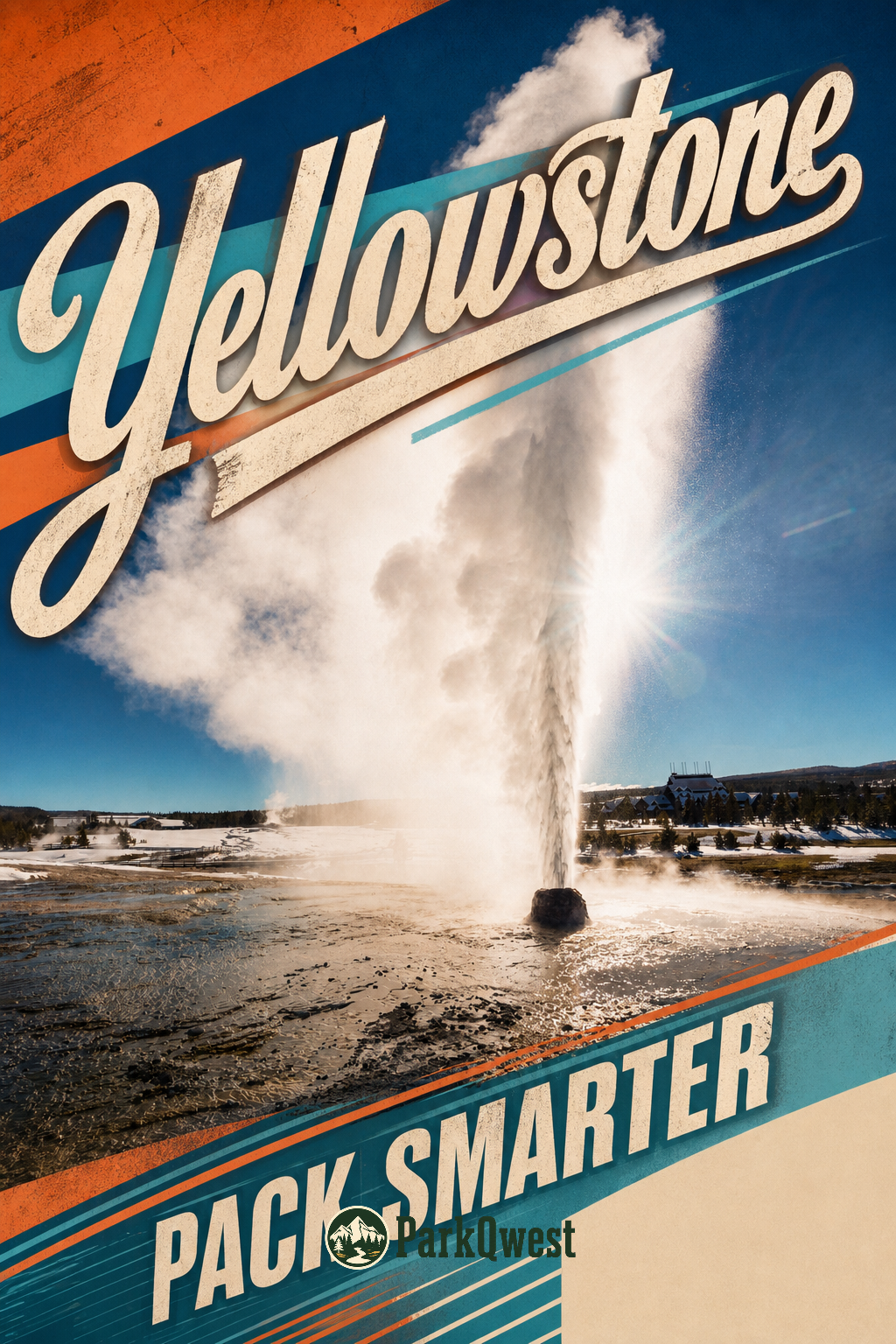
Packing for Yellowstone National Park is less about owning “outdoor gear” and more about being ready for rapid changes while you are far from your car. Yellowstone spans nearly 3,500 square miles across Wyoming, Montana, and Idaho, and drives between entrances can take many hours. A warm, sunny morning can turn into a cold, wet afternoon when a thunderstorm moves through; summer highs may exceed 70°F (21°C), yet temperatures can drop 20 degrees or more quickly, and snow is possible in every month. Build your bag around layers, dry feet, a reliable daypack, and enough water and food to handle a long park day without relying on a convenient stop appearing at the right time.
Clothing: Build a Layering System, Not a Single Outfit
Yellowstone’s useful packing rule is “warm layer plus rain layer, even in summer.” A hoodie alone is not a weather plan here. It absorbs moisture, takes time to dry, and may leave you cold when wind, rain, or a sudden temperature drop arrives.
- Base layer: Pack moisture-wicking shirts, preferably synthetic or wool. A short-sleeve shirt is practical for warm daytime walks; add a lightweight long-sleeve layer for sun, bugs, cool mornings, and temperature swings.
- Midlayer: Bring a fleece, insulated jacket, or warm wool sweater. This is the layer that earns its space when clouds roll in or when you are outside early and late in the day.
- Rain shell: Choose a waterproof or reliably water-resistant shell with a hood. An umbrella can help around developed areas, but it is awkward in wind and not a replacement for a jacket when you are walking.
- Bottoms: Quick-drying hiking pants, travel pants, or sturdy leggings work better than heavy denim for a full day outdoors. Jeans are fine for town or short overlooks on a dry forecast, but they are a poor choice if rain or cold is likely.
- Warm accessories: Pack a knit hat, light gloves, and a buff or neck gaiter in every season. They take little room and make a surprising difference during cold mornings, evening walks, and stormy weather.
Quick take
For a summer Yellowstone day, wear a breathable shirt and hiking pants, carry a fleece and hooded rain shell, and keep a warm hat in the daypack. The goal is not to predict the weather perfectly; it is to avoid being caught cold when it changes.
Footwear: Pack for Wet Ground, Long Walks, and Changing Temperatures
Your most important footwear decision is whether your shoes still work after rain. Yellowstone days often combine roadside stops, boardwalk-style walking areas, uneven paths, muddy edges, and plenty of standing outdoors. Comfortable shoes that lose traction or soak through quickly can shorten the day fast.
- Primary shoes: Wear broken-in hiking shoes or trail shoes with dependable tread. Waterproof hiking boots are helpful in wet, cold, or shoulder-season conditions, but breathable trail shoes may be more comfortable during warm, dry summer weather.
- Socks: Bring moisture-wicking wool or synthetic socks, plus one spare pair in the daypack. Dry socks are a small comfort with an outsized payoff after rain, a puddle, or a long walking day.
- Camp or lodging shoes: Lightweight sandals or sneakers are useful after hiking, but they should be your backup—not the only pair you bring.
- Winter traction: If traveling when snow or ice is possible, consider traction devices that fit your footwear. Check current NPS weather and road information before deciding what conditions to pack for.
The Yellowstone Daypack: What Should Leave the Car With You
Because Yellowstone is enormous, pack your daypack as though your next useful stop may be farther away than expected. This does not mean carrying expedition gear. It means avoiding the common mistake of leaving water, insulation, food, and basic navigation in the vehicle because the first stop looked short.
- Water: Carry more than a token bottle per person, especially on warm days or when your plans include extended walking. A refillable bottle or hydration reservoir makes it easier to drink consistently.
- Food: Pack a real lunch or substantial snacks: nuts, fruit, sandwiches, energy bars, crackers, or other foods that travel well. The park’s size makes “we’ll grab something soon” a risky plan.
- Sun protection: Bring sunscreen, sunglasses, lip balm with SPF, and a brimmed hat. Cool temperatures can hide how much exposure you are getting.
- Navigation and power: Download maps before entering areas with uncertain signal, carry a car charger or power bank, and keep a paper map if you prefer a non-battery backup.
- Small comfort kit: Include tissues, hand sanitizer, blister care, personal medications, a compact first-aid kit, and a reusable bag for trash.
- Emergency warmth: Add an emergency blanket or extra insulating layer when traveling outside the warmest part of summer, with children, or during uncertain forecasts.
Weather Exposure: Pack for the Forecast and the Forecast’s Failure
Yellowstone weather deserves its own packing category because it can shift within a single day. NPS notes that summer temperatures can exceed 70°F (21°C), then fall by 20 degrees or more during a thunderstorm. Snow can occur in any month, while winter nights frequently drop below 0°F (-18°C).
| Trip timing | Pack emphasis | Easy-to-miss item |
|---|---|---|
| Summer | Sun protection, rain shell, fleece, extra water | Warm hat and dry socks |
| Spring or fall | Warmer insulation, waterproof footwear, gloves | Traction option and emergency blanket |
| Winter | Serious cold-weather layers and vehicle preparedness | Current road and entrance-status information |
Before departure, check the official Yellowstone National Park page for current weather, road conditions, and entrance status. Several entrances are closed to regular vehicles during winter, so winter packing is inseparable from transportation planning. A trunk full of cold-weather gear does not help if the route you expected to use is not open to regular traffic.
Quick take
Keep one “weather pivot” pouch in the car: rain jackets, fleece layers, hats, gloves, dry socks, and a small towel. It is faster than repacking every morning and helps everyone adjust before a short stop turns into a cold one.
Food, Water, and Wildlife-Smart Storage
Pack food for convenience, but store it with wildlife in mind. Yellowstone is wildlife country, which means snacks, coolers, scented toiletries, and trash should never be treated casually. Follow current NPS food-storage and wildlife guidance for where you are staying and how you are traveling.
Choose low-mess foods that can be packed back out easily. Bring a cooler for your vehicle if it suits your itinerary, but do not assume that leaving food visible or unsecured is acceptable; verify current park guidance before your trip. A few reusable containers and a dedicated trash bag make day-to-day cleanup much easier.
Safety Gear That Actually Earns Its Space
The best Yellowstone safety kit is compact, practical, and paired with good decisions. Carry a basic first-aid kit, medications, whistle, flashlight or headlamp, and a power bank. If your group plans longer walks, add blister treatment, a small repair item such as tape, and an extra snack beyond what you expect to eat.
Wildlife safety is not a gear-only issue. Keep appropriate distance, do not feed animals, and review current NPS guidance before arrival. If you are considering carrying bear spray or any wildlife-defense product, learn the current park recommendations, transportation rules, and how to use it properly before the trip rather than buying it as a last-minute accessory.
Photography and Family Extras Worth Bringing
Yellowstone rewards patience, but your gear should not turn every stop into a production. A phone with downloaded maps, a power bank, and a simple camera setup are enough for many travelers. Bring a lens cloth, weather protection for electronics, and extra battery capacity; cold conditions can drain batteries more quickly.
- For photographers: Pack one versatile lens instead of an oversized kit unless photography is the main purpose of the trip. A small tripod can be useful, but only if you are willing to carry it all day.
- For kids: Bring child-size rain layers, extra snacks, a spare clothing set, and a simple activity such as binoculars, a notebook, or a park-focused scavenger list that does not encourage leaving designated areas.
- For drivers: Keep car games, charging cables, water, and accessible snacks within reach. Long drives between areas are part of Yellowstone planning, not an exception.
What to Leave Behind
- Brand-new hiking boots: Yellowstone is not the place to discover a heel-rubbing problem.
- One bulky coat as your only warm layer: Layers are more useful across changing daytime conditions.
- Heavy cotton clothing for outdoor days: It is slow to dry and uncomfortable when temperatures fall.
- Oversized coolers and loose clutter: Vehicle space matters when you are carrying layers, water, food, and emergency supplies.
- Drone or specialized equipment without checking rules: Verify current NPS regulations before packing anything that may be restricted.
Final Yellowstone Packing Checklist
- Wear: Broken-in trail shoes or boots, moisture-wicking shirt, adaptable pants, sun hat.
- Carry daily: Water, food, rain shell, warm layer, sunscreen, map access, power bank, first aid, and spare socks.
- Keep in the car: Extra layers, gloves, hats, towel, cooler or food bin, charging cable, and weather-pivot pouch.
- Verify before leaving: Current Yellowstone weather, road conditions, entrance status, and any seasonal access changes on the official NPS page.
If one item defines a smart Yellowstone packing list, it is a daypack that can handle a sunny morning, a cold storm, a long drive, and an unexpected extra walk. Pack for that reality, and you will spend less time retreating to the car and more time enjoying the park on its terms.
Before you go
- Review official alerts, closures, hours, and reservation requirements.
- Allow extra travel time and keep an alternate plan.
- Use official NPS information as the final authority.
Sources
- Yellowstone National Park — official National Park Service site — National Park Service, accessed 2026-08-16
Continue planning Yellowstone
Learn more about Yellowstone and find other helpful guides, trails, and trip information in the ParkQwest guide.
ParkQwest is a QwestLyfe Community.
QwestLyfe helps you track your lifelong bucket lists, collections, recipes, and the places you've been. Document your experiences, add notes and pictures, and share them with your friends — and the world.