Yellowstone National Park: Best Time to Visit
Plan with current information. Conditions, roads, services, fees, and rules can change. Verify details with the National Park Service before your visit.
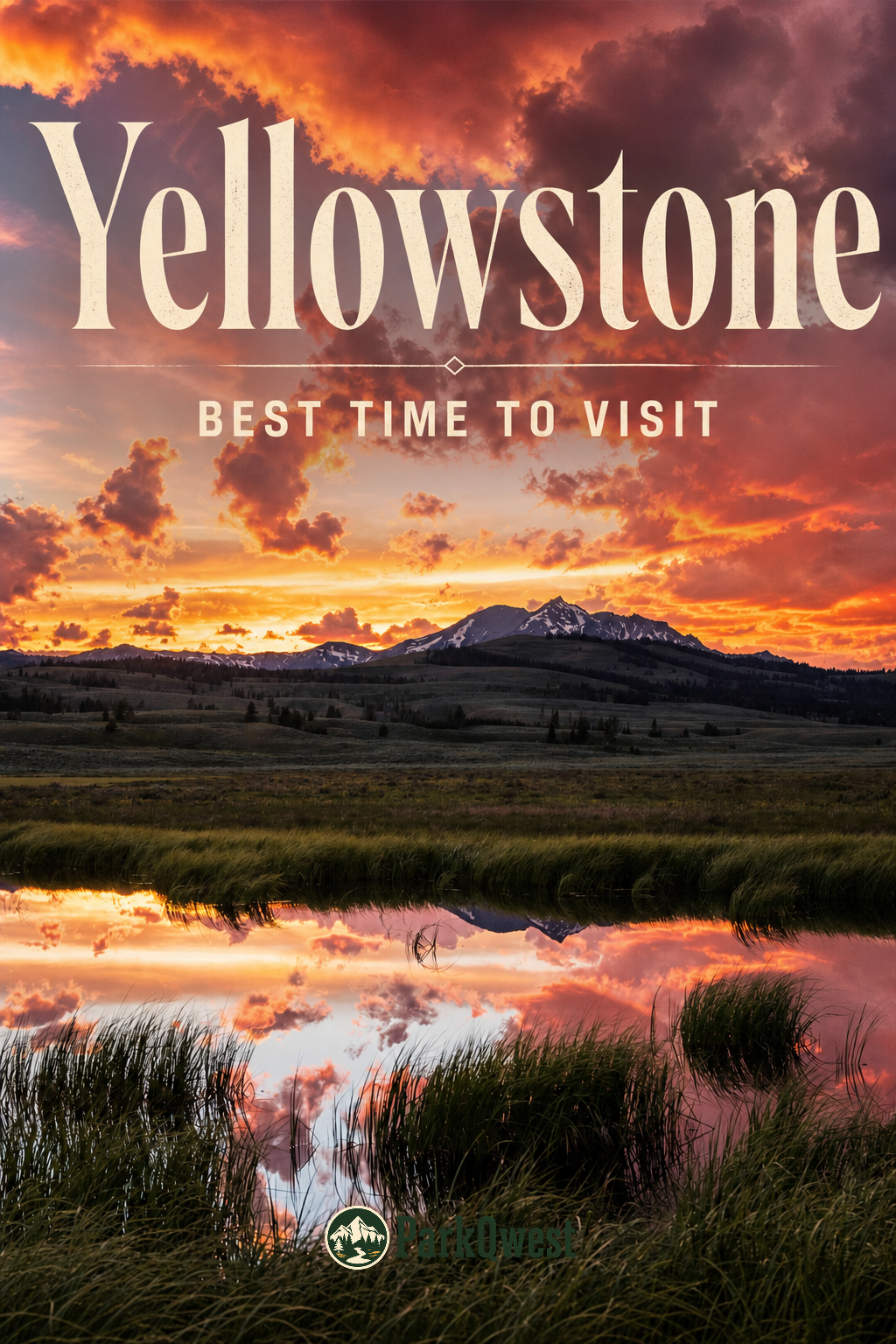
The best time to visit Yellowstone National Park depends less on a single “best month” and more on what you are willing to trade for access. Summer gives you the widest range of road travel and the longest practical sightseeing days, but it also concentrates the most visitors. Winter delivers a quieter, snowbound version of the park, but regular vehicle access changes dramatically. Spring and fall can be the most rewarding choices for travelers who value changing scenery and lower crowd pressure—provided they can accept variable weather and verify current road conditions before committing to an itinerary.
Yellowstone spans nearly 3,500 square miles across Wyoming, Montana, and Idaho, so a season affects more than your packing list. It changes how much of the park you can reasonably reach, how long travel between areas may take, and whether your trip feels like a broad driving tour or a more focused stay near the areas that are open. The NPS is clear on one durable truth: weather can shift quickly in every season, and snow is possible in any month.
Quick take
Choose summer for maximum access, fall for a more spacious classic Yellowstone trip, spring for dramatic transition and flexible plans, or winter for a deliberately limited, snow-focused experience. If seeing a long list of park areas matters most, summer is the safest fit. If atmosphere matters more than checking off every location, the shoulder seasons deserve serious consideration.
At a glance: what each season asks of you
| Season | Best for | Main advantage | Main tradeoff |
|---|---|---|---|
| Spring | Flexible travelers, photographers, repeat visitors | Seasonal change and generally lighter visitation than peak summer | Unsettled weather and changing access |
| Summer | First visits, families, wide-ranging itineraries | Broadest regular-vehicle access and long daylight | Largest crowds and frequent afternoon weather shifts |
| Fall | Couples, scenic drivers, crowd-averse planners | Cooler feel, changing color, easing demand after summer | Shorter days and increasing weather uncertainty |
| Winter | Snow travelers and quiet-season specialists | A fundamentally different, less vehicle-oriented park | Severe cold, limited daylight, and seasonal vehicle closures |
Spring: choose it for transition, not certainty
Spring is Yellowstone in motion. Snowmelt, changing temperatures, and an evolving landscape can make this season feel fresh and visually active, but it is not the time to build a rigid, park-wide driving schedule. Conditions can differ sharply from one part of Yellowstone to another, and the entrance that works for one trip plan may not support another.
The appeal is straightforward: the park has not yet settled into summer’s busiest rhythm, daylight is expanding, and the landscape often carries a raw, in-between quality that many returning visitors prefer. The tradeoff is that spring weather can swing from pleasant to wintry quickly. NPS notes that Yellowstone can receive snow in any month, so “spring” should never be translated as “warm.”
Spring is a smart fit if you are...
- Comfortable with a smaller daily agenda: Build your days around a few priorities rather than assuming every area will fit neatly into one loop.
- Happy to plan around conditions: This is the season for checking the official NPS road-status information immediately before departure and again on travel days.
- Drawn to weather-driven scenery: Cloud, snow, wet ground, steam, and changing light can be part of the point rather than a disruption.
Spring is less ideal for travelers whose satisfaction depends on maximum certainty: young children who need predictable outdoor comfort, tightly timed multi-stop vacations, or first-time visitors with only one narrow window to see the broadest possible slice of Yellowstone.
Summer: the easiest season to use, not necessarily the easiest season to love
Summer is the default choice because it offers the clearest case for broad access. It is the strongest season for a first Yellowstone trip when you want to connect multiple areas, use long daylight well, and reduce the odds that seasonal closures reshape the plan. With five entrance stations and many hours of driving possible between them, that fuller access matters more here than it might in a compact park.
But summer is not uniformly mild. The NPS notes that daytime highs can exceed 70°F (21°C), then drop by 20 degrees or more when thunderstorms move through. A bright morning can become a wet, chilly afternoon, so a day built around “summer clothes” alone is poorly matched to Yellowstone.
What summer gives you
- Longer usable days: More daylight makes it easier to pace scenic stops, walks, meals, and cross-park travel without feeling rushed.
- The broadest planning runway: It is generally the most practical season for travelers who want a larger geographic sweep rather than a concentrated visit.
- Simpler group logistics: Families and mixed-interest groups often benefit from having more open options when weather or energy levels change.
What summer costs you
Expect the most competition for popular viewing areas, parking, lodging, and road space. The practical response is not necessarily to avoid summer; it is to choose a realistic pace. Prioritize one major area or experience category per part of the day, rather than treating Yellowstone’s size as proof that you can casually cover it all.
Summer packing reality
Bring layers even when the forecast looks warm. A warm jacket and rain gear are sensible in summer, not overpacking. The NPS specifically warns that temperatures can drop sharply with thunderstorms, and Yellowstone weather can change considerably within a single day.
Fall: the best compromise for many adults
Fall often offers the most balanced version of a classic Yellowstone trip. Days are shorter than summer and weather becomes increasingly consequential, but the overall feel can be calmer once peak summer demand begins to fade. For travelers who want scenic driving, time outdoors, and a little more breathing room around their plans, this can be the season with the most favorable tradeoff.
Fall is especially good for people who do not need every day to be packed from early morning through evening. Cooler air can make layers more central to the trip, and shorter daylight rewards a more selective itinerary. Instead of trying to span the park from one entrance region to another in a single day, use fall to linger in fewer areas and leave room for changing conditions.
Choose fall when your priorities are clear
- You prefer fewer crowds to maximum daylight: You are willing to finish the day earlier in exchange for a less peak-season feel.
- You enjoy scenic transition: Seasonal color, cooler light, and weather variation are part of the desired atmosphere.
- You can verify conditions close to departure: Early fall and later fall can feel very different, so do not rely on broad seasonal labels alone.
Fall becomes less forgiving as conditions trend toward winter. Before locking in lodging or a route, check the official NPS page for current road and entrance information—not just a general seasonal expectation. Yellowstone’s scale means a closed or changing access point can have a much larger effect than it would at a park with one main road.
Winter: treat it as a different trip, not a discounted summer
Winter is for travelers who actively want Yellowstone’s cold, quiet, snow-shaped identity. It is not simply summer with fewer people. Several entrance stations are closed to regular vehicles during winter, and travel planning must begin with what access is available rather than with a wish list of sights.
The weather stakes are real: winter lows frequently fall below 0°F (-18°C), particularly at night. Limited daylight and severe cold mean comfort, timing, and transportation deserve equal weight with scenery. This is the season to choose when a focused, intentional park experience sounds appealing—not when you hope to do a standard driving tour with fewer crowds.
Winter suits travelers who can embrace limits
- Start with access: Confirm which entrance and roads are available to your mode of travel before choosing where to stay.
- Pack for exposure, not just forecasts: Insulating layers, a warm outer jacket, and weather protection are foundational rather than optional.
- Plan fewer transitions: A winter day works best when it is not dependent on long, complicated movement across the park.
How to make the final call
If this is your first visit and you want the least complicated path to a wide-ranging Yellowstone itinerary, choose summer. If you have flexibility and value a more atmospheric, less peak-season trip, lean toward fall. Choose spring when you can accept evolving conditions as part of the experience, and choose winter only when its restricted access and serious cold are features you genuinely want.
Whichever season you choose, use the official Yellowstone National Park NPS page as the final authority for current road, entrance, and weather conditions. Seasonal averages can guide a dream trip, but Yellowstone’s day-to-day reality—especially across a park this large—should shape the actual one.
Before you go
- Review official alerts, closures, hours, and reservation requirements.
- Allow extra travel time and keep an alternate plan.
- Use official NPS information as the final authority.
Sources
- Yellowstone National Park — official National Park Service site — National Park Service, accessed 2026-08-16
Continue planning Yellowstone
Learn more about Yellowstone and find other helpful guides, trails, and trip information in the ParkQwest guide.
ParkQwest is a QwestLyfe Community.
QwestLyfe helps you track your lifelong bucket lists, collections, recipes, and the places you've been. Document your experiences, add notes and pictures, and share them with your friends — and the world.