
Zion National Park: 3-Day Itinerary
Plan with current information. Conditions, roads, services, fees, and rules can change. Verify details with the National Park Service before your visit.
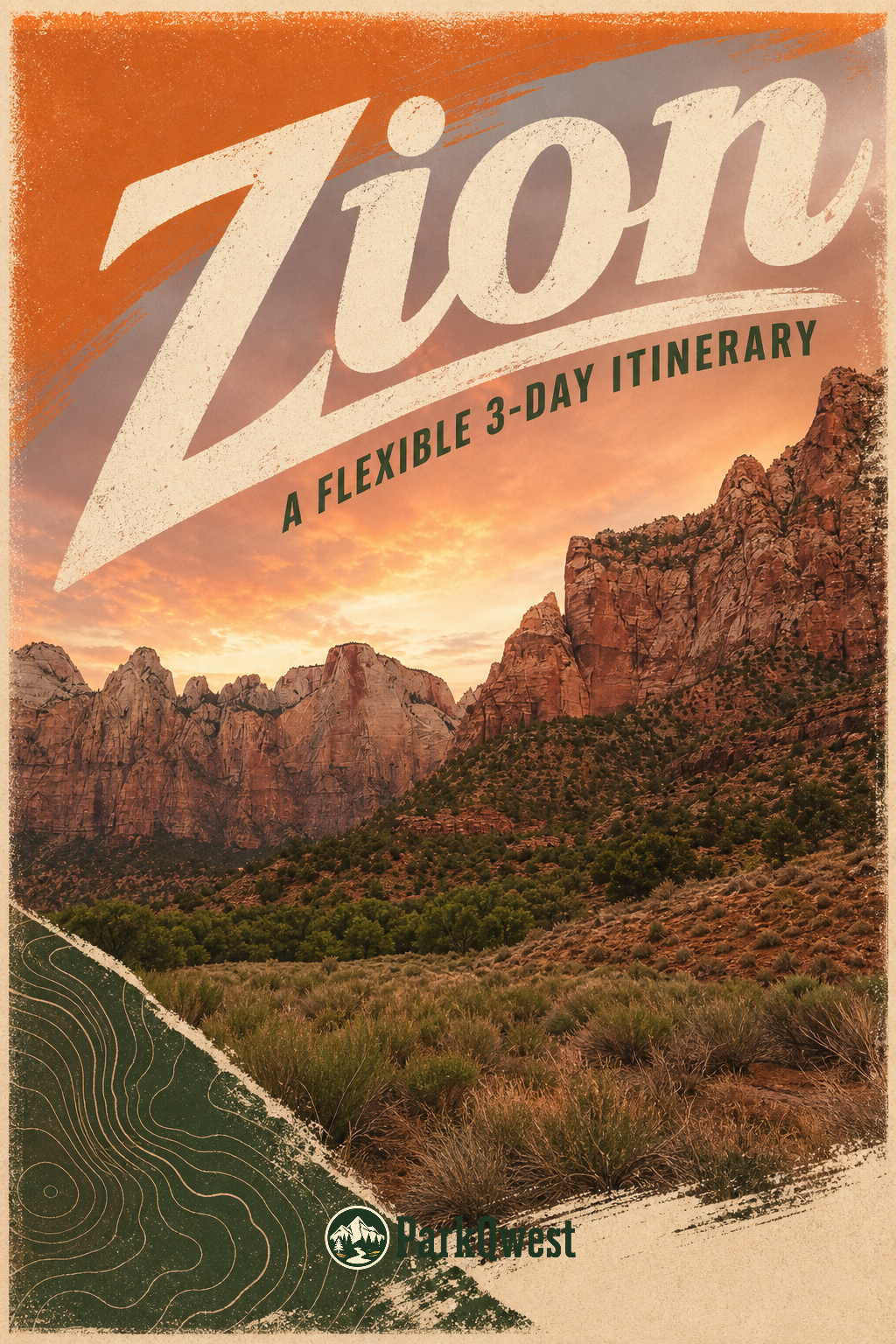
Zion National Park works best when you give each day one job. The park’s South Entrance near Springdale is the practical base for Zion Canyon and its popular hikes, while the East Entrance offers a different way into the park from west of Mt. Carmel Junction. This three-day plan uses that geography instead of trying to cram every viewpoint, canyon walk, and scenic pull-off into one rushed loop. It also leaves room for the realities that shape a Zion trip: shuttle operations, summer heat, big day-to-night temperature swings, and flash-flood or lightning concerns during the mid-July through September monsoon season.
Quick take
Use Day 1 to learn the canyon’s rhythm, Day 2 for your biggest hike or canyon-focused outing, and Day 3 for the East Entrance side and a gentler finish. That order makes it easier to adjust if weather, shuttle logistics, or your own energy changes.
Day 1: Zion Canyon orientation without burning out
Morning: Arrive early, park once, and understand the shuttle setup
Begin at the Zion Canyon Visitor Center near the South Entrance. For most of the year, the Zion Canyon Scenic Drive is open only to shuttle buses, so this is the day to check the current shuttle process, weather forecast, trail conditions, and any alerts before committing to a long outing. The official NPS page is the right source for current operations; schedules and access rules can change by season or conditions.
Rather than treating the first morning as a summit push, choose a short-to-moderate walk from the canyon shuttle corridor and use it to get your bearings. Notice where shade falls, how crowded stops feel, and how your group responds to the heat. Zion’s towering cream, pink, and red sandstone walls are the point here; you do not need an all-day mileage goal to have a strong first day.
- If you are visiting in hot weather: Start with the outing that has the least exposed afternoon walking, carry more water than you expect to need, and plan to be off the hottest pavement or open trail before the middle of the day.
- If you are traveling with kids or mixed fitness levels: Let the first shuttle ride be part of the experience. Pick one stop, walk as far as the group is enjoying it, then turn around while energy is still good.
- If you have only one full canyon day: Use Day 1 to decide which larger outing deserves Day 2 rather than guessing from photos.
Afternoon: Eat, reset, then choose a second small objective
Build a real rest window into the middle of the day. Return toward Springdale or use your available food plan for lunch, refill water, and take a break from the shuttle line. This is not wasted time: Zion can exceed 100°F (38°C) in summer, and temperatures can vary dramatically between elevations and between day and night.
After lunch, choose one of two tracks. If conditions are pleasant, take another shorter canyon walk or ride farther along the scenic drive simply to see how the canyon changes. If the day is hot, use the afternoon for low-effort sightseeing, gear preparation, and a quiet break before the cooler evening hours.
Evening: Keep dinner simple and save your legs
Plan dinner close to where you are staying rather than creating an extra driving mission. Review the next day’s forecast and official NPS alerts over your meal, especially if your preferred route involves narrow canyon terrain, water, exposed overlooks, or a long shuttle-dependent day. Tonight is the planning night: decide on a primary hike, a shorter backup, and the point at which you will turn around if heat, crowds, or weather make the day less enjoyable.
Alternate for heat, storms, or shuttle disruption
Make Day 1 an information-and-scenery day. Spend less time committing to a long trail and more time using the visitor center area, available viewpoints or short walks that remain appropriate under current conditions, and your lodging or Springdale base. Do not enter narrow drainages if storms are possible; Zion’s monsoon period brings an increased flash-flood risk, and lightning is a separate concern even when rain seems distant.
Day 2: Your big Zion day—choose one priority, not three
This is the day for the experience that made Zion the centerpiece of your trip: a longer hike, a canyon-focused outing, or a route with sustained elevation and expansive cliff views. The useful planning rule is simple: choose one major physical objective and protect it with an early start, food, water, and a conservative turnaround plan. Trying to pair a demanding hike with multiple shuttle stops often turns a memorable day into a series of lines and tired decisions.
Morning: Start with your highest-consequence activity
Place your longest or most heat-sensitive activity first. If your preferred outing requires special equipment, a permit, route-specific experience, or favorable weather, verify those requirements directly on the official NPS page before your trip; do not assume a popular Pinterest route is open or appropriate. The park’s famous narrow slot-canyon environment is compelling precisely because conditions can matter so much.
Before leaving, make a group agreement about three things:
- Turnaround trigger: Decide what will make you stop—rising water, thunder, worsening footing, fatigue, insufficient water, or a time limit.
- Communication plan: Know who carries navigation, emergency information, food, and layers; do not put every essential item in one pack.
- Energy budget: Save enough for the return, shuttle wait, and walk back to lodging or transportation.
Quick take
A successful Zion “big day” is not measured by whether you completed the most famous route online. It is measured by whether your plan matched that day’s forecast, access conditions, footwear, water, and group confidence.
Afternoon: Recover first; add scenery only if it still feels good
After the main outing, eat a substantial lunch and take a proper break before deciding what comes next. If everyone is still comfortable, use the afternoon for a low-commitment scenic stop, a short walk, or another shuttle ride through Zion Canyon. If legs are done, call it early. The tradeoff is easy: an extra hour of sightseeing is rarely worth compromising Day 3 or driving tired.
Pack for the temperature swing, not just the forecast high. A light insulating layer can be useful once canyon shade or evening temperatures replace daytime heat. Footwear should match the day’s surface and water exposure, not the photo you hope to take.
Evening: A quiet reset and a practical check-in
Make this your easiest evening of the trip. Eat, stretch, charge devices, dry or reorganize gear, and look at the route toward the East Entrance if that is part of tomorrow’s plan. If you are changing lodging, pack most items tonight so Day 3 does not begin with a rushed checkout.
Alternate for weather, route closures, or low energy
Turn Day 2 into a canyon interpretation day: ride the shuttle where available, take short walks only where conditions are suitable, photograph the changing cliff colors and textures, and spend more time understanding the landscape rather than forcing a major hike. Zion’s history includes paths used by people for thousands of years; slowing down can be a better response to a bad forecast than trying to “make up” missed mileage.
Day 3: East Entrance scenery and a softer landing
Use the final day to see Zion from a different approach. The East Entrance is west of Mt. Carmel Junction and provides access to Zion Canyon from the park’s east side. This is a good day for travelers continuing east afterward, for photographers who want a different visual character than the main canyon corridor, or for anyone who wants to finish with less shuttle dependence.
Morning: Drive deliberately, not as a race to the next stop
Start early enough to enjoy the transition from your Springdale or Zion Canyon base without pressure. Check current road, weather, and entrance information on the NPS site before setting out, particularly after storms or during seasonal weather shifts. The goal is not to stack every available pull-off; it is to give yourself time to notice how the park’s sandstone formations, vegetation, and light change outside the busiest canyon pattern.
Choose one modest walk or viewpoint-style stop that fits the day’s conditions and your remaining energy. If you need exact route names, current parking guidance, or accessibility details, verify them with NPS rather than relying on old pins, since these details can change.
Afternoon: Finish with flexibility built in
Keep lunch portable or easy, especially if you are continuing toward another destination. A shorter final afternoon works well here: revisit a favorite canyon area if access and energy allow, take a final scenic drive segment, or simply leave the park with enough daylight and attention for the next leg of your trip. Day 3 is intentionally lighter because departure days are where ambitious itineraries most often unravel.
Evening: Leave with the useful lessons, not a checklist
Before you go, do a final vehicle and gear check: water containers, food wrappers, hiking poles, chargers, and any wet footwear are easy to overlook. Zion rewards repeat visits because weather, light, water, and access conditions shape the experience so strongly. Three well-paced days will give you a fuller feel for the park than a rushed attempt to collect every famous photo location.
Alternate for storms or poor visibility
If weather limits the East Entrance plan, keep your final day close to your lodging or travel route and avoid committing to flood-prone or exposed terrain. Use current NPS alerts to decide whether a scenic drive, visitor-center stop, short walk, or early departure is the sensible choice. In Zion, choosing the safer, calmer version of the day is often the decision that preserves the trip.
Before you go
- Review official alerts, closures, hours, and reservation requirements.
- Allow extra travel time and keep an alternate plan.
- Use official NPS information as the final authority.
Sources
- Zion National Park — official National Park Service site — National Park Service, accessed 2026-09-28
Continue planning Zion
Learn more about Zion and find other helpful guides, trails, and trip information in the ParkQwest guide.
ParkQwest is a QwestLyfe Community.
QwestLyfe helps you track your lifelong bucket lists, collections, recipes, and the places you've been. Document your experiences, add notes and pictures, and share them with your friends — and the world.