
Cuyahoga Valley National Park: Family Adventure Guide
Plan with current information. Conditions, roads, services, fees, and rules can change. Verify details with the National Park Service before your visit.
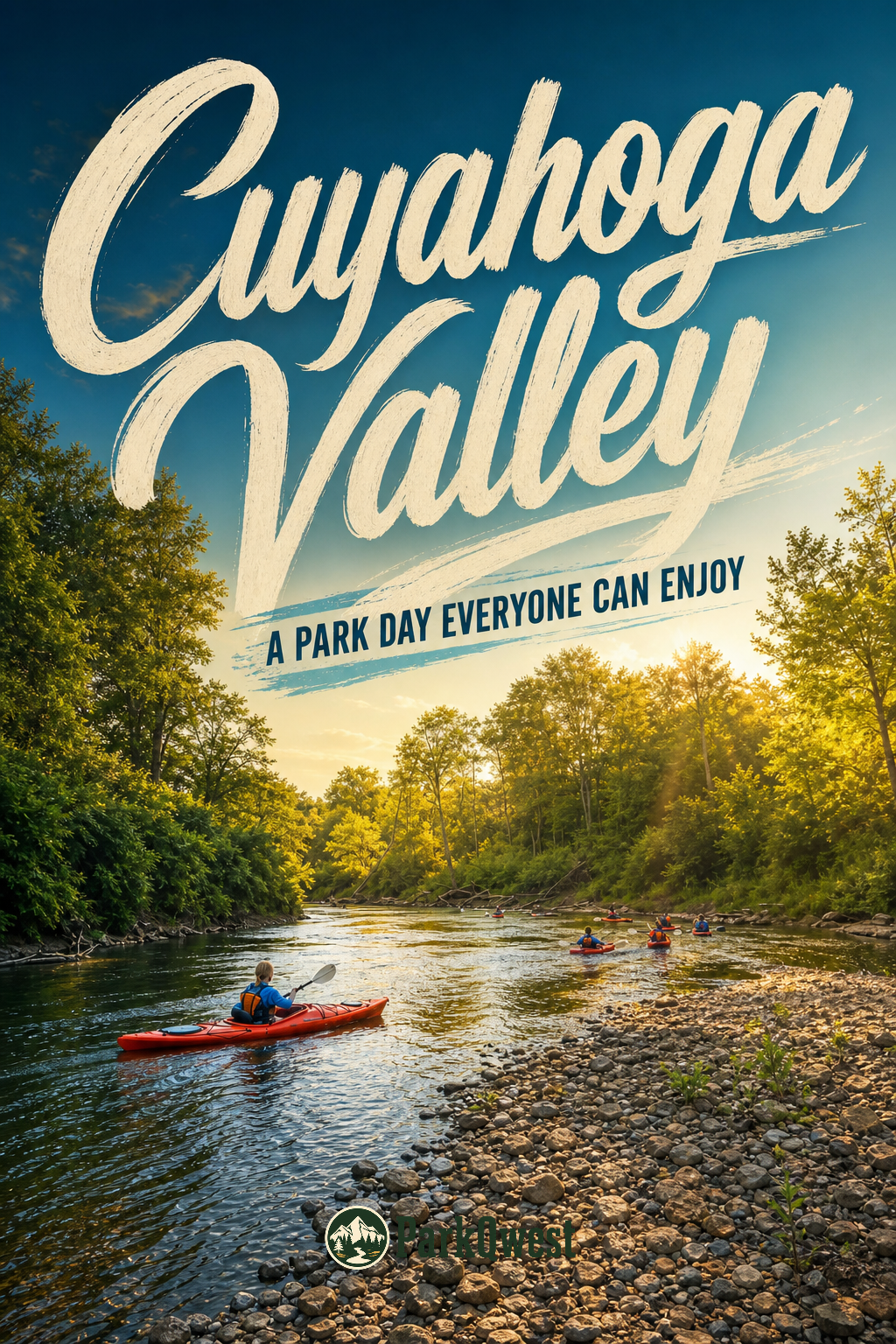
Cuyahoga Valley National Park is one of the easier national-park days to build around a real family schedule. You can arrive from Cleveland or Akron, trade city traffic for woods and farmland surprisingly quickly, and choose a day that does not depend on completing one long hike. The winning approach is to use the park’s historic canal corridor, river views, short trail segments, and visitor-center stop as a menu: one active outing, one discovery stop, one unhurried meal or snack break, and permission to stop before everyone is worn out.
The park’s landscape changes often enough to hold children’s attention—forest, rolling hills, open fields, and the winding Cuyahoga River—but it is still wise to plan in small blocks. A family that treats the day as a sequence of 45- to 90-minute adventures will usually have a better time than one chasing a packed checklist.
Start with a family-friendly basecamp
Boston Mill Visitor Center is a sensible first stop for families who want orientation before committing to a route. It is listed by the National Park Service at 6947 Riverview Road, Peninsula, Ohio 44264, and it gives adults a chance to confirm current conditions while children reset after the drive. Ask rangers which areas are best for your group’s ages, the day’s weather, trail surface conditions, restroom availability, and any temporary closures.
If your children enjoy collecting stamps, completing activity books, or asking lots of questions, ask whether a Junior Ranger activity or similar family discovery option is available during your visit. Programs, materials, and staffing can change, so treat this as a useful question rather than a promised activity. Even without a formal program, let each child choose one thing to look for: canal-era clues, animal tracks, a leaf shape, a bird call, or evidence of how people and water shaped the valley.
Quick take
For a low-stress first visit, begin at Boston Mill Visitor Center, choose only one main outdoor activity, and keep a second shorter option in reserve. A child who still has energy after lunch can lead the bonus plan; a tired child has already had a complete park day.
Build the day around short wins, not mileage
The Towpath Trail is the park’s most useful planning anchor because it follows the historic route of the Ohio & Erie Canal and can support a walk-or-ride style of outing. Rather than deciding that the family must cover a certain distance, pick a turnaround rule before leaving the car: walk until the first snack break, ride until the first “I’m done,” or continue for a set amount of time and return the same way.
This out-and-back pattern is particularly helpful with mixed ages. Older children can take turns navigating, watching for safe passing etiquette, or setting the turnaround timer; younger children get a clear expectation that they do not have to finish a giant loop. Before choosing a biking segment, verify current trail conditions, access points, and any bike-related guidance on the official NPS page.
A simple activity pattern that works
- Begin with movement: Take a short walk, bike ride, or nature-search segment while attention and patience are highest.
- Pause before complaints begin: Make the first water-and-snack stop a planned part of the outing, not a rescue operation.
- Switch the mission: After the break, give children a new role—photographer, map holder, “quiet listener,” or lookout for canal and river details.
- Finish with a choice: Offer a small decision between a brief second stop and heading toward food, the car, or the visitor center. A choice at the end prevents the day from feeling like a forced march.
For toddlers and preschoolers, think in terms of one destination and one return: reach a visible feature, pause for a snack, and head back. For elementary-age children, add a scavenger-style prompt such as finding five textures or three signs of water in the landscape. Teens often respond better to a job with a purpose—route planner, family photographer, cycling pace-setter, or researcher comparing the canal route with the modern valley.
Let kids lead without handing over the whole itinerary
Family travel goes more smoothly when children have real control over a few decisions and adults keep the safety-and-logistics decisions. At Cuyahoga Valley National Park, that can mean allowing kids to choose the first direction of a walk, the snack location, or the afternoon activity while adults decide where to park, when weather makes a change necessary, and when everyone turns around.
- Give a nature mission: Ask each child to find one native-plant detail, one sign of wildlife, and one clue that people have used this landscape over time. Observe from a distance; do not promise wildlife sightings.
- Use a paper map: Let a child trace the day’s route and mark each stop. This turns transitions into part of the adventure rather than dead time.
- Create a photo challenge: One photo of water, one of a trail texture, one of a wide valley view, and one “family vote” image is enough to keep phones from taking over the outing.
- Try a quiet minute: At a safe stopping point, challenge everyone to listen for 60 seconds. It works especially well after a car ride or before returning to a busy area.
Plan breaks as carefully as the trail
Food, toilets, dry clothes, and a place to sit are not minor details with children. Confirm current restroom locations and visitor-center operations before your visit, then carry what you would need if the closest facility is unavailable. A small picnic-style kit—water, substantial snacks, wipes, sunscreen, a spare shirt or socks for younger children, and a trash bag—can prevent a short outing from ending early.
Choose a meal plan with a built-in escape hatch. Packing lunch gives you more freedom if a child is hungry at an inconvenient time; planning to eat in a nearby community can be easier if the forecast is hot, wet, or cold. Either way, avoid saving everyone’s only meal until after a long outdoor effort.
What to pack by season
| Season | Family planning advantage | Watch for |
|---|---|---|
| Spring | New leaves and wildflowers make short walks feel rewarding. | Rain, muddy conditions, and quick temperature changes. |
| Summer | Longer daylight supports a relaxed morning-and-afternoon split. | Humidity and temperatures that can range widely; start outdoor activity early. |
| Fall | Cooler walking weather and foliage that often peaks around mid-October. | Cold evenings and variable day-to-night temperatures. |
| Winter | A quieter, focused visit can work for families prepared for a short outing. | Rapidly changing lake-effect conditions and temperatures that may drop below zero. |
The NPS specifically advises layers, and that is practical family advice in every season here. Keep warm layers and rain protection accessible rather than buried under lunch, especially in spring and fall. In winter, check conditions immediately before leaving; the park’s weather can change rapidly because of lake-effect snow from Lake Erie.
Quick take
If rain arrives or energy drops, do not try to “save” the day with a longer hike. Shift to the visitor center if it is open, use the drive to discuss what the family noticed, eat an early meal, and save the next outdoor stop for a weather window.
Rainy-day and low-energy backups
A successful backup plan should still feel like the park, not a consolation prize. Start by checking the official NPS page for current visitor-center status, road and trail conditions, and any ranger-led or educational opportunities that may be available. A short indoor orientation followed by a brief, weather-appropriate walk can be enough for children to remember the day as an adventure.
If conditions are merely damp rather than unsafe, reduce the goal: a 20-minute walk with rain gear, a search for water sounds, and a warm snack afterward. If conditions are poor, skip the outdoor objective altogether. The valley will still be there on a future visit, and avoiding a soaked, overtired finish is often the decision that preserves family enthusiasm.
A realistic family day in the valley
Morning: Arrive at Boston Mill Visitor Center or another verified access point, use facilities, review the day’s weather, and let each child pick a discovery mission. Spend the first outdoor block on a short Towpath Trail walk or ride, with a predetermined turnaround time.
Midday: Stop for lunch before hunger becomes a negotiation. Use the break to decide whether the afternoon should be a second short outdoor stop, a visitor-center-focused option, or a drive through the valley with one brief get-out-and-look pause.
Afternoon: Choose the lower-commitment option unless the entire group is clearly energized. Finish with a family recap: each person names one thing they saw, one thing they learned, and one idea for a future visit. That small ritual gives Cuyahoga Valley National Park a satisfying ending without requiring a packed itinerary.
Before you go
- Review official alerts, closures, hours, and reservation requirements.
- Allow extra travel time and keep an alternate plan.
- Use official NPS information as the final authority.
Sources
- Cuyahoga Valley National Park — official National Park Service site — National Park Service, accessed 2026-09-08
Continue planning Cuyahoga Valley
Learn more about Cuyahoga Valley and find other helpful guides, trails, and trip information in the ParkQwest guide.
ParkQwest is a QwestLyfe Community.
QwestLyfe helps you track your lifelong bucket lists, collections, recipes, and the places you've been. Document your experiences, add notes and pictures, and share them with your friends — and the world.