
Bryce Canyon National Park: Packing Guide
Plan with current information. Conditions, roads, services, fees, and rules can change. Verify details with the National Park Service before your visit.
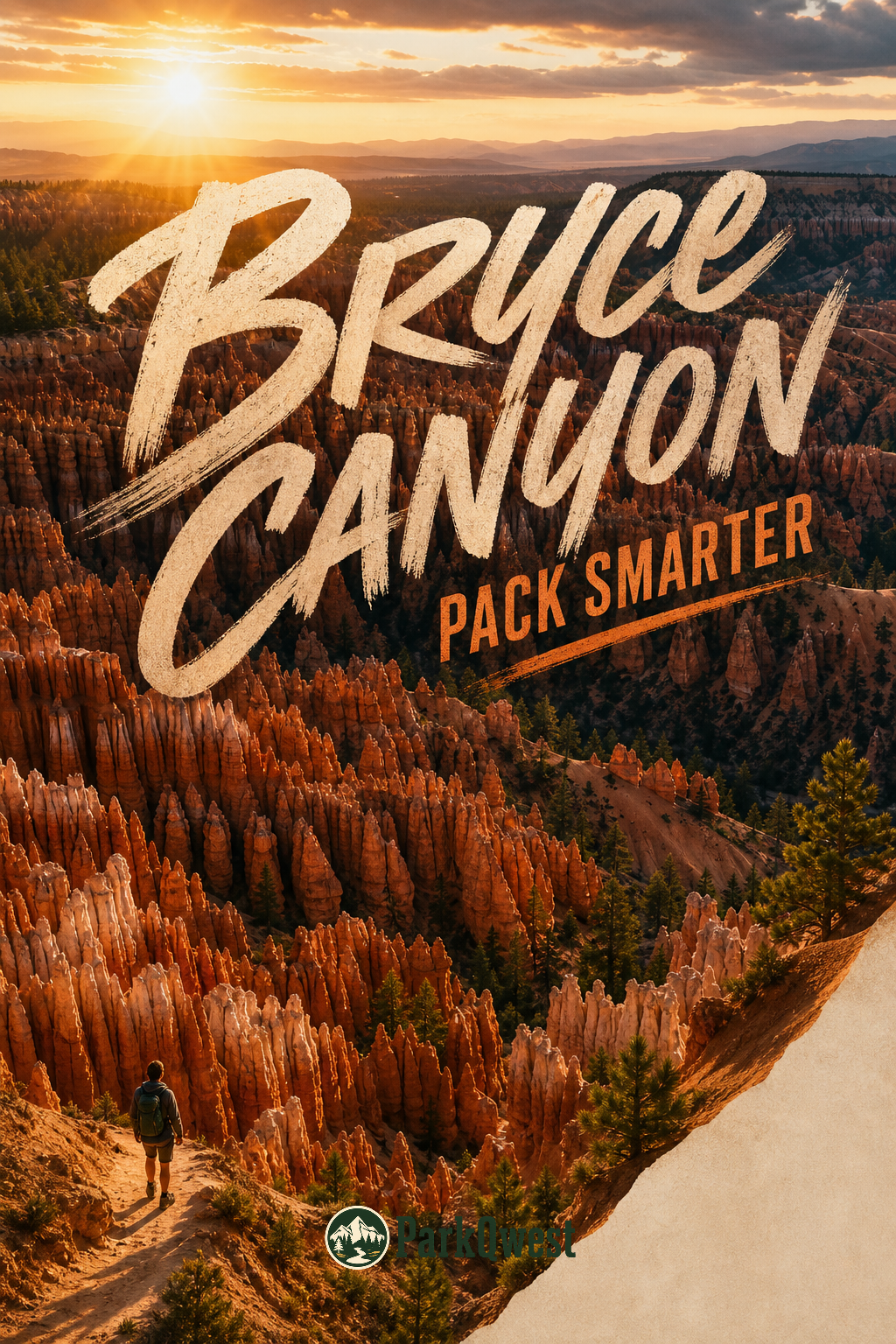
Bryce Canyon National Park is a packing park, not a “throw a jacket in the car” park. Its famous hoodoo amphitheaters sit on a high plateau, where elevation changes the equation even when southern Utah looks warm on a forecast app. A sunny overlook can feel comfortable at midday, then turn sharply cold after sunset; summer afternoons can bring thunderstorms; and from October through May, temperatures commonly drop below freezing at night. Pack for exposure first, then add the gear that makes long viewpoint walks, descents into the hoodoos, dark-sky evenings, and family logistics easier.
Quick take
The smart Bryce Canyon formula is layers, traction-minded footwear, more water than a short-looking walk suggests, and one genuinely warm item for after sunset. This is high-elevation desert: dry air, strong sun, exposed viewpoints, and surprisingly cold nights can all happen in the same trip.
Build Your Clothing Around Fast Temperature Swings
Think in removable layers rather than one heavy outfit. Bryce Canyon’s elevation is the reason: summer highs are generally in the 70s–80s°F, yet mornings and evenings can still feel cool, while autumn through spring brings frequent freezing nights. A hoodie alone is convenient, but it is a poor system if you are walking uphill in sun and then stopping in wind at an overlook.
The core clothing system
- Moisture-wicking base layer: Bring a breathable tee or long-sleeve shirt that dries quickly. The dry plateau air can make sweat easy to overlook, especially during sunny climbs.
- Light insulating layer: A fleece, synthetic jacket, or light puffy is useful in every season. It earns its space during sunrise, sunset, shaded walks, and any evening spent enjoying Bryce Canyon’s dark skies.
- Wind- and rain-resistant shell: Pack a true rain shell, not just a water-resistant windbreaker, from late spring through early fall. July and August afternoons commonly bring thunderstorms, and a shell also blocks cold wind on exposed rim areas.
- Sun-protective layer: A lightweight long-sleeve shirt, sun hat with a brim, and sunglasses are more useful here than an extra casual shirt. Pale rock reflects light upward, so the face, neck, and underside of the chin get more exposure than many visitors expect.
- Long pants or versatile hiking pants: Pack at least one pair even in summer. They are practical for cool mornings, dusty terrain, and the temperature drop that follows a storm.
For cold-season travel, upgrade the insulation rather than merely adding more cotton. From October to May, overnight freezing temperatures are common; December through February are typically the coldest and snowiest months, and March or April storms can still deliver heavy snow. Add warm base layers, insulated pants or a warm lower-body layer if conditions warrant, a winter coat, beanie, neck gaiter, and insulated gloves.
| When you go | Pack emphasis | Why it matters at Bryce |
|---|---|---|
| June–August | Sun layer, shell, warm evening layer | Warm days can give way to stormy afternoons and cool high-elevation evenings. |
| September–November | Fleece or puffy, shell, hat and gloves | Cold nights arrive early in the season; conditions can vary widely. |
| December–May | Winter layers, waterproof outerwear, traction plan | Freezing nights are routine, with snow most likely in winter and possible in spring storms. |
Footwear: Prioritize Grip Over Looking Outdoorsy
Wear broken-in hiking shoes or boots with a grippy sole. Bryce Canyon’s appeal is not limited to roadside views; if your plans include walking below the rim or on uneven, dusty, wet, or snowy ground, secure footing matters far more than ankle-height branding. A low hiking shoe is often enough for dry-day walkers, while waterproof boots make more sense when snow, slush, or spring mud are plausible.
- Dry-weather choice: Trail runners or hiking shoes with reliable tread work well for active days, provided they are already broken in.
- Cold or snowy-weather choice: Waterproof hiking boots paired with wool or synthetic socks help manage snow, slush, and cold ground.
- Bring spare socks: One dry pair in the daypack is low-weight insurance after a storm, puddle, or sweaty climb.
- Consider traction devices: If forecasts or current park updates indicate packed snow or ice, pack traction aids that fit your footwear. Verify current trail and road conditions on the official NPS page before relying on them.
Skip brand-new boots, slick casual sneakers, and open sandals for serious walking. Sandals may be fine around lodging or for a short paved stop on a warm day, but they leave feet exposed to sun, grit, cold, and unstable footing. The hoodoo landscape is exactly where a small blister or poor grip can cut a planned day short.
Your Bryce Canyon Daypack, Edited to the Essentials
A 15- to 25-liter daypack is usually the useful middle ground. It holds layers, water, rain protection, food, and a few safety items without encouraging you to carry unnecessary weight on elevation-affected walks. Use zip bags or a small dry pouch for electronics and paper items during summer storm season.
- Water capacity: Carry bottles or a hydration reservoir with enough capacity for your planned walk, plus a little margin. Dry air and elevation can make dehydration sneak up before thirst feels urgent.
- Electrolytes: Pack tablets, powder, or a salty snack for longer warm-weather outings. They are especially useful for travelers arriving from lower elevations.
- Sun kit: Broad-spectrum sunscreen, SPF lip balm, sunglasses, and a brimmed hat belong in the pack, not back in the vehicle.
- Weather kit: Rain shell, insulating layer, compact hat or gloves in cooler months, and a pack cover or waterproof bag for electronics.
- Navigation and backup power: Download maps before entering areas with uncertain service, carry a charged phone, and add a compact power bank. Do not assume a phone alone replaces situational awareness.
- Basic first aid: Blister care, bandages, any personal medication, pain relief if appropriate for you, and an elastic wrap are practical additions.
Packing move worth copying
Put your rain shell, warm layer, headlamp, and snacks in the same packing cube or tote the night before. At Bryce Canyon, those are the items most likely to be needed after a pleasant morning turns windy, stormy, or unexpectedly late.
Food and Water: Pack for the Plateau, Not the Drive
Bring food that still sounds good when you are warm, dry, and a little tired. This is not the place to rely exclusively on one sugary bar and a bottle of water. The combination of sun, altitude, and activity favors salty, calorie-dense, easy-to-eat food: nuts, pretzels, tortillas, jerky or a plant-based protein alternative, dried fruit, cheese kept cool, and sandwiches that do not collapse in a backpack.
Keep a small “car reserve” separate from your hiking food: extra water, shelf-stable snacks, and a warm drink setup in colder months. Bryce Canyon is reached via regional highways and UT-63, so the drive itself can be part of the day’s exposure plan. Check the official NPS website and road-weather resources before departure when storms are possible.
Weather Exposure and Safety Gear That Earns Its Space
Afternoon thunderstorms deserve a real plan, not just a poncho. In July and August, start outdoor walking early when possible, watch the sky, and treat thunder as a cue to move away from exposed terrain rather than trying to finish a route. A rain shell, map awareness, charged phone, and willingness to shorten plans are more useful than carrying a large umbrella in wind.
For dark-sky viewing, pack warmth and light discipline. Bryce Canyon is known for fantastic dark skies, but night temperatures can be dramatically cooler than daytime readings. Bring a puffy or fleece, beanie, gloves outside summer, a thermos if desired, and a headlamp with a red-light setting; red light is kinder to your own night vision and to nearby visitors.
- Headlamp: Better than using a phone flashlight for early starts, late returns, or campground and parking-area tasks.
- Emergency warmth: A compact emergency blanket is sensible in shoulder season or winter, particularly if your vehicle kit is otherwise light.
- Vehicle readiness: In snow-prone months, carry warm layers, water, snacks, a charged power bank, and appropriate winter driving equipment for current conditions. Confirm requirements and closures through official sources; conditions can change after you pack.
- Wildlife-minded storage: Keep all food secured and do not pack feeding supplies. The right “wildlife extra” is a pair of binoculars, not food for animals.
Photography and Family Extras That Make Sense Here
Pack photography gear for contrast, distance, and changing light. A phone can capture the broad hoodoo views, but a small tripod or stable support is useful for low-light images after sunset, and a lens cloth is valuable in dust or precipitation. Bring a spare battery or power bank because cold temperatures reduce battery performance, particularly during early morning or nighttime use.
For families, prioritize comfort items that prevent a small problem from becoming a turnaround. Pack child-sized sun hats, extra water, familiar salty snacks, a warm layer for each person, wipes, and a simple activity for waiting periods. A child carrier can be more practical than a stroller where surfaces are uneven; verify current accessible routes and conditions directly with the park if that is part of your plan.
What to Leave Behind
- Heavy cotton layers: They dry slowly and become chilly once damp with sweat or precipitation.
- Oversized coolers in the daypack: Keep the cooler in the vehicle; carry compact food and water on foot.
- Drone equipment: Do not assume it is usable in a national park. Check current NPS rules rather than packing around an activity that may not be permitted.
- Disposable plastic clutter: Refillable bottles, durable snack containers, and a small trash bag are easier to manage in a windy landscape.
- One-outfit optimism: Even a short Bryce Canyon stay benefits from a spare warm layer and dry socks.
Final Bryce Canyon Packing Checklist
- On your body: Broken-in grippy shoes, breathable shirt, sun hat, sunglasses, and a removable layer.
- In the daypack: Water, salty snacks, sunscreen, lip balm, rain shell, warm layer, map, phone, power bank, first aid, and headlamp.
- Seasonal add-ons: Gloves, beanie, insulating base layers, waterproof boots, and traction devices when snow or ice is possible.
- In the vehicle: Extra water and food, spare clothing, weather-ready supplies, and a check of current conditions before heading toward the park.
- Before leaving lodging: Review the official Bryce Canyon National Park page for current weather, alerts, road conditions, and any route-specific updates that can change after this packing list is saved.
The goal is not to pack for every possible scenario; it is to avoid being caught by Bryce Canyon’s predictable extremes. Bring the layer you can add after sunset, the shell you can use during a summer storm, the shoes you trust on changing surfaces, and enough water to make the high plateau feel like part of the experience rather than the reason your day ends early.
Before you go
- Review official alerts, closures, hours, and reservation requirements.
- Allow extra travel time and keep an alternate plan.
- Use official NPS information as the final authority.
Sources
- Bryce Canyon National Park — official National Park Service site — National Park Service, accessed 2026-09-05
Continue planning Bryce Canyon
Learn more about Bryce Canyon and find other helpful guides, trails, and trip information in the ParkQwest guide.
ParkQwest is a QwestLyfe Community.
QwestLyfe helps you track your lifelong bucket lists, collections, recipes, and the places you've been. Document your experiences, add notes and pictures, and share them with your friends — and the world.