
Joshua Tree National Park: Packing Guide
Plan with current information. Conditions, roads, services, fees, and rules can change. Verify details with the National Park Service before your visit.
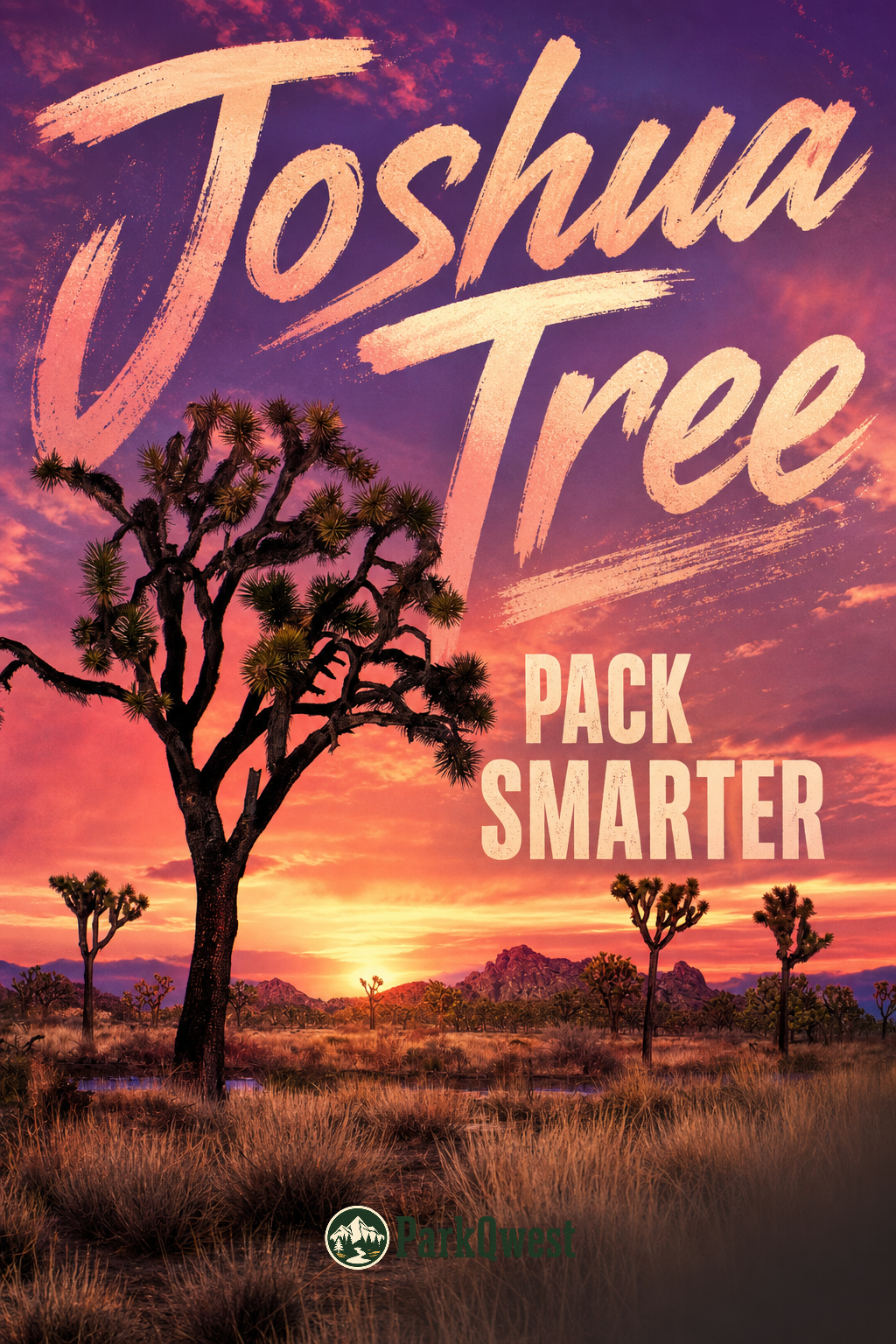
Joshua Tree National Park asks for a different kind of packing strategy than a typical California road trip. This is a meeting place of the higher, cooler Mojave Desert and the lower, hotter Colorado Desert, with strong sun, low humidity, wind, rocky ground, and temperature swings that can make a pleasant morning feel entirely different by late afternoon. Pack for exposure first, comfort second—and build your kit around the part of the park and season you plan to explore. The official NPS weather guidance is the best place to confirm current conditions before departure, especially when summer heat, freezing winter nights, wind, or storm potential is in the forecast.
Build Your Clothing System Around Sun, Wind, and Temperature Swings
The most useful Joshua Tree outfit is a lightweight layering system, not a single “desert outfit.” Clear skies and humidity typically below 25% can make the sun feel intense even on days that do not look especially hot. At the same time, exposed overlooks, rock formations, and open desert terrain can become chilly quickly when wind picks up or the sun drops.
- Sun shirt or lightweight long sleeves: A breathable, UPF-rated button-down or long-sleeve hiking shirt protects arms and shoulders without requiring constant sunscreen reapplication. Light colors are practical in direct sun, but choose fabric that is substantial enough to block rays.
- Moisture-wicking base layer: Bring a short-sleeve shirt for active hiking, but avoid relying on cotton. Cotton holds sweat, dries slowly, and becomes unpleasant if a cool wind arrives.
- Warm layer: A fleece, synthetic insulated jacket, or warm midlayer belongs in the car and often in the daypack during spring, fall, and winter. NPS notes average spring and fall highs around 85°F and lows around 50°F; that range is wide enough to justify layers.
- Wind-blocking outer layer: A thin wind shell is one of the highest-value Joshua Tree items. Strong winds help sculpt this landscape, and a shell can make an exposed stop far more comfortable without adding much bulk.
- Long pants or durable hiking pants: Shorts are fine for hot weather, but pants offer useful protection from abrasive granite, spiny vegetation, sun, and kneeling or scrambling around rocks. A pair with some stretch is more useful than heavy, stiff cargo pants.
Quick take
Pack one warm layer even if your forecast looks sunny. Joshua Tree’s dry air, wind, elevation changes, and open terrain make “warm in the parking lot” a poor guide to how you will feel later in the day.
Seasonal Clothing Adjustments
| Season | Pack the extra layer for | What not to underestimate |
|---|---|---|
| Spring & fall | Cool mornings, evenings, and wind | Sun exposure during comfortable-temperature days |
| Winter | Insulated jacket, beanie, gloves | Freezing nights and possible snow at higher elevations |
| Summer | More water capacity, sun coverage, cooling breaks | Daytime temperatures above 100°F and warm nights |
Footwear: Prioritize Grip, Toe Protection, and Sand Tolerance
Joshua Tree is not the place to break in new shoes. The park’s surreal rock formations invite scrambling and exploration, while desert paths can combine sand, uneven stone, loose gravel, and sharp edges. Wear already-tested hiking shoes or trail runners with reliable tread; choose mid-height boots only if ankle support is helpful for you.
- Closed-toe hiking footwear: Best for most visitors because it protects toes around boulders and keeps more sand out than sandals.
- Merino or synthetic socks: Bring an extra pair in the daypack or car. Dry socks can prevent a small hot spot from becoming a trip-ending blister.
- Camp shoes: Lightweight sandals are useful after hiking, but they are a backup, not your primary exploration shoe.
- Blister kit: Pack adhesive bandages, blister pads, and tape before you need them. Desert terrain is unforgiving when every step hurts.
Daypack Essentials for a Park With Few Easy Fixes
Carry the gear that lets you turn around safely, not just the gear that makes a photo stop comfortable. Joshua Tree’s vastness is part of its appeal, but it also means shade, water, cell service, and quick assistance should not be assumptions. The exact route or area you choose may change what you need, so check current NPS alerts and route information before setting out.
- Navigation: Download offline maps before entering the park and carry a paper map as a non-battery backup. A phone is useful, but it is not a complete navigation plan.
- Sun protection: Wide-brim hat, sunglasses, SPF 30+ sunscreen, lip balm with SPF, and a neck gaiter or sun hood all earn their space here.
- Emergency basics: Small first-aid kit, headlamp with fresh batteries, whistle, multitool, lighter or emergency fire starter where appropriate, and a fully charged power bank.
- Comfort items: Sit pad, cooling bandana, trekking poles if you use them, and a compact wind layer. These are especially useful for lingering at viewpoints or waiting for changing light.
Food and Water: Pack for the Desert, Not the Drive
Water capacity matters more than fancy snacks at Joshua Tree. Dry air can disguise how much you are sweating, and hot conditions can escalate quickly. Carry more water than you expect to drink, keep a reserve in your vehicle, and do not treat a single bottle as adequate for a hiking day.
A practical approach is to divide water between a hydration reservoir and at least one bottle, so a leak does not take out your entire supply. For food, choose salty, durable items that tolerate warmth: nuts, pretzels, jerky, nut-butter packets, dried fruit, energy bars, and a sandwich stored in an insulated bag. Eat and drink early and regularly rather than waiting for thirst, fatigue, or headache.
Quick take
If summer temperatures are forecast above 100°F, reconsider the length and timing of exposed activity. A larger water bottle does not turn extreme heat into a routine hiking day; it simply gives you a better margin for a shorter, more conservative plan.
Weather Exposure and Safety Items That Earn Their Weight
Joshua Tree weather is usually dry, but “desert” does not mean risk-free weather. NPS describes occasional torrents of rain in this wind-shaped landscape, and winter can bring freezing nights. Check the official Joshua Tree National Park NPS page for alerts, weather updates, and conditions that may affect your planned area.
- Rain shell and pack cover: A compact waterproof layer is worthwhile when rain is possible. Keep electronics and spare clothing in zip bags or a dry sack.
- Cold-weather kit: For winter camping or evening stargazing, add insulated layers, warm socks, beanie, gloves, and a sleeping setup rated for expected overnight lows.
- Vehicle backup: Keep extra water, food, warm layer, charging cable, tire-related essentials, and a flashlight in the car. Confirm your entrance route in advance: NPS notes access from I-10 exit 117 toward CA Hwy 62 for the West, North, Black Rock, and Indian Cove areas, while exit 168 leads toward the South Entrance.
- Leave-no-trace supplies: Trash bag, toilet paper or waste system as appropriate to your plans, and hand sanitizer. Pack out every bit of waste, including food scraps.
Photography, Stargazing, and Family Extras
The best extras are the ones that help your group stay out longer without damaging the experience. Joshua Tree’s dark night skies and dramatic geology make a camera tempting, but photography gear should not crowd out water, warmth, or safety equipment.
- For photographers: Bring a dust-resistant camera bag, spare battery, microfiber cloth, lens hood, and small tripod only if you will truly use it. Desert dust and wind are hard on exposed gear.
- For night skies: Use a headlamp with a red-light mode, warm clothing, and a seated layer. Keep lights low and directed downward so others can enjoy the dark-adapted sky.
- For kids: Pack more water and snacks than their usual outing requires, plus sun hats, a simple nature notebook, binoculars, and a small first-aid refresh. Set an earlier turnaround point than you would for adults.
What to Leave Behind
Leave behind gear that creates false confidence, excess waste, or avoidable strain. Skip brand-new boots, heavy glass containers, bulky “just in case” gadgets, cotton-heavy outfits, and oversized camera kits that make you less willing to carry water. Drones, climbing equipment, fires, camping equipment, pets, and other activity-specific items can involve rules or area restrictions; verify current NPS regulations before packing them rather than assuming they are permitted.
Joshua Tree Final Packing Checklist
- Wear: Broken-in closed-toe shoes, wicking shirt, sun hat, sunglasses, and durable pants or shorts.
- Carry: Extra water, salty snacks, map backup, charged phone and power bank, first aid, headlamp, sunscreen, and wind layer.
- Add for cool conditions: Fleece or insulation, beanie, gloves, warm socks, and rain shell if weather calls for it.
- Add for heat: Greater water capacity, long-sleeve sun coverage, electrolytes, cooling cloth, and a shorter exposed itinerary.
- Keep in the car: Water reserve, food, warm layer, flashlight, charging cable, and route information for your chosen entrance.
Pack this way and Joshua Tree National Park becomes easier to experience on its own terms: bright, dry, rocky, windy, quiet, and surprisingly changeable over the course of one day. The goal is not to carry everything—it is to carry the few things that let you enjoy the Mojave and Colorado desert landscapes without letting exposure dictate when your day ends.
Before you go
- Review official alerts, closures, hours, and reservation requirements.
- Allow extra travel time and keep an alternate plan.
- Use official NPS information as the final authority.
Sources
- Joshua Tree National Park — official National Park Service site — National Park Service, accessed 2026-09-04
Continue planning Joshua Tree
Learn more about Joshua Tree and find other helpful guides, trails, and trip information in the ParkQwest guide.
ParkQwest is a QwestLyfe Community.
QwestLyfe helps you track your lifelong bucket lists, collections, recipes, and the places you've been. Document your experiences, add notes and pictures, and share them with your friends — and the world.