Rocky Mountain National Park: Don't-Miss Experiences
Plan with current information. Conditions, roads, services, fees, and rules can change. Verify details with the National Park Service before your visit.
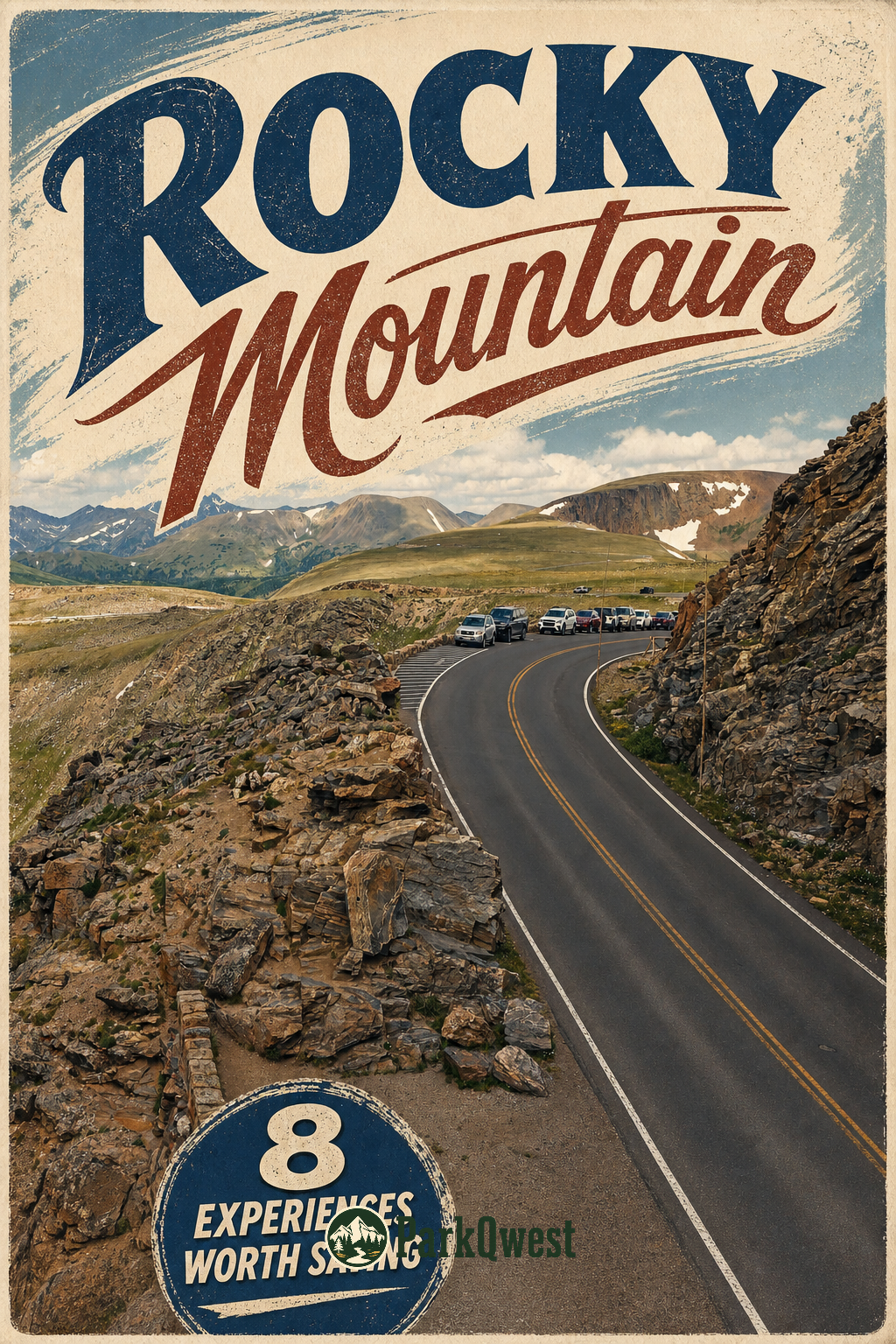
Rocky Mountain National Park is best approached as a set of distinct mountain experiences rather than a checklist to conquer in one visit. Its 415 square miles run from montane meadows at roughly 7,800 feet to alpine lakes, high country, and peaks above 14,000 feet, so the right day for one traveler may be entirely wrong for another. Use the eight ideas below to build a trip around your energy, comfort with elevation, available time, and the weather you actually find—not the itinerary you hoped the forecast would allow.
Quick take
Choose one primary experience per day, then add a shorter second stop only if conditions, parking, energy, and daylight cooperate. In a park where elevation rises quickly and weather can shift through the day, a smaller plan is often the more satisfying one.
How to choose your Rocky Mountain National Park experiences
Start with your preferred pace. Pick a scenic drive and overlooks if your group includes limited-mobility travelers, a lake walk if you want a clear destination without committing to a huge day, or a longer hike if time on trail is the point of the trip. Then decide whether you prefer the east-side approach near Estes Park or the west-side approach near Grand Lake; the two gateways can create very different-feeling days.
- For a first visit: Combine changing elevations, a short walk, and time to pause rather than trying to cover the whole park.
- For hikers: Choose either a lake-focused hike or a high-country outing, not both by default.
- For wildlife-minded visitors: Prioritize patient time in meadow and forest-edge habitat over rushing between viewpoints.
- For weather-sensitive days: Keep your most exposed plans early and retain a lower-elevation alternative.
Eight Rocky Mountain National Park experiences worth planning around
1. Watch the landscape change as you gain elevation
Why it matters: One of the clearest ways to understand Rocky Mountain National Park is to travel through its mountain environments in sequence: lower montane terrain, forest, open meadows, alpine lakes, and the high country above treeline. This is more than a scenic-drive day; it gives context to everything you see on later walks and hikes.
Best for: First-time visitors, multigenerational groups, photographers, and travelers with limited hiking time will get a lot from this. It is also a smart orientation choice on your first morning, when you are still learning how your body feels at altitude.
Planning note: Road access, vehicle requirements, timed-entry procedures, and seasonal closures can change. Before setting out, verify the current route conditions and entry guidance on the official National Park Service Rocky Mountain National Park page, and do not assume a high-elevation route will be available simply because it is open on a map.
2. Make an alpine lake the destination, not a detour
Why it matters: A lake hike gives a day a satisfying shape: a clear goal, a natural place to rest, and a strong sense of having entered the park rather than merely driven through it. Rocky Mountain National Park’s alpine lakes are especially useful trip-planning targets because you can select a route that fits your group’s available time and conditioning.
Best for: Couples, families with trail-ready older kids, casual hikers, and visitors who want scenery with a purpose rather than a long summit effort. It is also a good choice for a first hiking day at elevation because you can choose a shorter or less ambitious option.
Planning note: Do not choose solely by photos. Check the official NPS trail information for current conditions, elevation gain, snow or ice concerns, trail closures, and whether your desired trailhead has access limitations. Bring more water and warmer layers than a similar outing at home would require.
3. Give meadow time the patience it deserves
Why it matters: The park is known for wildlife viewing, but the rewarding part is usually quiet observation rather than a quick stop built around a guarantee. Meadows and nearby forest edges can be places to slow down, listen, scan carefully, and notice how the lower-elevation landscape differs from the rocky high country.
Best for: Wildlife watchers, families, birders, sketchers, and anyone who prefers an unhurried hour outdoors to another long drive. This is one of the most approachable experiences for travelers easing into altitude.
Planning note: Keep expectations realistic: wildlife activity is variable, and animals should always be viewed from a safe, respectful distance. Bring binoculars if you have them, remain on designated routes, and check current NPS wildlife guidance before your visit rather than relying on social media sightings.
Quick take
For wildlife viewing, trade mileage for time. A calm hour in suitable habitat is usually more useful than racing across the park in search of a photo opportunity.
4. Take a short trail before committing to a big hike
Why it matters: Rocky Mountain National Park’s more than 300 miles of hiking trails can make a first-time visitor feel as though every choice needs to be epic. A short trail or viewpoint walk is often the better opening move: it tests footwear, breathing, group morale, weather, and the pace of the day without locking you into a long turnaround.
Best for: New arrivals, visitors from lower elevations, families, and travelers deciding whether a bigger hike is truly a good idea. It also works well as a reset after a drive or as a final activity on a travel day.
Planning note: Use the current NPS trail listings to find an appropriate option rather than treating a route saved on Pinterest as current. Verify conditions, route difficulty, and access, then turn around early if storms build, winds increase, or anyone develops altitude-related discomfort.
5. Earn a high-country view on foot
Why it matters: A hike into open alpine terrain feels fundamentally different from seeing high elevations from a vehicle. Above treeline, the scale of the park becomes easier to understand: exposure, wind, rapidly changing clouds, and long views all shape the experience.
Best for: Fit hikers comfortable with uneven terrain, changing weather, and a deliberately early start. This is for travelers who value the walk itself and are prepared to shorten or abandon the plan when conditions call for it.
Planning note: High terrain is not a casual add-on. The NPS notes that weather can change quickly throughout the day, and Rocky Mountain National Park spans elevations from 7,800 feet to over 14,000 feet. Check the park weather page and the National Weather Service forecast for Rocky Mountain National Park before leaving, carry insulating and rain-protective layers, and make a conservative turnaround decision.
6. Build a weather-smart split day
Why it matters: Some of the best park days are intentionally mixed: an early outdoor objective, a midday pause, then a lower-commitment scenic or meadow stop later. This approach acknowledges that mountain weather, trail conditions, and energy levels can change faster than a tightly sequenced itinerary can handle.
Best for: Visitors staying more than one night, hikers traveling with non-hikers, and planners who dislike sacrificing an entire day when one activity changes. It is especially practical when conditions are uncertain but not clearly poor.
Planning note: Prepare two versions of the day: Plan A for stable early conditions and Plan B for lower-elevation walking, scenic stops, or a shorter outing. The detailed NPS weather page is the durable source for understanding mountain conditions; the current forecast should guide the actual decision that morning.
7. Use the Estes Park side for an east-side park day
Why it matters: Approaching the park from the east near Estes Park can make logistical sense for travelers arriving from Colorado’s Front Range. The official NPS directions route east-side visitors from I-25 via U.S. Highway 34 or 36 west to Estes Park, helping you plan a day around your likely arrival corridor instead of backtracking unnecessarily.
Best for: Visitors coming from the Denver-area direction, short-stay travelers, and groups who want an efficient first look at the park’s eastern access area. It is also useful for anyone who prefers to keep their first day simple.
Planning note: Treat gateway convenience as a planning advantage, not a promise of easy parking or quick access. Confirm current entrance procedures, road status, and any reservation or permit requirements through NPS before departure.
8. Let Grand Lake set the tone for a west-side day
Why it matters: The park’s west side offers a distinct way to enter the landscape, approached through Grand Lake. Official NPS directions send west-side visitors from I-70 to U.S. Highway 40 toward Granby, then east on U.S. Highway 34 to Grand Lake—useful information when choosing where to base a slower, west-oriented itinerary.
Best for: Travelers arriving from Colorado’s western mountain corridors, repeat visitors wanting a different approach, and anyone who would rather devote a day to one side of the park than spend it crossing long distances.
Planning note: Do not assume east- and west-side plans are interchangeable on a given date. Seasonal road conditions and access can determine whether the two sides connect as expected, so verify the latest NPS road updates before committing to a cross-park route.
Make the park feel manageable
The best Rocky Mountain National Park itinerary is selective. Pick two or three of these experiences for a short trip, with one serving as your main objective each day. If you have only one day, pair a changing-elevation drive or gateway-based orientation with either a meadow stop or a short lake-focused walk; save the longer high-country hike for a morning when the forecast, trail conditions, and your group’s energy all line up.
For current weather information, consult the NPS All About Weather page and the official park homepage before you go. In Rocky Mountain National Park, practical choices—an earlier start, an extra layer, a shorter trail, or a different side of the park—often lead to the day you remember most.
Before you go
- Review official alerts, closures, hours, and reservation requirements.
- Allow extra travel time and keep an alternate plan.
- Use official NPS information as the final authority.
Sources
- Rocky Mountain National Park — official National Park Service site — National Park Service, accessed 2026-09-03
Continue planning Rocky Mountain
Learn more about Rocky Mountain and find other helpful guides, trails, and trip information in the ParkQwest guide.
ParkQwest is a QwestLyfe Community.
QwestLyfe helps you track your lifelong bucket lists, collections, recipes, and the places you've been. Document your experiences, add notes and pictures, and share them with your friends — and the world.