
Bryce Canyon National Park: Family Adventure Guide
Plan with current information. Conditions, roads, services, fees, and rules can change. Verify details with the National Park Service before your visit.
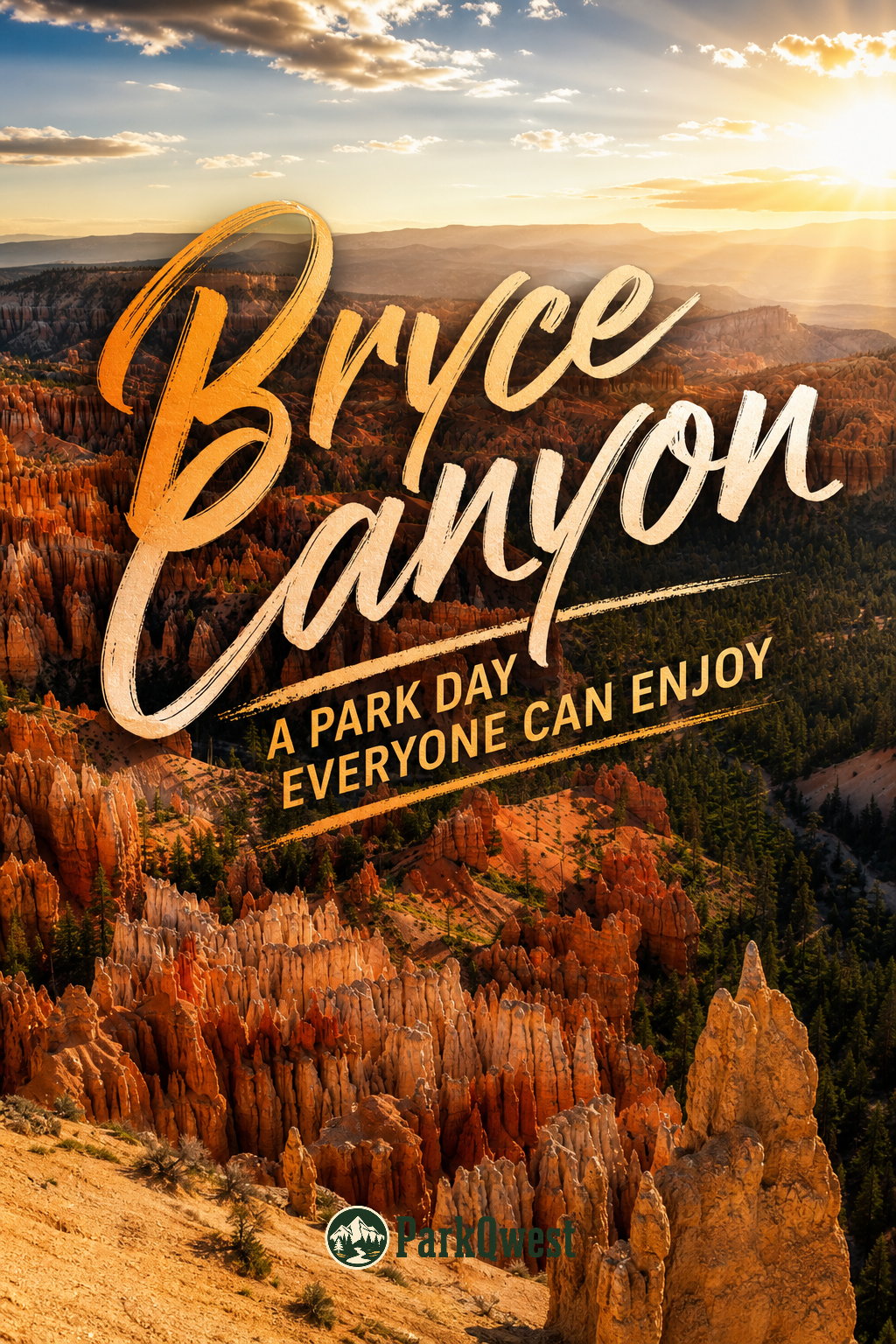
Bryce Canyon National Park is one of the rare parks where a child’s first reaction—“Those rocks look like a giant castle!”—is also a useful way to begin exploring. The park’s famous hoodoos, irregular columns of rock gathered here in the largest concentration known anywhere on Earth, are easy to appreciate from overlooks without committing the family to an all-day hike. That matters at this high-elevation park: short walks, warm layers, snack breaks, and a plan for changing weather often create a better day than trying to cover every viewpoint.
For families, Bryce works best as a series of small adventures rather than one big itinerary. Pick a few visual “wins,” give children a job to do, build in indoor or car-based recovery time, and treat the day’s conditions as part of the plan. The hoodoos will still feel extraordinary from a short viewpoint stop if a toddler melts down, an older child gets cold, or afternoon storms begin to build.
Quick take
Plan Bryce Canyon as a high-altitude, weather-aware family day: start with views, add one age-appropriate walk, stop before everyone is exhausted, and save a second scenic stop for later. The park’s geology delivers a big payoff even when your schedule stays deliberately small.
Start with the family logistics, not the trail list
Bryce Canyon’s elevation changes the usual “desert park” assumptions. Summer daytime temperatures are often in the 70s to 80s Fahrenheit, but sun exposure, dry air, and elevation can still drain energy quickly. From October through May, nighttime temperatures commonly fall below freezing, while winter and early spring storms can affect regional travel.
The practical result: bring more warmth than you think you need, even if the forecast sounds mild. A child who is comfortable can notice the shapes in the canyon; a child with cold hands or wet socks is unlikely to care how unusual the landscape is.
- Footwear: Closed-toe shoes with grip are the sensible default for uneven ground, loose surfaces, and cold or wet conditions. Pack spare socks for young children.
- Layers: Use a light base layer, insulating layer, and wind or rain shell instead of relying on one bulky coat. Hats and gloves can be useful well beyond winter.
- Sun and water: Bring water for each person and regular snacks, even for a short outing. Add sunscreen, sunglasses, and lip balm for exposed overlooks.
- Car kit: Keep a blanket, dry clothing, simple games, and extra food in the vehicle. It turns an unexpected weather pause into a manageable break.
Choose a basecamp stop first
A visitor center is often the smartest first stop for families, especially on a first visit. Use it to ask which areas are practical for your group that day, confirm road and weather conditions, find restrooms and drinking-water options, and check whether age-appropriate educational materials or a Junior Ranger activity are available. Do not build the day around a specific program until you verify it on the official NPS page or in person.
Even if nobody wants a long indoor stop, a quick orientation gives children context: hoodoos are not sculptures, chimneys, or ruins; they are rock columns shaped over time. That small bit of explanation makes the landscape more interactive once everyone is outside.
Build the day around short “look, move, rest” cycles
The best family pacing pattern is usually 20 to 45 minutes of exploring followed by a reset. At each scenic stop, let everyone look first before introducing a lesson, photo request, or walking goal. Young children often need time to invent stories about the formations; older kids may enjoy spotting patterns, colors, or changes in the rock layers.
Rather than promising one ambitious hike, choose a primary walking option only after you see the day’s wind, temperature, crowd level, and group energy. Any route that descends below the rim asks for a realistic return plan: what goes down must come back up, and uphill effort can feel harder at elevation. Check current route conditions, closures, and safety guidance with the National Park Service before setting out.
Let children lead without handing them the map
Giving children limited, real choices prevents the familiar “Are we done yet?” spiral. Keep the options small enough that adults still control safety, timing, and turnaround decisions.
- Pick the mission: Ask whether the next stop is for “the tallest-looking hoodoo,” “the best family photo,” or “five different rock colors.”
- Assign a ranger-style role: One child can watch for weather changes, another can track water breaks, and another can be the official hoodoo counter.
- Use a turnaround reward: Decide in advance that the group turns around at a certain landmark, timer, or snack point—not when someone is already exhausted.
- Invite observation, not collecting: Encourage sketches, photos, and notes. Leave rocks, plants, and other natural features where they are for the next family to discover.
A useful family rule
Stop while the group still has a little energy left. At Bryce Canyon, a cheerful 30-minute walk plus a scenic overlook often beats a longer route that ends with a difficult uphill return, missed meals, and no patience for the views.
Match the plan to your children’s ages and energy
Families do not need the same kind of adventure to have a meaningful park day. The visual impact of Bryce Canyon gives you permission to scale the physical effort up or down. Think in terms of attention span, mobility, and recovery time—not what another family completed online.
| Family situation | Best day shape | What to avoid |
|---|---|---|
| Preschoolers or nap schedules | One morning viewpoint session, a short walk, lunch and rest, then one later stop if moods allow. | Treating every overlook as mandatory. |
| Elementary-age explorers | A visitor-center mission, two viewpoint stops, and one chosen walking goal. | Too much adult narration; leave room for questions and play. |
| Teens or active mixed-age groups | An earlier, longer walk with a firm turnaround, followed by scenic driving and a dark-sky conversation later. | Assuming younger siblings can match the pace without breaks. |
Have a weather backup before clouds arrive
Weather is not a minor detail at Bryce Canyon National Park. July and August commonly bring afternoon thunderstorms, and spring storms in March and April can still produce heavy snowfall. Winter is typically the coldest and snowiest period, with conditions that may affect both park access and the broader drive to the region.
Make the morning your outdoor priority when storms are possible. Start with the views and any planned walking, then reserve lower-commitment activities for later: a visitor-center stop, a drive between accessible scenic areas if conditions permit, a picnic or snack break in the vehicle, a geology sketchbook, or a family photo challenge from a safe overlook.
If lightning, heavy rain, snow, strong wind, or poor visibility develops, do not try to rescue the original itinerary. Return to the vehicle, reassess current NPS alerts and weather information, and choose the safer version of the day. The park’s dark skies are a major feature, but an evening stargazing attempt should also depend on clear conditions, warm clothing, alertness, and the needs of the youngest travelers.
A realistic one-day family outline
- Arrival and orientation: Begin with restrooms, water, a quick weather check, and a visitor-center question list. Ask specifically about current conditions for the type of outing your family can manage.
- First viewpoint window: Give everyone time to simply take in the amphitheater-like landscape. Try a five-minute hoodoo challenge before moving on.
- One main activity: Choose a short walk or a longer outing only if the group is well-fed, dressed appropriately, and comfortable with the return effort.
- Lunch and recovery: Eat before children announce they are hungry. Use this break for bathroom needs, layer changes, sunscreen, and an honest vote on whether to continue.
- Afternoon flex stop: Pick one additional scenic area, an indoor learning stop, or a quiet vehicle break. If thunderstorms are possible, this is the portion most worth shortening.
- Optional evening finish: If conditions and energy cooperate, revisit the sky after dark or enjoy a calm final overlook. If not, end on a successful note and let the next morning’s drive be easier.
The most successful Bryce Canyon family trip is not measured by how much ground you cover. It is measured by whether the kids remember the hoodoos, adults remember the day as manageable, and everyone leaves with enough energy to enjoy the rest of the road trip. Before departure, review current details on the official Bryce Canyon National Park website, particularly weather, road conditions, facilities, and any family programs that may be available during your visit.
Before you go
- Review official alerts, closures, hours, and reservation requirements.
- Allow extra travel time and keep an alternate plan.
- Use official NPS information as the final authority.
Sources
- Bryce Canyon National Park — official National Park Service site — National Park Service, accessed 2026-09-02
Continue planning Bryce Canyon
Learn more about Bryce Canyon and find other helpful guides, trails, and trip information in the ParkQwest guide.
ParkQwest is a QwestLyfe Community.
QwestLyfe helps you track your lifelong bucket lists, collections, recipes, and the places you've been. Document your experiences, add notes and pictures, and share them with your friends — and the world.