Great Smoky Mountains National Park: Packing Guide
Plan with current information. Conditions, roads, services, fees, and rules can change. Verify details with the National Park Service before your visit.
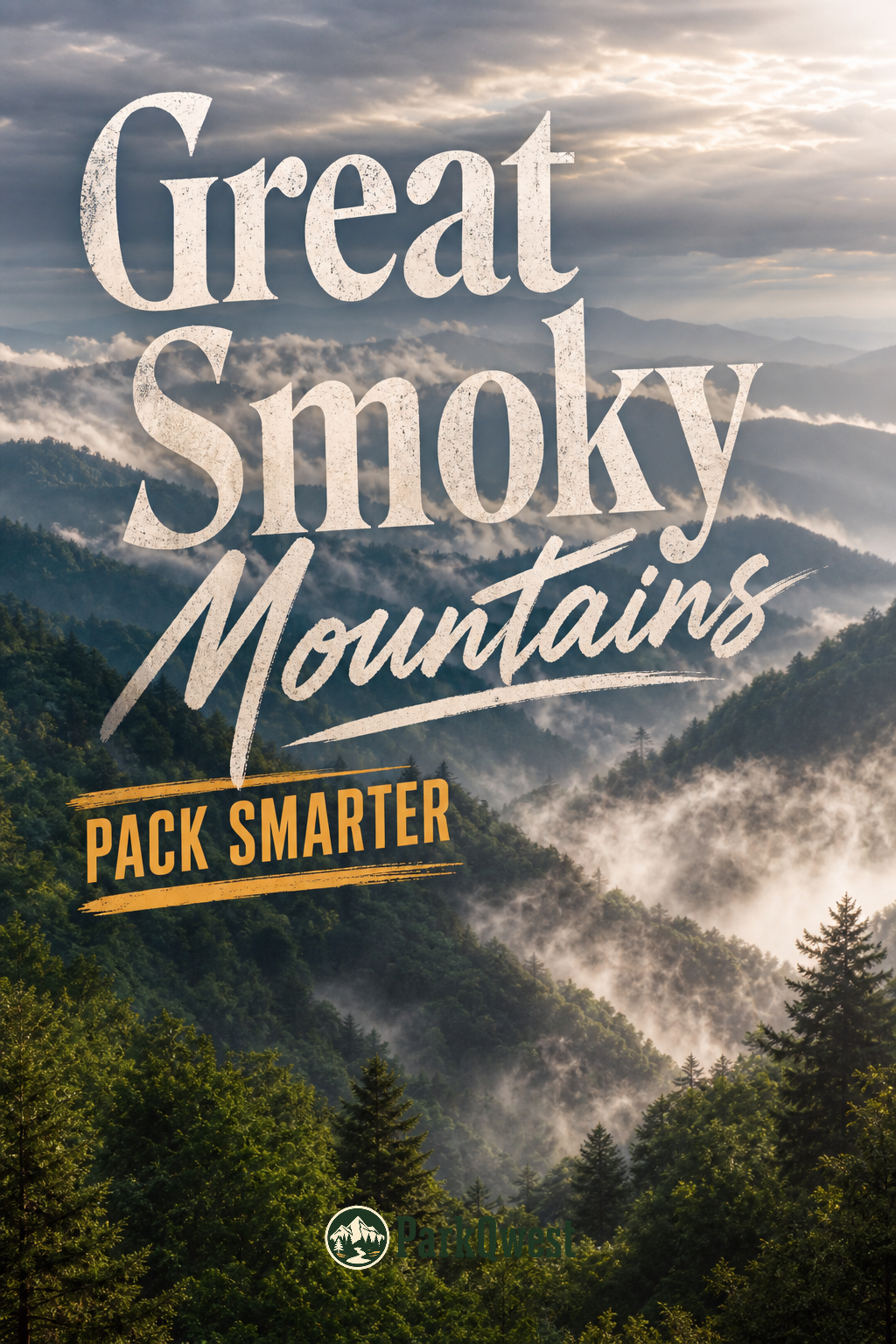
Great Smoky Mountains National Park is a layering-and-weather park, not a “throw on a T-shirt and see what happens” park. Its elevations run from roughly 875 to 6,643 feet, so a warm morning near a gateway community can become a cool, wet, windy afternoon higher up. The park spans Tennessee and North Carolina, and a day may include damp forest paths, exposed overlooks, historic areas, busy pull-offs, and long stretches without a convenient place to replace forgotten gear. Pack for the elevation you will reach—not just the forecast where you slept.
Build a Smokies Clothing System, Not a Single Outfit
The most useful packing strategy here is a small set of layers that can handle humidity, sudden rain, and a noticeable temperature drop as you gain elevation. Even on a short scenic outing, the combination of shade, damp vegetation, and changing terrain can make a cotton-heavy outfit feel clammy fast.
What to Wear on the Trail or for a Long Day Outdoors
- Moisture-managing base layer: Choose a synthetic or wool T-shirt, tank, or long-sleeve top rather than cotton. In the Smokies’ humid forest conditions, a shirt that dries reasonably quickly is more comfortable after rain, sweat, or brushing against wet leaves.
- Light insulating layer: Pack a fleece, light sweater, or insulated midlayer even when the lower elevations look warm. NPS notes that temperatures can differ by 10–20 degrees Fahrenheit from the base to higher elevations.
- Rain shell with a hood: A truly waterproof or reliably water-resistant shell matters more than a tiny emergency poncho if you expect to be outside for hours. Look for room underneath it for your fleece; a shell that only fits over a T-shirt is less useful when the temperature drops.
- Quick-drying hiking pants or shorts: Pants are practical for brushy edges, cool mornings, and insect exposure, while shorts can work on warm lower-elevation days. Many visitors do well with lightweight pants or leggings plus shorts rather than bringing bulky jeans.
- Warm accessories in cool seasons: A knit hat and light gloves take almost no room and can make a chilly mountain stop much more pleasant. They are particularly useful when you are standing still for views, photos, or family breaks.
Quick take
Pack for a 20-degree swing: a breathable shirt, a warm layer, and a hooded rain shell are more useful in Great Smoky Mountains National Park than a second bulky sweatshirt.
Seasonal Adjustments Worth Making
| Trip conditions | Packing priority | Why it fits the Smokies |
|---|---|---|
| Warm, humid days | Sun layer, spare socks, rain shell | Forest humidity and rain can leave clothing damp long after a shower passes. |
| Cool shoulder seasons | Fleece, beanie, gloves | Elevation changes make a mild lowland forecast an incomplete guide. |
| Winter or high-elevation plans | Warmer layers and traction planning | Mountain weather can be substantially different from conditions near park entrances; verify current NPS updates before departure. |
Footwear: Prioritize Grip, Drying Time, and Spare Socks
Footwear is where a Smokies packing list becomes park-specific. Forest trails and roadside stops can be wet from rain, runoff, or persistent dampness, and uneven natural surfaces are common. You do not necessarily need a heavy backpacking boot for a short walk, but you do need more traction and support than smooth-soled casual sneakers provide.
- For most day hikers: Trail shoes or light hiking boots with dependable tread are the practical middle ground. Choose the option you have already worn enough to trust; new boots are a poor souvenir if they create blisters on day one.
- For scenic driving and short stops: Closed-toe walking shoes with grip are still smarter than sandals. A brief walk can mean slick leaves, muddy edges, or uneven stone and roots.
- For wet conditions: Bring an extra pair of wool or synthetic socks in a zip bag. Dry socks can reset a long day more effectively than carrying a second pair of shoes.
- For cold-weather travel: Consider traction devices only if current conditions and your planned route call for them. Check the official NPS page rather than assuming conditions from town apply in the mountains.
Daypack Essentials That Earn Their Space
A compact daypack keeps the weather layers, water, and safety basics together when plans shift from a viewpoint to a longer walk. In a park with big elevation variation, the goal is not to pack every contingency—it is to avoid being caught cold, thirsty, or without navigation when the conditions differ from the forecast.
- Offline map plus paper backup: Download maps before entering the park and carry a printed overview or written route notes. Phone batteries, signal, and navigation apps should not be your only plan.
- Power bank and charging cable: Use it for navigation, emergency communication, and photos—not continuous streaming. Keep the phone in an inside pocket when temperatures are cool to help conserve battery.
- Headlamp: A small headlamp is a better emergency tool than relying on a phone flashlight. It is useful if a walk takes longer than expected or if a vehicle issue delays your return.
- Basic first-aid kit: Include blister care, adhesive bandages, any personal medication, antihistamine if appropriate for you, and a small elastic wrap. This is especially useful when wet socks and uneven footing are part of the day.
- Whistle and emergency blanket: These weigh very little and are sensible additions for anyone going beyond developed stops.
Rain, Sun, and Insects: Pack for Overlapping Exposure
The Smokies’ wooded setting can make people underestimate sun and heat, but shade is not a complete sun strategy. UV exposure still adds up at overlooks, open areas, and during long drives with frequent stops. At the same time, rain protection should stay accessible rather than buried at the bottom of the pack.
- Sun protection: Bring broad-spectrum sunscreen, sunglasses, and a brimmed cap. A lightweight long-sleeve sun shirt is often more comfortable than repeatedly applying sunscreen to sweaty arms.
- Insect protection: Pack repellent appropriate for your household and follow its label directions. Long socks and lightweight pants can reduce exposed skin without making you overheat.
- Dry storage: Use a few zip bags or a pack liner for electronics, maps, medication, and a spare shirt. They are low-cost insurance in a park where a clear lower-elevation sky does not guarantee dry weather higher up.
Quick take
Keep your rain shell, water, map, and warm layer reachable without unpacking the whole car. In the Smokies, the gear you can grab quickly is the gear that actually helps.
Food and Water for a Long, Stop-and-Go Park Day
Bring more water than your first activity seems to require. A park day often expands: one short walk turns into another stop, a scenic drive runs longer, or a family needs a break before reaching the next exit. Carry reusable bottles or a hydration reservoir, and consider a water-treatment method only if you know how to use it and have verified it suits your plan.
Choose snacks that tolerate a warm car and damp pack: nuts, dried fruit, crackers, nut-butter packets, jerky, granola, or simple sandwiches in a cooler. Pack enough food for an unexpected delay, plus familiar snack options for children. Store all food, wrappers, and scented items securely, and follow current NPS guidance on food storage and wildlife practices.
Safety, Wildlife, and Vehicle Readiness
Great Smoky Mountains National Park is known for rich plant and animal life, which is a reason to pack thoughtfully rather than to expect close wildlife encounters. Give animals space, never feed them, and keep children close enough to follow those same rules. Current closures, weather alerts, road conditions, and wildlife guidance can change, so check the official NPS page before leaving your lodging.
- In the car: Carry a spare layer, drinking water, basic roadside supplies, and a paper map. The park’s main entrances are near Gatlinburg and Townsend in Tennessee and Cherokee in North Carolina, but your route and conditions can differ substantially once inside.
- On foot: Tell someone your intended route and return window if you are taking a longer hike. Turn around early if weather, footing, daylight, or group energy makes the original plan less safe.
- With wildlife: Pack binoculars instead of planning to get closer. They make distant observation better while keeping the interaction appropriately distant.
Photography and Family Extras That Reduce Friction
A small camera, phone, or binoculars can be rewarding here, but protect them from moisture with a pouch or dry bag. Bring a lens cloth; humid air and drizzle can leave glass foggy or spotted. A compact tripod is only worth carrying if you will genuinely use it and it does not make your daypack awkward on uneven ground.
For families, pack a change of clothes for younger children, a small sit pad or lightweight towel, wipes, and a few quiet car activities. The useful extra is often not another toy; it is dry socks after a puddle, a snack before a mood crash, or a rain jacket that does not require everyone to return to the vehicle.
What to Leave Behind
- Umbrellas as your main rain plan: They occupy a hand, catch wind, and are awkward on narrow or uneven paths. A hooded shell is more practical.
- Brand-new hiking boots: Bring proven footwear and address fit before the trip.
- Oversized coolers in the daypack: Keep food organized in the vehicle and carry only what you need for the outing.
- Single-use plastic clutter: Refillable bottles, durable snack containers, and a small trash bag create less mess and simplify packing out every scrap.
- Loose food or scented items left exposed: Keep them secured and review current park guidance before your visit.
Final Great Smoky Mountains National Park Packing Checklist
- Wear: Quick-dry top, hiking pants or shorts, grippy closed-toe shoes, moisture-wicking socks.
- Carry: Fleece or warm layer, hooded rain shell, hat, sunscreen, insect repellent, and sunglasses.
- Daypack: Water, durable snacks, offline map, power bank, headlamp, first aid, whistle, and dry bags.
- For the car: Extra water, spare socks, backup layer, roadside basics, and a change of clothes for kids.
- Before departure: Check the official NPS page for current weather, closures, route conditions, and any changing park guidance—especially if your plans include higher elevations.
Before you go
- Review official alerts, closures, hours, and reservation requirements.
- Allow extra travel time and keep an alternate plan.
- Use official NPS information as the final authority.
Sources
- Great Smoky Mountains National Park — official National Park Service site — National Park Service, accessed 2026-08-31
Continue planning Great Smoky Mountains
Learn more about Great Smoky Mountains and find other helpful guides, trails, and trip information in the ParkQwest guide.
ParkQwest is a QwestLyfe Community.
QwestLyfe helps you track your lifelong bucket lists, collections, recipes, and the places you've been. Document your experiences, add notes and pictures, and share them with your friends — and the world.