
Cuyahoga Valley National Park: 3-Day Itinerary
Plan with current information. Conditions, roads, services, fees, and rules can change. Verify details with the National Park Service before your visit.
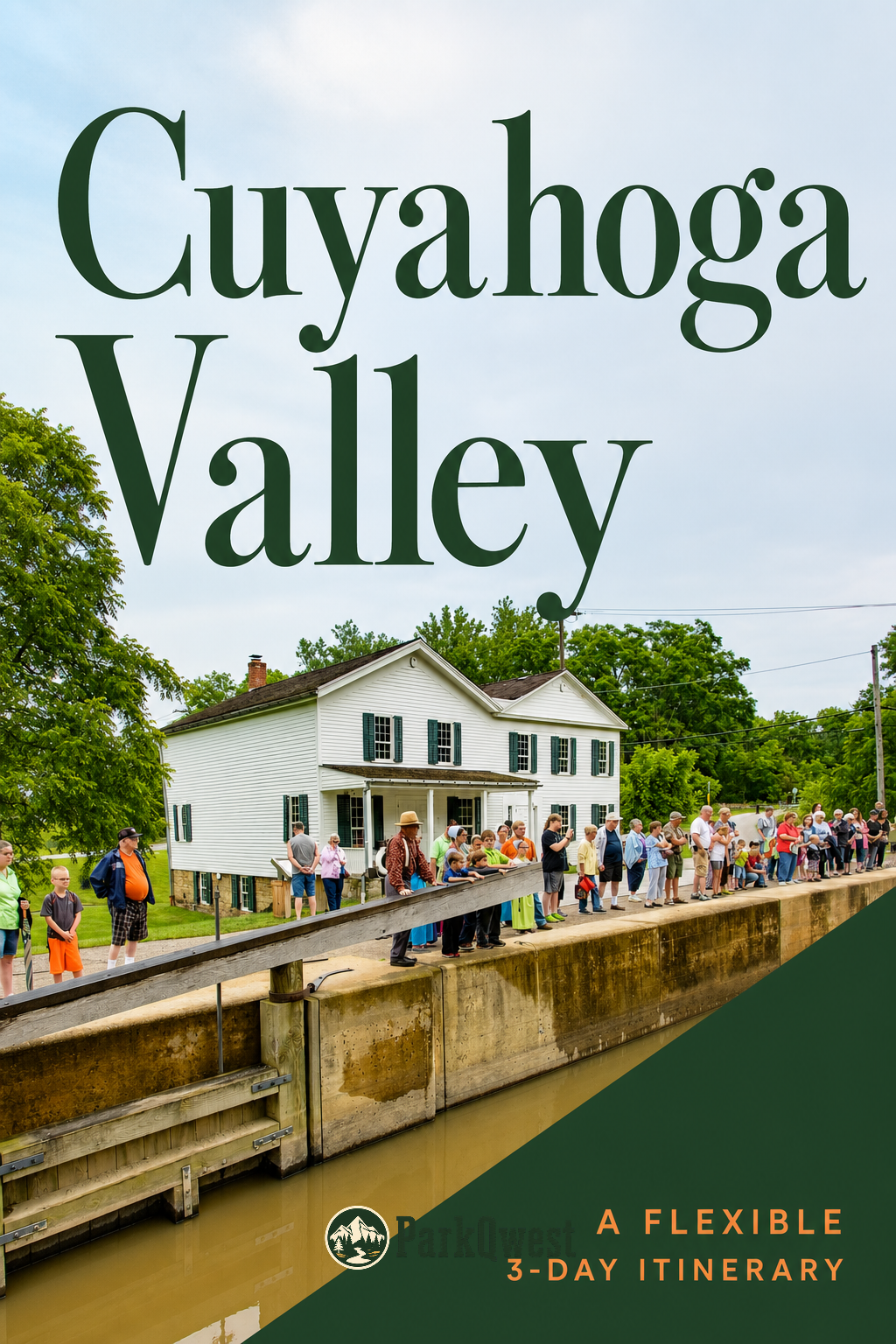
Cuyahoga Valley National Park is easiest to enjoy as a corridor, not a checklist. The park stretches between the Cleveland and Akron areas, with the Cuyahoga River, forested hills, farmland, and the historic Ohio & Erie Canal route shaping the experience. This three-day plan uses that layout to reduce backtracking: begin by getting oriented, devote one day to the Towpath Trail and canal landscape, then use the final day for quieter woods or a weather-smart reset. Start each morning by checking the official NPS page for trail conditions, closures, and current visitor-center information.
Quick take
Base your plan around one park zone per day. Cuyahoga Valley National Park is close to Cleveland and Akron, but trailheads, canal access, and facilities are spread out enough that trying to “pop over” to every highlight can turn a restorative park day into windshield time.
Day 1: Get the Lay of the Valley
Morning: Start with orientation, then choose your energy level
Begin at Boston Mill Visitor Center, at 6947 Riverview Road in Peninsula, which the National Park Service identifies as a good place to start. Use this first stop for the practical questions that shape the next two days: Which areas are muddy after rain? Are there active closures? Is a trail, parking area, or route you had in mind currently workable?
Afterward, take a short introductory walk rather than committing immediately to a long hike. The goal is to notice the park’s basic rhythm: river valley below, wooded slopes, open pockets of farmland, and the canal-era transportation corridor. A short walk on the Towpath Trail or another currently open, NPS-recommended route is enough to set the scale for the trip.
- If you want movement: Choose a longer out-and-back walk on the Towpath Trail, turning around when the group’s least enthusiastic walker is still feeling good.
- If you want a softer start: Pair a brief walk with extra time at the visitor center and save your longer outing for Day 2.
- If you are traveling with kids: Make the first hike deliberately short. A successful first hour outdoors is more useful than pushing through a long, unhappy afternoon.
Afternoon: Follow the canal landscape at an unhurried pace
The Towpath Trail follows the historic route of the Ohio & Erie Canal, making it the most logical place to spend your first full afternoon. Think of this as a choose-your-own-distance day: walk, ride a bike if you have arranged one, or combine a modest trail segment with scenic pauses. Because it is an out-and-back decision, it is easy to shorten without feeling as though you have abandoned the plan.
Build in a proper lunch break before the afternoon effort, whether that means packing food or eating in a nearby community outside the park. Do not assume food service, water, or indoor seating will be available at every park access point. Carry more water than you think you will need in summer, when temperatures can reach the 90s and humidity can make an otherwise gentle outing feel surprisingly taxing.
Evening: Keep it close to your overnight base
Use the evening for a low-effort meal and an early look at tomorrow’s forecast. This is a good night to organize layers, refill water bottles, and decide whether Day 2 will be a longer hike or a bike-oriented Towpath day. In fall, daytime conditions can feel mild while evenings head toward freezing; in spring, a dry morning does not guarantee dry trails by afternoon.
Alternate: Rainy-day orientation plan
If steady rain, thunderstorms, or slick conditions make a longer outing unappealing, keep the visitor-center stop, then use the day for a short paved or otherwise manageable walk only if conditions support it. Spend the recovered time planning around the next dry window rather than trying to “make up” every missed mile. Verify current conditions and facility access on the official NPS page before heading out.
Day 2: Make the Towpath Trail Your Main Event
This is the flexible active day. The Towpath Trail is not just a convenient path through Cuyahoga Valley National Park; it is the clearest thread connecting the canal story to the present-day valley. Giving it a dedicated day lets walkers and cyclists set a distance that fits their actual fitness, weather, and daylight instead of forcing a rushed loop.
Morning: Start early enough to buy options later
Have breakfast before arriving at your chosen access point, then begin with the coolest and freshest part of the day. Pick a direction based on practical factors: parking availability, the day’s forecast, and whether you prefer to return the same way or arrange a permitted, currently available transportation option. Do not assume any train service, bike rental, shuttle, or seasonal operation is running; check the NPS website and provider details directly.
For most groups, the best approach is a time-based turnaround, not a mileage-based one. Agree in advance on when to turn back, including the time needed for photos, restrooms, snack breaks, and the slower return pace that often arrives after lunch.
Quick take
Treat the Towpath Trail as an adjustable outing, not a test of endurance. A shorter walk with time to notice the river valley and canal corridor is usually more satisfying than chasing an arbitrary distance and skipping the parts that make the route meaningful.
Afternoon: Refuel, then decide whether to continue or pivot
Plan lunch as a real pause, ideally before anyone reaches the hungry-and-tired stage. If you packed food, choose a lawful, low-impact place to rest and pack out all waste. If you plan to leave the park for a meal, regard that as a reset point: after eating, assess heat, rain, sore feet, and enthusiasm before committing to another segment.
The afternoon choice should be simple:
- Continue on the Towpath: Best for pleasant weather, cyclists, and groups that still have energy after lunch.
- Switch to a shorter woodland walk: Best if you want a different texture than the canal corridor. Select a currently open route from official park information rather than relying on an old saved pin.
- Call it a complete day: Best in heat, high humidity, or after a longer-than-expected morning. Saving your legs improves Day 3.
Evening: Eat early and protect tomorrow’s legs
After the itinerary’s most active day, prioritize a meal with enough substance and a quiet evening over adding one more stop. Stretch, dry footwear if it was wet, and check for hot spots or blisters before they become a next-day problem. If you are visiting in summer, keep drinking water into the evening; if visiting in colder seasons, set out warm layers and dry socks now.
Alternate: Hot, humid, or storm-prone conditions
Shorten the morning route and skip the long afternoon extension. Summer temperatures in the park can range from 49 to 95 degrees F, and humidity changes how hard the trail feels. During thunderstorms or hazardous weather, do not linger on an exposed route; use the time for indoor meals, a visitor-center stop if open, or a drive between park areas only when road conditions are appropriate.
Day 3: Forest, Farmland, and a Low-Pressure Finish
Day 3 is designed to feel different from Day 2. Instead of treating the park as a linear route to cover, use this day to choose one landscape mood: deep forest, rolling hills, or open farmland. The right choice depends on weather, energy, and what you found most compelling during your first two days.
Morning: Pick one non-Towpath experience
Consult current NPS trail information and select a hike that gives you more wooded terrain or a hillier feel than the previous day. This is the day for people who came hoping for forest immersion, seasonal leaves, spring wildflowers, or a quieter trail experience. Keep expectations realistic: wildlife is part of the park’s appeal, but it is never an appointment.
Bring sturdy footwear, especially in spring or after rain. Spring brings new leaves and wildflowers, but it also brings wet conditions; fall can offer peak foliage around mid-October, though timing varies from year to year. In winter, lake-effect snow from Lake Erie can change conditions quickly, so route choice should be conservative and based on that day’s updates.
Afternoon: Leave room for a graceful exit
After lunch, choose between one final short walk and an early departure. This is especially useful if you are returning a rental car, catching a flight from Cleveland Hopkins International Airport or Akron-Canton Regional Airport, or driving onward. The park is accessible by car from multiple directions, but do not build a departure day around unverified travel-time assumptions.
| If Day 3 feels like… | Choose… |
|---|---|
| Cool, dry, and energetic | A longer wooded or hill-focused hike selected from current NPS guidance. |
| Wet, muddy, or uncertain | A shorter, condition-appropriate walk and an earlier meal or departure. |
| Tired after Day 2 | A brief final stroll, scenic pauses, and no guilt about finishing early. |
Evening: End with the part you will remember
Before leaving, take a final moment to identify the landscape that stayed with you most: the river valley, the old canal route, the woods, or the contrast between nearby cities and protected open land. That contrast is the point of Cuyahoga Valley National Park. A three-day visit works best when it leaves space for the park to feel like a refuge, not another itinerary to conquer.
Before you go
- Review official alerts, closures, hours, and reservation requirements.
- Allow extra travel time and keep an alternate plan.
- Use official NPS information as the final authority.
Sources
- Cuyahoga Valley National Park — official National Park Service site — National Park Service, accessed 2026-08-26
Continue planning Cuyahoga Valley
Learn more about Cuyahoga Valley and find other helpful guides, trails, and trip information in the ParkQwest guide.
ParkQwest is a QwestLyfe Community.
QwestLyfe helps you track your lifelong bucket lists, collections, recipes, and the places you've been. Document your experiences, add notes and pictures, and share them with your friends — and the world.