
Bryce Canyon National Park: Best Time to Visit
Plan with current information. Conditions, roads, services, fees, and rules can change. Verify details with the National Park Service before your visit.
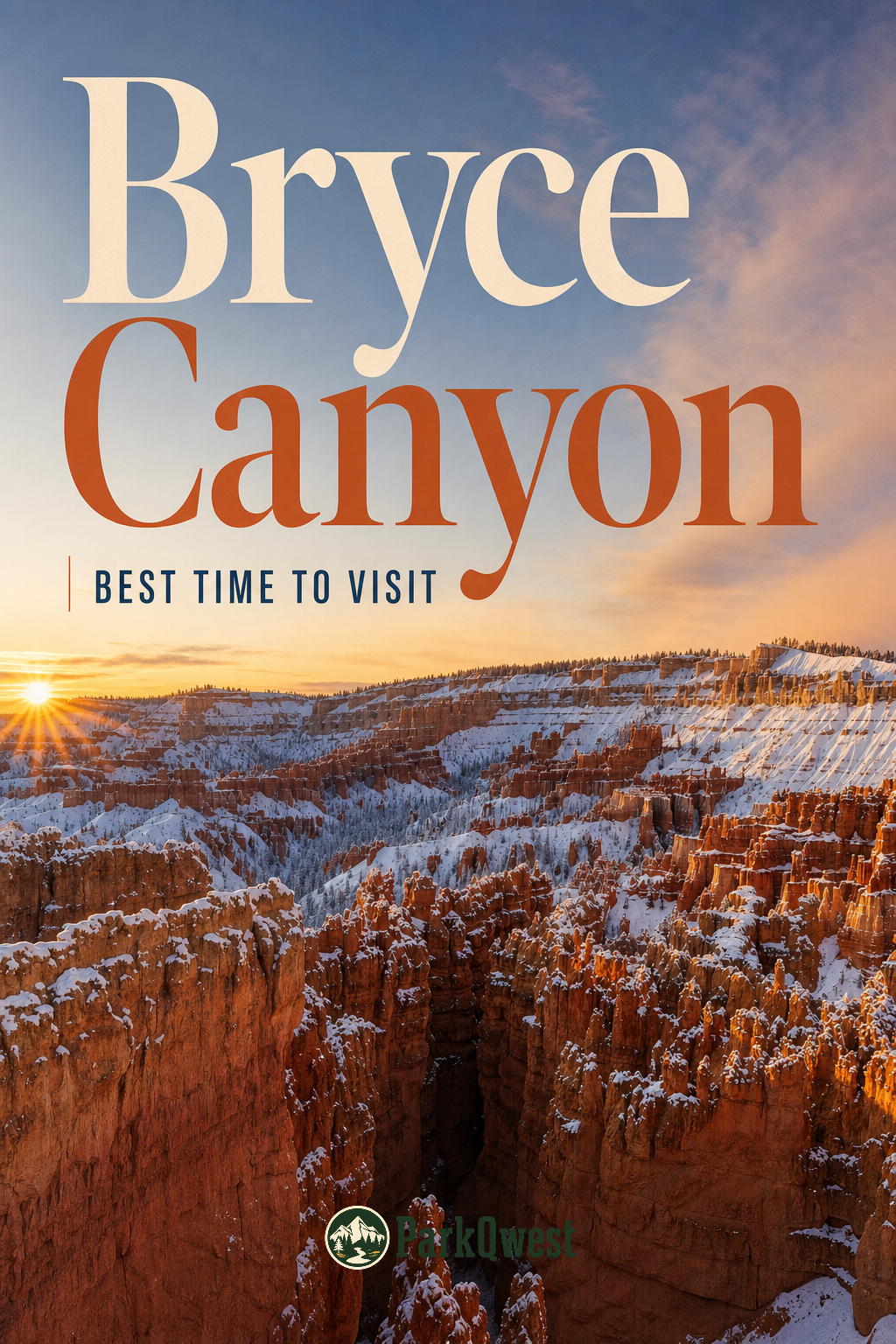
The best time to visit Bryce Canyon National Park depends less on a single “perfect” month than on what you need the park to do for your trip. This is a high-elevation park on the Grand Staircase, where the largest concentration of hoodoos anywhere on Earth can look radically different under summer sun, October frost, or fresh snow. If your priority is long hiking days, summer has the advantage. If you want cooler walking weather and a calmer feel, fall is usually the stronger bet. If snow-framed hoodoos are the goal, winter is the clear choice—but it asks more of your vehicle, clothing, and contingency planning.
Bryce Canyon’s elevation is the deciding factor in nearly every season. The National Park Service notes that temperatures can fall below freezing nearly every night from October through May, while spring storms can still bring heavy snow in March and April. Treat the calendar as a starting point, then choose based on your tolerance for variable weather, crowds, reduced daylight, and possible travel disruption.
Quick take
Choose summer for the widest access and longest days, fall for the best balance of weather and crowd levels, spring for dramatic conditions with real snow-risk tradeoffs, and winter for quiet, snow-covered scenery if you can handle cold-weather logistics.
At a glance: which season fits your trip?
| Season | Best for | Main tradeoff |
|---|---|---|
| Spring | Cool air, changing conditions, fewer peak-season crowds | Snow and freezing nights can affect regional travel and plans |
| Summer | Long days, warmer temperatures, broadest practical access | More visitors and July–August afternoon thunderstorms |
| Fall | Cooler walking weather, clearer trip pacing, shoulder-season feel | Freezing nights return; daylight shrinks quickly |
| Winter | Snowy hoodoo views, quiet scenery, dark-sky focus | Cold, limited daylight, and the greatest weather-related access uncertainty |
Spring: choose it for mood and contrast, not certainty
Spring at Bryce Canyon is for travelers who enjoy a trip with changing conditions built into the experience. Snow can linger, temperatures can swing sharply, and the same day may call for sunglasses, a warm layer, and waterproof outerwear. The NPS specifically warns that March and April storms can produce heavy snowfall that affects travel in the region, so this is not the season to build an itinerary with no margin.
The reward is visual contrast. Pale snow against Bryce Canyon’s red, orange, and cream-colored hoodoos can make spring feel especially photogenic, while cool temperatures can be more comfortable than summer heat for active days. But “spring” does not automatically mean snow-free: nighttime freezing temperatures remain normal well into the season.
Spring suits you if:
- You value scenery over predictability: You would rather see a changing landscape than guarantee dry conditions.
- Your route has flexibility: You can adjust arrival times or overnight plans if a spring storm affects roads in the region.
- You pack for temperature range: Warm insulation, waterproof layers, traction-aware footwear, and gloves may matter as much as a sun hat.
Skip spring as your first choice if a missed scenic drive, snowy parking area, or cold morning would undermine the trip. Before departing, check current conditions and any road or trail notices on the official Bryce Canyon National Park page rather than assuming May will behave like summer.
Summer: the easiest season logistically, not always the easiest physically
Summer is the practical default for visitors who want warmth, long daylight, and fewer cold-weather complications. NPS guidance puts typical summer highs in the 70s to 80s Fahrenheit—pleasant by many desert-trip standards, though Bryce Canyon’s high elevation and exposed viewpoints can still make sun management important. Long days also make it easier to pace a visit without compressing every viewpoint, walk, and evening sky session into a narrow window.
The central summer tradeoff is timing. This is generally the season when more people can travel, so the most convenient parts of the day may feel busier. July and August also bring common afternoon thunderstorms, which means an early start is not merely a crowd-avoidance strategy; it is the sensible weather strategy.
Summer timing rule
Use mornings for your most exposed or time-sensitive plans, then keep the afternoon adaptable. Summer storms are common in July and August, and a “nice forecast” should not be treated as a promise of a storm-free day.
Summer suits you if:
- You are coordinating several travelers: Reliable warmth and long daylight make the itinerary easier to manage across different energy levels.
- You want the broadest margin for outdoor time: You can start early, take a midday break, and still have evening light remaining.
- You can tolerate busier conditions: The best answer is often to shift your daily schedule earlier or later, not to expect solitude at every stop.
For a summer road trip approaching from I-15, US-89, UT-12, and UT-63, weather may be less disruptive than in winter or spring—but thunderstorms can still affect driving conditions. Travelers arriving through Zion National Park should also allow generous time rather than treating the route as a fixed-speed transfer.
Fall: the best all-around choice for many deliberate planners
Fall is often the strongest compromise season because it pairs cooler daytime conditions with a more settled rhythm than peak summer. The hoodoo amphitheaters remain visually powerful in lower-angle light, daytime walking can feel more comfortable, and the park’s dark skies become especially appealing once evenings turn crisp. It is a season for travelers who want to be outside for long stretches without planning their day around summer heat or frequent afternoon storm patterns.
That said, fall is not a warm-weather extension of summer. From October through May, the NPS says temperatures fall below freezing nearly every night. The practical implication is simple: a pleasant afternoon does not eliminate the need for a serious evening layer, especially if your plans include sunrise, sunset, or stargazing.
Fall suits you if:
- You prefer cool, active days: This is a strong fit for visitors who would rather add a jacket than manage hot, exposed conditions.
- You care about a balanced itinerary: Fall can offer a useful middle ground between summer’s longer days and winter’s more severe weather.
- You are comfortable with earlier sunsets: Plan your daylight priorities first, then save dark-sky viewing for after dinner rather than trying to fit everything into one afternoon.
The best fall approach is to think in layers: daytime sun protection, an insulating layer for late afternoon, and warm gear for after dark. Verify current conditions before travel, especially later in the season, because a cold snap can change the feel of an October or November trip quickly.
Winter: choose it for snow, quiet, and atmosphere
Winter is Bryce Canyon’s most distinctive season, but it is not the low-effort version of the park. December through February are typically the coldest and snowiest months, according to the NPS. Snow can transform the view by outlining individual hoodoos and emphasizing the depth of the amphitheaters, while fewer visitors can make the experience feel more spacious and contemplative.
The cost is reduced margin. Daylight is shorter, overnight cold is routine, and weather can affect travel in the region as well as conditions inside the park. A winter trip works best when Bryce Canyon is the purpose of the journey, not a tightly scheduled stop between several fixed commitments.
Winter suits you if:
- Snow is part of the goal: You want the visual contrast of white snow and sculpted rock, not simply a cheaper or quieter date on the calendar.
- You can make conservative travel decisions: Build in extra time, monitor conditions, and be willing to change plans when a storm changes access.
- You enjoy early darkness: Bryce Canyon’s high-elevation setting and fantastic dark skies make winter evenings compelling for travelers who are prepared for the cold.
For winter, verify current park conditions, regional road conditions, and any alerts directly through the official NPS page before setting out. Do not assume the route via UT-20, US-89, UT-12, and UT-63—or the route through Zion National Park—will have identical conditions on the same day.
How to make the final call
Choose your season by ranking your non-negotiable first. If your top priority is dependable outdoor time, start with summer. If you want the most balanced mix of comfortable daytime conditions and a less peak-season feel, choose fall. If weather drama and snow contrast are part of the appeal, consider spring or winter—but give those seasons more schedule space.
- Pick your priority: long daylight, cool walking temperatures, snow scenery, quiet, or the simplest driving conditions.
- Match it to the season: summer for daylight, fall for balance, spring for changeable contrast, winter for snow and stillness.
- Check current conditions close to departure: durable seasonal patterns help you choose a month; current NPS alerts determine the real trip.
Bryce Canyon National Park is compelling in every season because the hoodoos do not need perfect weather to be memorable. The smart choice is the season whose compromises you will actually enjoy—or at least comfortably accept.
Before you go
- Review official alerts, closures, hours, and reservation requirements.
- Allow extra travel time and keep an alternate plan.
- Use official NPS information as the final authority.
Sources
- Bryce Canyon National Park — official National Park Service site — National Park Service, accessed 2026-08-20
Continue planning Bryce Canyon
Learn more about Bryce Canyon and find other helpful guides, trails, and trip information in the ParkQwest guide.
ParkQwest is a QwestLyfe Community.
QwestLyfe helps you track your lifelong bucket lists, collections, recipes, and the places you've been. Document your experiences, add notes and pictures, and share them with your friends — and the world.