
Great Smoky Mountains National Park: First-Trip Guide
Plan with current information. Conditions, roads, services, fees, and rules can change. Verify details with the National Park Service before your visit.
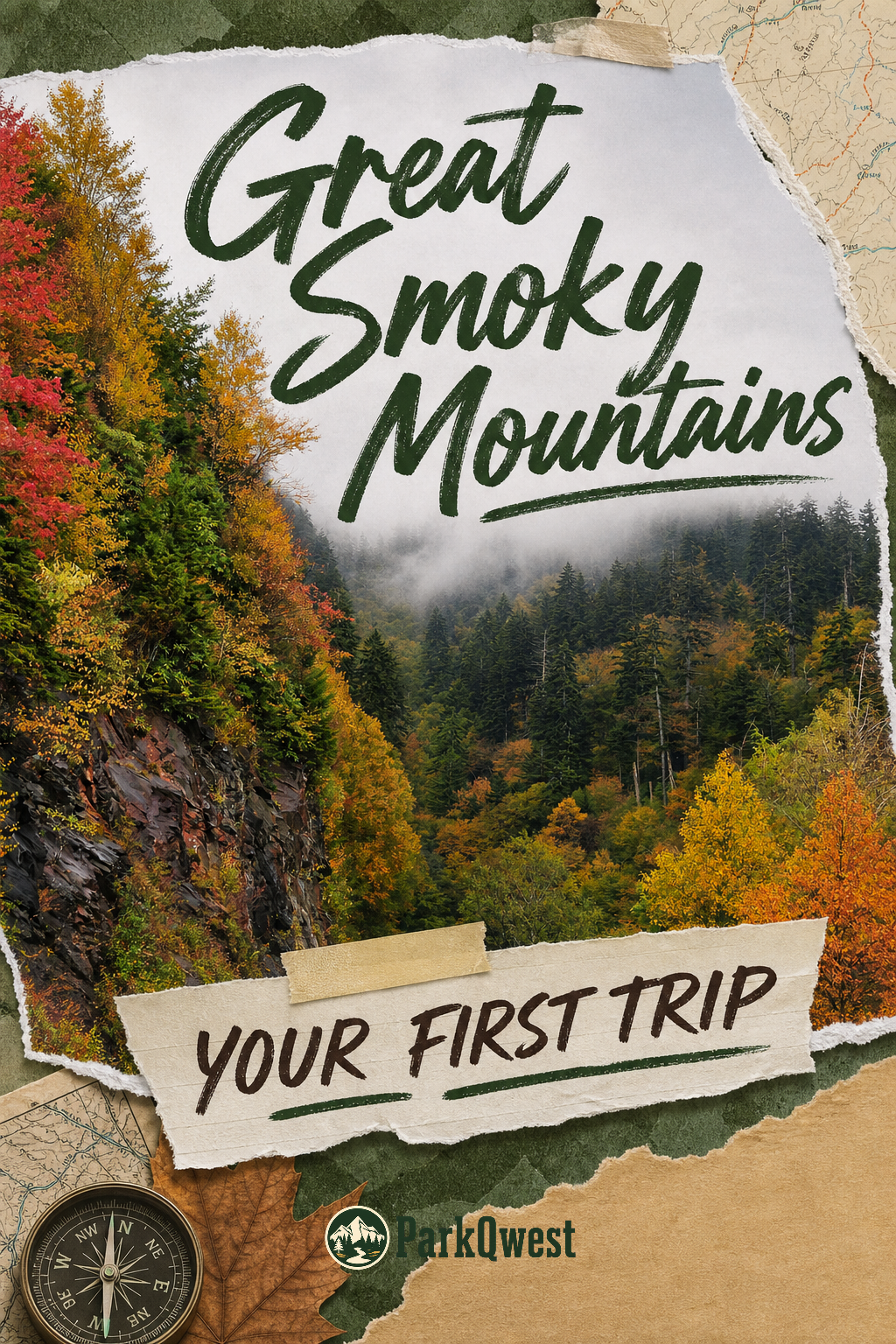
Great Smoky Mountains National Park is easiest to enjoy when you stop treating it like a checklist. The park sprawls across the Tennessee–North Carolina border, with ridge after ridge of forest, old mountain communities, streams, overlooks, and elevation changes that can make one day feel like several different places. For a first visit, the smart goal is not to “cover” the park. It is to choose one side of the park, pair a scenic drive with one or two unhurried stops, and leave room for weather, traffic, and the simple pleasure of being outside.
What sets the Smokies apart is the combination of ancient mountain scenery and remarkable variety. Great Smoky Mountains National Park is world renowned for plant and animal diversity, but its character is also shaped by Southern Appalachian cultural remnants: historic buildings, former farm landscapes, and signs of the communities that lived in these valleys before the park existed. This is America’s most visited national park, so a first trip goes better when you plan for popular places without making crowds the whole story.
Start by choosing your side of the park
The park has three main gateway areas: Gatlinburg, Tennessee; Townsend, Tennessee; and Cherokee, North Carolina. They are not interchangeable starting points. Each can work well, but your choice affects how much time you spend getting to the scenery and how your day feels once you are inside.
- Gatlinburg: A practical choice for visitors who want the most developed gateway environment, with plenty of nearby lodging and dining options. The tradeoff is that this entrance area can feel busy, so build in extra time for arrival, orientation, and getting beyond the first congested stretches.
- Townsend: Often the better fit for travelers who want a quieter base and a lower-key start to the day. It can be a useful choice when your priority is a calm park-focused visit rather than a busy resort-town atmosphere.
- Cherokee: A sensible North Carolina base, especially if you are approaching from that side of the mountains or want to organize your visit around the park’s eastern approaches. It is also a good reminder that the Smokies are not just a Tennessee destination.
Quick take
For a first visit, pick one gateway area and explore outward from it. Trying to enter from one side, cross the park, and return to a different base can turn a nature day into a windshield day.
Choose lodging for your mornings, not just your evenings. A base near the entrance you plan to use lets you arrive earlier, when parking decisions and roadside stops are usually simpler. If you are staying farther away, decide in advance whether your priority is an early park start or a more relaxed day with fewer stops.
Orient yourself before committing to a route
Great Smoky Mountains National Park rewards a few minutes of planning more than a packed agenda. Begin with the official NPS park page shortly before your trip and again on the morning you enter. That is where to confirm changing conditions, road and facility status, current requirements, and any temporary closures that could affect your plan.
Think in elevation, not just mileage
Weather is one of the park’s biggest first-timer surprises. Elevations range from roughly 875 feet to 6,643 feet, and the NPS notes that temperatures can vary by 10–20°F from the mountain base to higher elevations. Clear skies at your lodging do not mean the same conditions higher up, where clouds, wind, or cooler temperatures may change both comfort and visibility.
- Low-elevation plan: Favor streamside scenery, cultural stops, and short walks when higher ridges are cloudy or chilly.
- High-elevation plan: Save overlooks and ridge walks for a clearer window, but do not assume a morning forecast guarantees an all-day view.
- One backup: Keep a lower, shorter alternative in mind instead of trying to force a mountain-top plan in poor conditions.
This is durable planning advice, not a weather forecast. Check the current NPS forecast and alerts before choosing your route, especially if your day depends on high-elevation views.
Build a first visit around three kinds of Smokies experiences
The best first day mixes movement, scenery, and context. Many visitors make the mistake of choosing only a drive or only a long hike. A better introduction is a scenic stretch of road, one purposeful walk, and one place where the park’s human history is visible.
1. Scenic driving with deliberate stops
The Smokies are a driving park in the practical sense: roads connect very different elevations, valleys, viewpoints, trail access points, and historic areas. But scenic driving works best when you plan fewer stops than you think you need. Pull over only where it is safe and legal, then give yourself time to look, walk a little, and move on without feeling rushed.
Use drives as connectors, not as the main accomplishment. A road can reveal the scale of the mountains, but a short walk beside a stream or through a historic landscape gives the day texture that a string of overlooks cannot.
2. One walk matched to your actual day
A first-time visitor does not need to tackle the longest or most talked-about route to have a satisfying park experience. Pick a walk based on your group’s comfort, daylight, weather at the elevation you will reach, and the energy you want left for the rest of the day. The official NPS page is the right place to verify current trail conditions and select a named route.
Let the walk be the anchor, not the afterthought. If you schedule it before an ambitious drive, a crowd delay or unexpected weather can erase it. Build your day around the walk first, then add scenic stops around it.
3. A cultural stop that explains the landscape
It is easy to see the Smokies as uninterrupted wilderness, but the park also preserves remnants of Southern Appalachian mountain culture. Historic structures and former settlement landscapes add a useful layer to a first trip: they show why valleys, streams, fields, and old road corridors mattered to the people who lived here.
Give this stop at least 20 to 30 minutes. Rushing through a historic area just to take a photo misses the point. Read the interpretive material available on site, notice the relationship between buildings and land, and treat it as part of the park—not a detour from it.
Quick take
A strong first-day formula is one scenic drive segment, one walk, one cultural stop, and one unplanned pause. That is enough to understand the park’s range without spending the day chasing every landmark.
Set a realistic pace: less territory, better day
Great Smoky Mountains National Park looks compact on a map but does not behave that way. Curving mountain roads, pullouts, changing weather, parking decisions, and the temptation to stop often all stretch a day. Treat travel time inside the park as part of the experience rather than dead time between attractions.
| If your available time is… | Make the day about… | Avoid… |
|---|---|---|
| A few hours | One entrance area, one short walk, and a handful of scenic stops | Crossing the entire park |
| Most of a day | A scenic drive, one main walk, and a cultural site | Two major walks plus a long through-drive |
| A repeat visit | Exploring a different gateway side or spending more time on a chosen trail | Repeating a rushed first-day circuit |
Common first-timer mistakes—and the better move
- Trying to see both states in a single sweep: Choose Tennessee or North Carolina as your practical base for the day, then enjoy that side well.
- Planning only for sunny lowland weather: Check conditions by elevation and keep a warmer or lower-altitude option available.
- Arriving with no priority: Decide whether your non-negotiable is a walk, views, cultural history, or a quiet drive. Everything else becomes optional.
- Assuming popular means essential: The park’s value is in its forests, streams, mountain scale, and cultural landscapes—not in collecting the most crowded stops.
- Skipping the official update: Current road, trail, weather, parking, and visitor information can change. Verify it directly with the NPS rather than relying on an old social post or map screenshot.
A practical sample first day
This outline is intentionally loose enough to survive real conditions. Use it from the entrance nearest your lodging, and replace the unnamed walk or cultural stop with options confirmed on the official NPS site.
- Morning: Check NPS alerts, weather, and current conditions before leaving your base. Enter through Gatlinburg, Townsend, or Cherokee, then make your first stop an orientation point or a clearly marked park area where you can confirm the day’s direction.
- Late morning: Drive one scenic section without trying to stop everywhere. Choose two or three pull-offs or viewpoints, then take your main walk while energy and daylight are still on your side.
- Early afternoon: Pause for food and water, then visit a historic or cultural landscape. This is a good time to slow down if mountain weather has become less inviting.
- Later afternoon: Add one final scenic stop only if conditions, traffic, and your group’s energy support it. Otherwise, leave with time to return comfortably rather than making the exit drive the stressful part of the day.
The most useful first-trip mindset is simple: let Great Smoky Mountains National Park feel big. Choose a manageable slice, notice the shift from valley to ridge, and save the other entrance roads, walks, and landscapes for the reason many visitors return.
Before you go
- Review official alerts, closures, hours, and reservation requirements.
- Allow extra travel time and keep an alternate plan.
- Use official NPS information as the final authority.
Sources
- Great Smoky Mountains National Park — official National Park Service site — National Park Service, accessed 2026-08-19
Continue planning Great Smoky Mountains
Learn more about Great Smoky Mountains and find other helpful guides, trails, and trip information in the ParkQwest guide.
ParkQwest is a QwestLyfe Community.
QwestLyfe helps you track your lifelong bucket lists, collections, recipes, and the places you've been. Document your experiences, add notes and pictures, and share them with your friends — and the world.